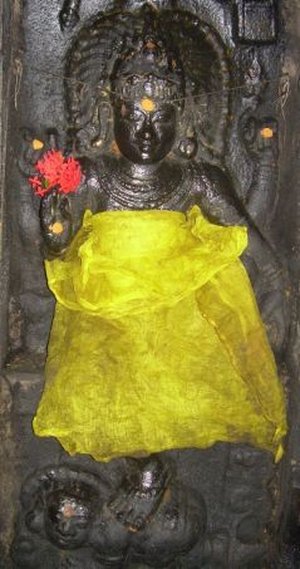
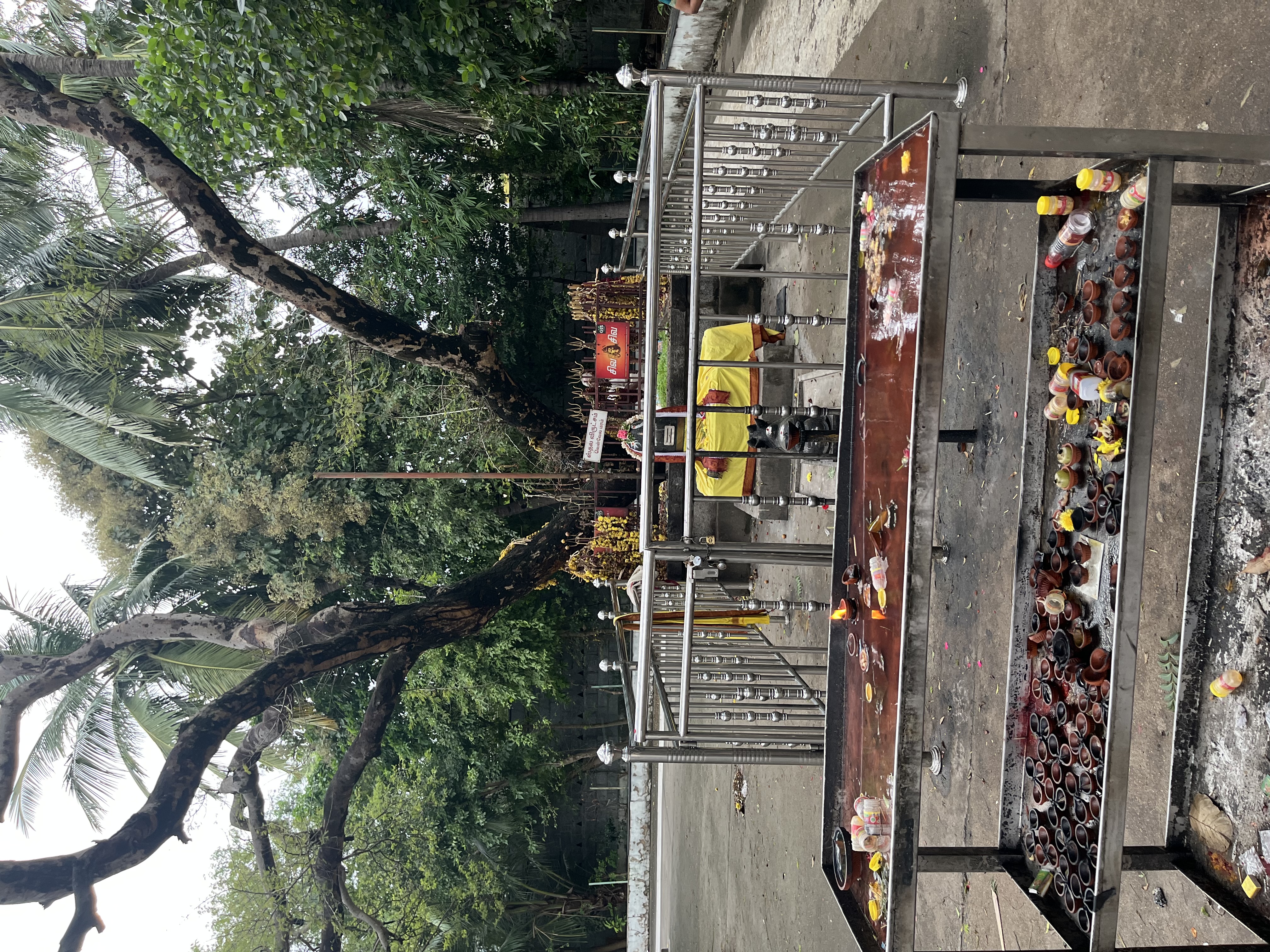
Vedhapureeswarar temple, Tiruverkkadu
Location
Tiru-Verkaadu, near Poonamallee in Chennai
Deity
Vedhapureeswarar, Verkatteeswarar
Female Deity
Baalaambikai
Pathikam
Sambandar - 1
Gallery - Vedhapureeswarar Temple


How to Reach
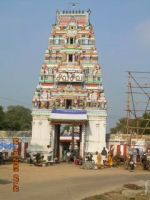
Tiruverkadu is located about 20 kilometers from Chennai Central and can be reached by taking a side road that branches off from the main Chennai–Poonamallee trunk road. An ornamental archway at the junction marks the route leading to Tiruverkaadu Temple.
Temple Address
திருவேற்காடு அஞ்சல்
Tiruvallur District
PIN – 600077
Temple Hours
Morning : 6:30 - 20:30
Temple Overview
The Vedhapureeswarar Temple, located in Tiru-Verkaadu, is less widely known compared to the more frequently visited Devi Karumari Amman Temple, which attracts devotees throughout the year. However, Vedhapureeswarar Temple is an important Paadal Petra Shivasthalam. It is situated about 1 kilometer from Devi Karumari Amman Temple. From the Tiru-Verkaadu bus terminus, the temple can be reached by following “Sivan Kovil Road,” which leads directly to the temple. The place is known as “Verkaadu” because, according to legend, the four sacred Vedas are believed to have manifested as four large trees here to worship the deity.
Temple Architecture
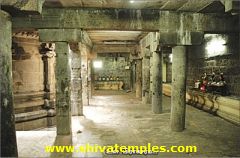
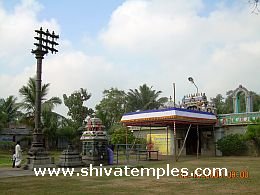
The Vedhapureeswarar Temple features an impressive five-tiered east-facing gopuram at its entrance. After entering through the gopuram, visitors come into a spacious outer prakaram where the dwajasthambam (flagstaff), balipeetam, and Nandi are aligned along the axis of the eastern entrance. On the right side of this prakaram are two west-facing sannidhis dedicated to Saneeshwara and Moorkha Nayanar. Proceeding further through an inner gateway leads to the sanctum of the presiding deity, Vedhapureeswarar, which also faces east. Behind the main deity is a striking sculpture depicting Shiva and Parvati in their wedding form, known as Tirumana Kolam, commemorating their divine appearance before the sage Agasthya.
Inner Prakaram
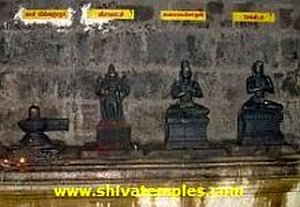
In the inner prakaram surrounding the sanctum of Vedhapureeswarar Temple, several important sannidhis and idols can be seen. There are sannidhis for Sage Agasthya and Surya, the Sun God. Along the southern side of the inner prakaram are the idols of the four principal Nayanmars—Tirugnanasambandar, Appar, Sundarar, and Manikkavacakar—as well as a row depicting all the 63 Nayanmars.On the western side are the idols of Kasi Viswanathar, Visalakshi, and the king Anabhaya Chola. The sannidhi of the goddess Balambikai is located on the northern side of the inner prakaram and faces south. Around the sanctum walls are the goshta murthas of Chandikeshwarar, Ganesha, Dakshinamurthy, Brahma, and Durga.
A notable feature in the temple is the unique depiction of Muruga. Here, Muruga is shown holding a bow and arrow instead of His usual spear (vel), and He stands on one leg upon His peacock, symbolizing strength, balance, and valor. The temple’s sthala vruksham (sacred tree) is the White Bark Acacia, locally known as “Vell Vela Maram.” The temple’s sacred water body (theertham) is called Velayuda Theertham..
Temple Legends
Muruga and Brahma
According to temple tradition, Muruga once detained Brahma because Brahma was unable to explain the true meaning of the sacred Pranava (the syllable “Om”). As Brahma is responsible for creation, this act disrupted the cosmic process. Hearing of this, Shiva sent His divine bull Nandi to release Brahma, but Muruga remained firm in his decision. Shiva then personally appeared before Muruga and explained the consequences of obstructing Brahma’s role in creation. Understanding this, Muruga finally released Brahma. To correct Muruga for his defiance, Shiva instructed him to travel to Tiruvekadu and worship Him there. Obeying this command, Muruga came to Tiruvekadu and created a sacred water body in order to perform worship to Shiva. This holy tank later came to be known as Velayuda Theertham.
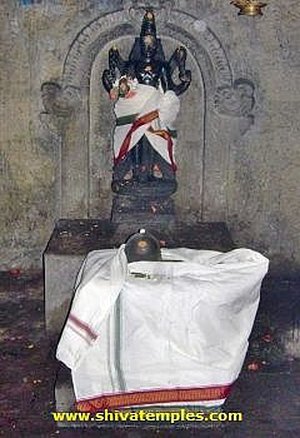
The Velayutha Theertham, located near the eastern entrance of Vedhapureeswarar Temple, is believed to have been created by Muruga for the purpose of worshipping Shiva. Within the inner praharam, on the western side of the sanctum, there is also a sannidhi dedicated to Muruga. A distinctive feature of this sannidhi is the presence of a Shiva Linga placed in front of Muruga, a rare arrangement that is not commonly found in other temples. The revered saint-poet Arunagirinathar has composed two hymns in praise of Muruga at this temple, and these songs are included in his famous devotional work, the Tiruppugazh.
Navagrahas and Sage Parasara
Inside the Vedhapureeswarar Temple, the Navagrahas are installed on a Padma Peetam—an octagonal pedestal designed in the form of a lotus. Because of this sacred arrangement and the associated legends, the temple is considered an important parihara sthalam for devotees seeking relief from Navagraha Dosha (planetary afflictions). According to tradition, the revered sage Parashara, who is closely associated with the foundations of Hindu astrology, worshipped the deity at this temple. For this reason, those involved in astrology—whether practicing astrologers or students learning the subject—are believed to receive spiritual benefits by worshipping the deity here.
Moorkha Nayanar
Tiruverkadu is revered as the birthplace of Moorkha Nayanar, one of the 63 Nayanmars celebrated in the Saivite tradition. He dedicated his entire life to serving the devotees of Shiva by providing them with food and care. His commitment to this noble service was so profound that he eventually spent all his wealth in the process. Despite losing his financial resources, Moorkha Nayanar remained determined to continue feeding the Shivanadiyars (devotees of Shiva). To sustain this charitable mission, he even took to gambling and used whatever he won solely to provide meals for Shiva’s devotees, reflecting his extraordinary devotion, sacrifice, and selflessness.
Significance of the Temple
Tiruvekadu is regarded as one of the places where Sage Agasthya witnessed the divine wedding of Shiva and Parvati. Because of this association, the site is considered especially auspicious for those facing delays in marriage, and many devotees visit the temple seeking blessings for a harmonious union. The temple is also believed to provide remedies for Navagraha Dosha, the unfavorable influences of the nine celestial bodies in astrology. Furthermore, tradition holds that Adisesha worshipped the presiding deity here. Due to this belief, devotees consider the temple a place that offers protection from snake-related dangers, which further adds to its spiritual significance and reverence.
The Wedding
During the celestial wedding of Shiva and Parvati at Mount Kailash, the presence of countless gods and sages gathered in the north caused the earth to tilt slightly. To restore balance, Shiva asked the revered sage Agastya to travel to the southern regions. Agastya felt sorrowful at leaving, as he wished to witness the divine marriage. Understanding the sage’s devotion, Shiva granted him a boon that he would be able to behold the sacred wedding from wherever he was and whenever he desired.
Places visited by Sage Agasthya in his journey to south -
Gallery - Vedhapureeswarar Temple