Kalyāna Sundareswarar temple, TiruNallur
Location
Tiru-Nallur
Deity
Pancha-Varneshwarar, Kalyāna Sundareswarar
Female Deity
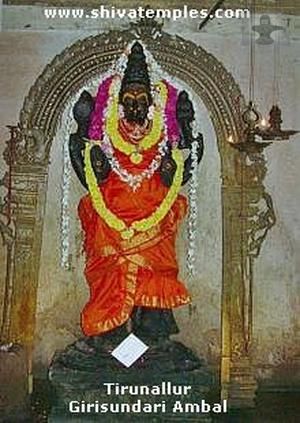
GiriSundari, Kalyāna Sundari
Pathikam
TiruNāvukkarasar - 2, TiruGyānasambandhar - 3
Gallery - Pancha-Varneshwarar Temple

How to reach
This Shiva temple is situated near Papanasam on the Thanjavur–Kumbakonam Highway, approximately 28 km from Thanjavur and 16 km from Kumbakonam, making it easily accessible from both towns. From Papanasam, visitors should take the road leading towards Govindakudi. After passing through the village of Valaippazhakadai, a branch road leads to the temple, which is located about 1 km from the main road. The temple be conveniently reached by private vehicles, taxis, or local transport operating from Papanasam and the surrounding areas.
📢 Notice: All information and photographs have been updated following our visit to the temple in October 2025.
Temple Address
Tirunallur Village
Tirunallur Post
(Via) Sundaraperumal Koil
Papanasam Taluk
Thanjavur District
PIN – 614208
Temple Hours
Morning : 6:00 - 1:00
Evening : 4:00 - 8:00
Nearby Paadal Petra Shiva Temples
Temple History
According to the puranas, a contest of strength once arose between Adisesha, the celestial serpent, and Vayu, the god of wind. To demonstrate his power, Adisesha coiled his thousand hoods firmly around Mount Kailash, holding the sacred mountain in an unyielding embrace. In response, Vayu assumed the form of a mighty tempest and unleashed powerful winds in an attempt to dislodge the mountain. The force of their contest caused the heavens to tremble, filling the gods with fear. They prayed for the conflict to end, and, moved by their plea, Adisesha relaxed his grip ever so slightly. Seizing the opportunity, Vayu tore away two peaks of Mount Kailash and carried them southward. One peak came to rest at Tirunallur, while the other was established at nearby Avur. The sacred peak that descended at Tirunallur became the divine site where Panchavarneswarar manifested in all His glory. For this reason, Tirunallur has long been revered as Then Kailayam—the Southern Kailash.
Temple Architecture
Mādakovil
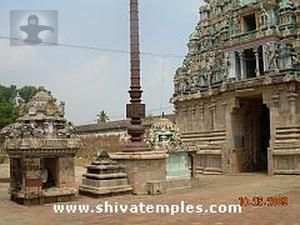
This temple is one of the Mādakovils constructed by King Kochengat Cholan, with the sanctum of the presiding deity set upon an elevated platform. A majestic five-tiered Rājagopuram graces the entrance, while the inner gopuram rises in three tiers. Passing through the gateway, one enters a spacious courtyard where the sacred, armoured flagstaff (Dwajasthambam) stands, with Kodimaram Vināyaka enshrined in front of it. To the north lies the Vasanth Mandap, and to the south is the Thula Mandap, where Amarneethi Nayanār was once seated upon a balancing scale.
Goddess Giri Sundari
The sanctum of the female deity GiriSundari is in a dedicated sannidhi oriented towards south.
Other Deities
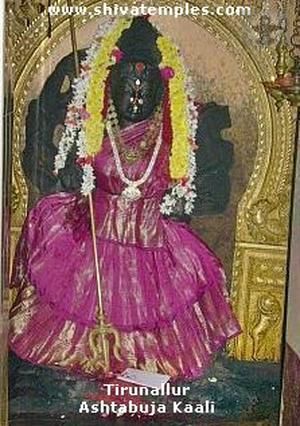
The prakaram houses sannidhis for various deities and sages; Sage Agastyā, Kāsi Viswanāthar, Gananāthar, Kāsi Vinayakā, Bānalingā, Murugā, the four primary Saivite saints (Nālvar), Kunti Devi, Dakshināmurthy, Lingodbhavā, Brahmā, Durgā, Chandikeswarar, and Natarāja.
Sacred Tree
The temple's sacred tree (Sthala Vriksham), the Vilvā tree, is of great antiquity and is revered as the 'Aadhi Maram' (the primordial tree).
Amarneethi Nayanār
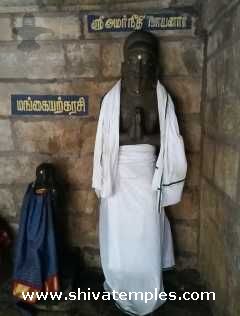
Tirunallur is sanctified as the abode where Amarneethi Nayanār, one among the 63 revered Saivaite saints, attained eternal union with God Shiva. Amarneethi Nayanār, together with his devoted wife and son, was taken into divine grace and granted mukti. To this day, within the temple, devotees can behold the idols of Amarneethi Nayanār, his wife, and son, alongside God Shiva who manifested here in the guise of a Brahmin to bestow His boundless compassion.
Special feature
The presiding deity of this temple is Panchavarneswarar. The Shiva Linga here is unique, for it changes color five times during the course of a single day, once every six naazhigai (roughly 2 hours 24 minutes). The hues appear in sequence - copper, then light crimson, followed by molten gold, then emerald green, and finally a mysterious shade that defies description. It is for this wondrous phenomenon that the deity is adored as Panchavarneswarar, (the One of Five Colors.) The Swayambhu Linga (self-manifested) form, is on a square-shaped pedestal (Chathura Avudaiyar), facing east. It bears small cavities said to have been formed when Sage Bringi worshipped the deity in the form of a bee. Behind the sanctum, a stucco image of Kalyāna Sundarar can be seen, depicting the divine wedding form in which the deity granted darshan to Sage Agastya. On either side stand Vishnu and Brahma, while the sage is shown in humble worship.
Tiruppugazh Temple
The Muruga in this temple holds a special place in Tamil devotional tradition, having been glorified by Saint Arunagirinathar in his revered Tiruppugazh hymns. Here, Muruga is enshrined facing east, radiating divine grace with four graceful arms, and is accompanied by His consorts Valli and Deivanai. His serene and resplendent form inspires devotion among worshippers. In the Tiruppugazh, Saint Arunagirinathar composed a hymn specifically in praise of the Muruga of this temple, immortalizing the sanctity of the temple.
The Wedding
During the celestial wedding of Shiva and Parvati at Mount Kailash, the presence of countless gods and sages gathered in the north caused the earth to tilt slightly. To restore balance, Shiva asked the revered sage Agastya to travel to the southern regions. Agastya felt sorrowful at leaving, as he wished to witness the divine marriage. Understanding the sage’s devotion, Shiva granted him a boon that he would be able to behold the sacred wedding from wherever he was and whenever he desired.
Places visited by Sage Agasthya in his journey to south -
- Tiru-Kodunkundram
- Kutralam
- Tiru-Panankattur
- Tiru-Kallil
- Tiru-Votriyur
- Tiru-Verkaadu
- Tiru-Vaanmiyur
- Achirupakkam.
- Tiru-Nallur
- Tiru-Nani-Palli
- Tiru-Aakkur
True to this divine promise, Tirunallur is among one of the places where Agastya was blessed with the vision of the celestial wedding. Overjoyed by this grace, Agastya installed and worshipped a separate Lingam to the right of Sundara Lingam. In the sanctum, behind the Deity, devotees can behold the stucco image of Kalyana Sundarar accompanied by the divine assembly.
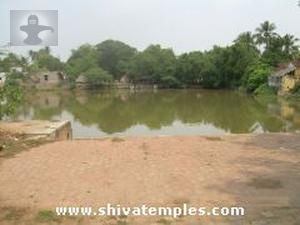
Saptha Sagara Theertham
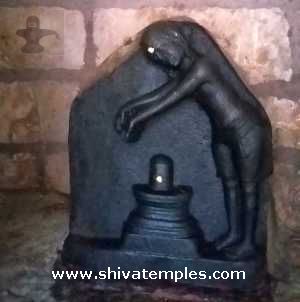
Kunti Devi, the mother of the Pandavas, was burdened with afflictions arising from having borne children through the blessings of the Pancha Bhoothas (the five cosmic elements) and from the sorrow of having set her firstborn son, Karna, adrift in a river. Seeking relief from these burdens, she prayed earnestly to Shiva for divine grace. In answer to her prayers, Kunti learned that bathing in the waters of all seven sacred seas within a single day would absolve her of her sins and restore her inner peace. Realizing that such a pilgrimage was beyond human possibility, she was divinely guided to Tirunallur, where the Sapta Sagara Theertham is believed to embody the sanctity of all seven seas in a single sacred tank. Kunti journeyed to this place, worshipped the deity, and took a ritual bath in the Sapta Sagara Theertham, and she was freed from her spiritual afflictions and attained peace of mind. Temple tradition further states that, as Kunti was born under the Magham star, she performed this sacred bath on the auspicious occasion of Maasi Magham, when her sins were completely washed away. The temple's Sthala Purana proclaims that bathing in the Sapta Sagara Theertham bestows the same spiritual merit as taking a holy dip in the renowned Mahamagham Tank at Kumbakonam. Commemorating this sacred legend, the temple also preserves a beautiful sculpture depicting Kunti Devi offering worship to a Shiva Linga, serving as a lasting reminder of her devotion and the divine grace she received.
Tiru-Navukarasar Pathikam
One of the most celebrated legends associated with this temple concerns Saint Tirunavukkarasar (Appar). At Tiru-Shakthi-Mutram, Appar fervently prayed to Shiva, beseeching Him to bless him by placing His divine feet upon his head. In His infinite compassion, Shiva chose to fulfill this heartfelt prayer not there, but at Tirunallur. When Appar arrived here, the deity graciously placed His sacred feet upon the saint's head, bestowing upon him the highest form of divine grace. Overwhelmed with devotion and ecstasy, Appar prostrated before the divine and sang a series of hymns glorifying the greatness of His holy feet, praising them in every verse with profound love and reverence. This divine event gave rise to a unique and cherished temple tradition. Much like the Satari (Shatari) placed upon the heads of devotees in Vishnu temples, this temple ceremonially places a Jatari bearing the sacred footprints of Shiva on the heads of worshippers. Through this symbolic act, devotees receive the same divine blessing that Shiva graciously bestowed upon Saint Tirunavukkarasar.
Gallery