Chandrasekarar temple, Elambayamkottur
Location
Elambayamkottur
Deity
Deivanaatheswarar, Chandrasekar, Rambeswarar
Female Deity
Kanaka Kuchambikai
Pathikam
Sambandhar - 1
Gallery - Chandrasekarar Temple


How to Reach
This Shiva temple is located about 24 km from Thiruvallur and 7 km from Perambakkam. Frequent bus services operate between Thiruvallur and Perambakkam, making the journey convenient. From Perambakkam, visitors can hire an auto-rickshaw to reach the temple.
Temple Address
Elumiyankottur
Kappankattur Post
Via Edayarpakkam
Sriperumbudur Taluk
Kanchipuram District
PIN – 631553
Temple Hours
Morning : 8:00 - 12:00
Evening : 4:30 - 8:00
Contact
97157 10192
Nearby Paadal Petra Shiva Temples
Tripura Samhara - The Destruction of the Three Cities
The Three Demons of Tripura
According to legend, three formidable demons—Vidyunmali, Tarukaksha, and Kamalaksha—resided in three impregnable, moving fortresses collectively known as Tripura. These celestial cities, fashioned from gold, silver, and iron, drifted through the skies, beyond the reach of ordinary weapons. From their invincible strongholds, the demons spread destruction across the universe, relentlessly tormenting the Devas. Unable to endure their suffering any longer, the distressed celestial beings sought refuge in God Shiva, earnestly appealing to him to destroy the tyrants and restore peace and balance.
The Divine Chariot
Answering their plea, a resplendent celestial chariot was prepared for the divine mission. The four Vedas transformed into four mighty horses to draw it, while Brahma assumed the role of charioteer. The Sun and the Moon became the right and left wheels, and beings from across the worlds gathered to adorn the chariot, forming a vast divine army. Each participant took pride in their role, convinced that their individual contribution would secure victory. Watching this quiet rise of arrogance, Shiva simply smiled—his calm, knowing expression a subtle reminder that all power ultimately rests with him alone.
The Benevolent Smile
That radiant smile of Shiva poured divine grace across all the worlds. Among the inhabitants of Tripura, those demons who remained steadfast in their devotion to him were granted protection and well-being, while those who turned away from devotion met their inevitable end. With nothing more than a gentle, effortless chuckle, Shiva reduced the three mighty fortresses to dust, marking the ultimate triumph of good over evil and the restoration of cosmic balance.
Temples associated with Tripura Samhara:
The Broken Axle
As the divine army prepared to depart, an unexpected event occurred. Vinayaka broke the axle of the chariot, for the Devas had neglected to worship him before beginning their journey. The chariot tilted and lost its balance, bringing the march to a halt and serving as a solemn reminder that no divine undertaking can commence without first invoking his blessings.
The Sacred Necklace
At this moment of crisis, Mahavishnu swiftly intervened, firmly holding the chariot and preventing it from crashing to the ground. Yet, amid the sudden imbalance, Shiva’s sacred necklace slipped from the chariot and fell upon the earth. At the very spot where it touched the ground, a divine manifestation occurred, giving rise to a holy Shiva Linga. In time, a temple arose at this sanctified place, standing as an eternal witness to this wondrous event. The presiding deity came to be known as Devanatheswarar, meaning “the Lord who led the army of the Devas.”
Worship by Apsara Ramba
Additionally, Rambha, the queen of the celestial Apsaras, is believed to have worshipped the presiding deity of this temple with deep devotion. Seeking the boon of eternal youth and beauty, she performed sincere prayers and penance before the deity. Pleased by her unwavering devotion, the deity became known as Rambeswarar, meaning “the Lord worshipped by Rambha.” In memory of this sacred association, the place came to be called Rambaikottur. Over the centuries, the name gradually evolved through common usage, changing from Rambaikottur to Elambyankottur, and eventually to its present form, Elumiyankottur.
Beckoning of GyanaSambandhar
The Divine Encounter
While Thirugnanasambandar was on a sacred pilgrimage, worshipping the temples of Thondai Nadu, he passed through this region. At that time, God Shiva appeared first as a small child and later as an elderly man, intercepting the path to indicate the presence of this temple. However, the devotees who accompanied him failed to recognize these signs and did not realize the existence of the temple.n.
The Sacred Cow
In order to capture their attention, Shiva then appeared in the form of a cow and gently butted the palanquin in which Tirugnanasambandar was being carried. Astonished by this act, Sambandar followed the sign shown by the cow. When he reached the vicinity of this place, the cow suddenly disappeared. Only then did Sambandar realize that it was none other than Shiva himself who had appeared in the form of a cow to reveal the presence of this site. Thereafter, Sambandar came to this temple, worshipped the Deity and sang a pathigams.
Temple Layout and Architecture
Temple Entrance
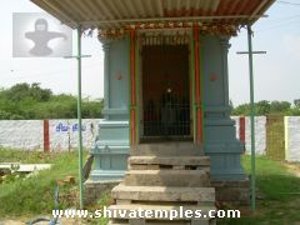
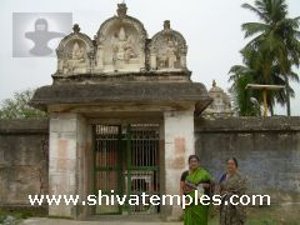
The east-facing entrance of this Shiva temple does not feature the traditional gopuram. Instead, visitors are welcomed by the balipeetam and Nandi. The dwajasthambam, a common element found in most temples, is notably absent here.
Prakaram and Sannidhis
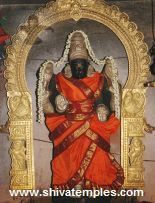
To the left, within the prakaram, stands the west-facing sannidhi of Rambeshwarar, worshipped by the Apsara Rambha. The sanctum of the presiding deity, Deivanatheshwarar, faces the east. The prakaram also houses several other sannidhis, including Kurunda Vinayaka, Subramanya with his consorts Valli and Deivanai, as well as a sannidhi for Bhairavar.
Goshta Murthis
The Goshta Murthis here include Vinayaka and Dakshinamurthy. In place of the usual Lingodbhava on the rear wall of the sanctum, the images of Mahavishnu are seen, followed by Brahma and Goddess Durga. Dakshinamurthy is portrayed in the form of Yoga Dakshinamurthy, with one hand held in Chin Mudra. His right leg is folded and placed on the plinth, while his left hand rests firmly on the asana. With eyes gently closed, he appears calm and meditative. The sculpture depicts him seated beneath the sacred Kallala tree, accompanied by the Sanaka sages, with Muyalakan subdued beneath his feet—symbolizing the conquest of ignorance through wisdom.
Sacred Waters and Swayambhu Linga
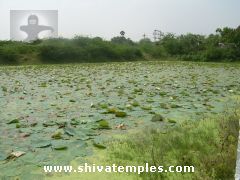
The presiding deity is enshrined as a Swayambhu Linga set upon a large Avudayar, whose base is exquisitely fashioned in the form of a lotus. Opposite the temple lie two sacred water bodies, Mallikai Theertham and Chandra Theertham, both held in great reverence by devotees. According to legend, Chandra, the Moon god, was afflicted by a curse from Daksha and sought relief by bathing in the holy waters of Mallikai Theertham. He subsequently worshipped the presiding deity with deep devotion, praying for deliverance from the effects of the curse.
Special Features and Festivals
Sun Rays on the Deity
Between April 2 and April 7, and again from September 5 to September 11, the rays of the sun fall directly upon the presiding deity, creating a spiritually significant phenomenon. Devotees believe that worshipping Devanatheshwarar helps remove doshas—negative planetary influences. In particular, Guru Dosha, the adverse effect associated with the planet Jupiter, is believed to be greatly reduced through worship of Yoga Dakshinamurthy.
Temple Festivals
This temple is renowned for the grand celebration of several significant occasions, including the annual transit of the planet Jupiter, Maha Shivratri, Arudra Darshan, Thirukarthikai, and Aadiperku. Each of these festivals is observed with great enthusiasm, ritual splendour, and deep devotion, drawing devotees from near and far.
Map connecting Tiruvalangadu, Tiruvirkolam, Elambayankottur, Thakkolam and Tirumarperu.
Gallery - Temple Features