Thripuranthakar temple, Tiruvirkolam
Location
Tiru-Vir-Kolam (Koovam)
Deity
Thripuranthakar
Female Deity
Thripuranthaki
Pathikam
Sambandhar - 1
Gallery - Thripuranthakar Temple
How to Reach
This Shiva temple is located about 19 km from Thiruvallur railway station. Buses operating on the Tiruvallur–Kancheepuram route pass through Perambakkam. Koovam lies adjacent to Perambakkam, and the temple is situated approximately 1 km from the Koovam bus stop, making it easily accessible by road.
Temple Address
Koovam Village
Kadambathur Post
Via Tiruvallur
Tiruvallur District
PIN – 631203
Temple Hours
Morning : 6:00 - 12:00
Evening : 5:00 - 8:00
Nearby Paadal Petra Shiva Temples
Temple Overview
The Koovam River Origin
The Shiva temple, commonly known as Koovam, is located in Tiruvallur District, about 50 km from Chennai. It is at this sacred spot that the Koovam River originates. However, as the river flows eastward toward Chennai, it gradually becomes polluted, losing the natural purity it possesses at its source near Koovam.
The Self-Manifested Linga
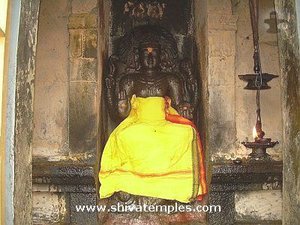
The presiding deity of the temple is a self-manifested (Swayambhu) Linga, which is never touched even by the priests. Because of this unique tradition, the deity is revered as “Theenda Tirumeni Nathar,” meaning “the one who is never touched.” Devotees believe that the Linga undergoes subtle seasonal color changes—appearing white during periods of heavy rainfall and taking on a reddish hue during times of conflict or distress, a phenomenon regarded as a divine omen reflecting changes in the world around it.
Blessings for Couples
Devotees visiting the temple are traditionally expected to first offer prayers to Thripurasundari before worshipping Thripuranthakar, in keeping with the temple’s sacred customs. The temple is widely regarded as a place of solace, harmony, and spiritual reassurance. It holds special significance for married couples, who believe that sincere prayers here can help resolve marital difficulties and restore understanding and unity through the compassionate blessings of the deity.
Temple Layout and Architecture
Temple Entrance
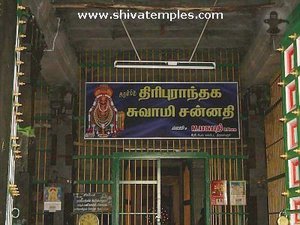
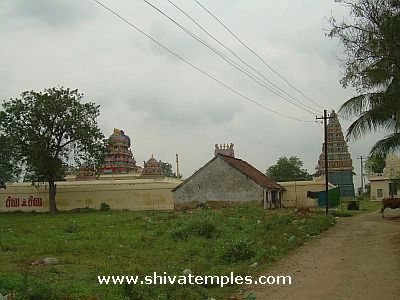
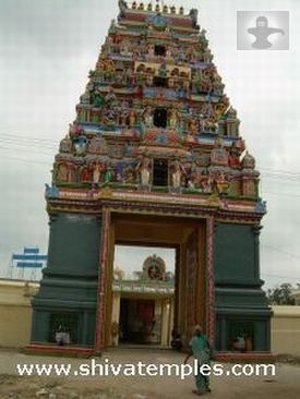
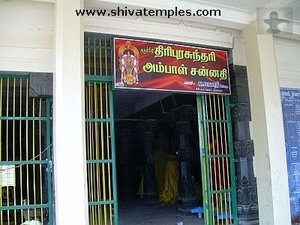
The southern gateway serves as the main entrance to the temple and is crowned by an impressive five-tiered rajagopuram. From the outer prakaram, an inner gateway leads devotees into two sanctums. The first is the sannidhi of the female deity Tripuranthanayaki, followed by the sannidhi of the presiding deity Tripuranthakar. Both are traditionally oriented toward the east, in keeping with Agamic principles.
Vimana and Sannidhis
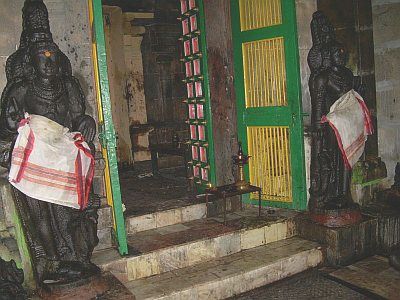
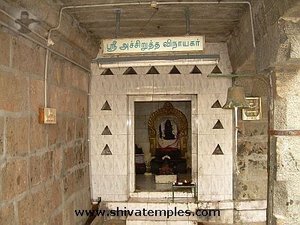
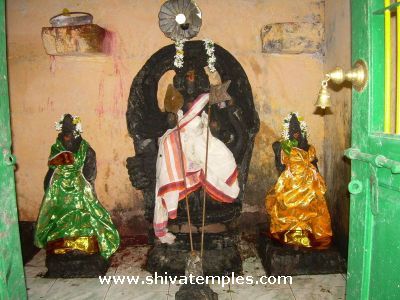
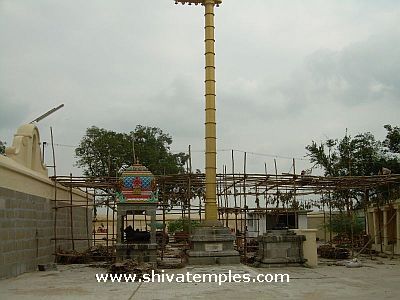
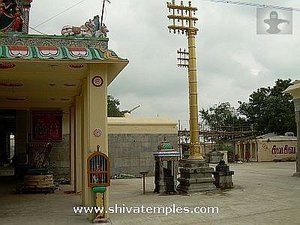
The vimana above the swamy sannidhi is exquisitely designed in the form of an elephant’s back, a distinctive architectural style known as gajaprushtam. Each sannidhi is complete with its own dwajasthambam (flagstaff) and balipeetam, and is encircled by a pradakshina path, allowing devotees to perform ritual circumambulation with ease. In the south-west corner of the prakaram is the sannidhi of Acchirutha Vinayaka. Uniquely, two sons of Taraka stand as dwarapalakas at the entrance of the presiding deity’s sannidhi—an unusual and symbolically rich feature that adds to the temple’s theological depth.
Sacred Sculptures
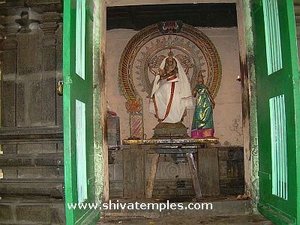
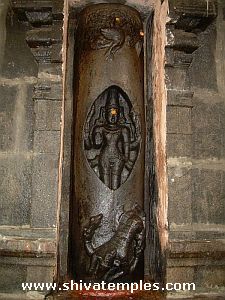
Adjacent to the entrance is the south-facing Nataraja sabha, where Nataraja is worshipped in a rare orientation. The exquisitely sculpted idols of Dakshinamurthy and Muruga with his consorts Valli and Deivanai are particularly captivating, reflecting refined Chola-period artistry. The rear wall of the sanctum displays a striking panel of LingothBhava, depicting Mahavishnu in his Varaha form and Brahma as a swan. This powerful imagery symbolizes their eternal quest to discover the beginning and the end of Shiva’s infinite pillar of light, underscoring the boundless nature of the Supreme.
Additional Shrines
Adjacent to the entrance is the south-facing Nataraja sabha, where Nataraja is worshipped in a rare orientation. The exquisitely sculpted idols of Dakshinamurthy and Muruga with his consorts Valli and Deivanai are particularly captivating, reflecting refined Chola-period artistry. The rear wall of the sanctum displays a striking panel of LingothBhava, depicting Mahavishnu in his Varaha form and Brahma as a swan. This powerful imagery symbolizes their eternal quest to discover the beginning and the end of Shiva’s infinite pillar of light, underscoring the boundless nature of the Supreme.
The Legend of Tripura Samhara
The Divine Mission
The historical and mythological significance of this temple is closely linked to the episode of Tripura Samhara. According to tradition, during the samhara, the divine chariot set out for battle met with an unexpected obstacle—the axle broke midway. This mishap was believed to have occurred due to the negligence of the devas, who failed to seek the blessings of Vinayaka before beginning their sacred mission. The episode serves as a profound reminder of the belief that no endeavor, however divine, can succeed without first honoring Vinayaka, the remover of obstacles.
Realization and Resolution
Realizing their grave oversight, the devas first sought the blessings of Vinayaka and only then resumed their journey toward the battlefield. The scriptures recount that Shiva, wielding a bow and arrow, manifested at this very spot during the episode of Tripura Samhara. Owing to this divine manifestation, the sacred place came to be known as Tiruvirkolam—the place where Shiva stood armed for battle. The Vinayaka enshrined here is venerated as Achirutha Vinayaka, a name that literally means “the one who removed the axle,” commemorating his pivotal role in removing the broken axle of the divine chariot and enabling the devas to proceed with their mission.
The Legend of Tripura Samhara
The Three Demons of Tripura
According to legend, three formidable demons—Vidyunmali, Tarukaksha, and Kamalaksha—resided in three impregnable, moving fortresses collectively known as Tripura. These celestial cities, fashioned from gold, silver, and iron, drifted through the skies, beyond the reach of ordinary weapons. From their invincible strongholds, the demons spread destruction across the universe, relentlessly tormenting the Devas. Unable to endure their suffering any longer, the distressed celestial beings sought refuge in God Shiva, earnestly appealing to him to destroy the tyrants and restore peace and balance.
The Divine Chariot
Answering their plea, a resplendent celestial chariot was prepared for the divine mission. The four Vedas transformed into four mighty horses to draw it, while Brahma assumed the role of charioteer. The Sun and the Moon became the right and left wheels, and beings from across the worlds gathered to adorn the chariot, forming a vast divine army. Each participant took pride in their role, convinced that their individual contribution would secure victory. Watching this quiet rise of arrogance, Shiva simply smiled—his calm, knowing expression a subtle reminder that all power ultimately rests with him alone.
The Benevolent Smile
That radiant smile of Shiva poured divine grace across all the worlds. Among the inhabitants of Tripura, those demons who remained steadfast in their devotion to him were granted protection and well-being, while those who turned away from devotion met their inevitable end. With nothing more than a gentle, effortless chuckle, Shiva reduced the three mighty fortresses to dust, marking the ultimate triumph of good over evil and the restoration of cosmic balance.
Temples associated with Tripura Samhara:
Sacred Waters and Rituals
Temple Theerthams
Two sacred water bodies are associated with this temple—Agni Theertham and Kopagni Theertham. Temple priests traditionally begin their daily rituals by bathing in Agni Theertham, which is believed to possess extraordinary sanctity. Local belief holds that this theertham never dries up, even during periods of severe famine, underscoring its spiritual potency and divine protection.
Abhisheka Practices
Water drawn from the Koovam River is traditionally used to anoint the presiding deity, emphasizing the sacred bond between natural resources and temple rituals. This practice highlights the belief that elements of nature themselves participate in divine worship. When water from the Koovam River is unavailable, tender coconut water is used as an alternative for the anointing process.
Sacred Milk Offering
Furthermore, milk sourced from the nearby village of Pinjavakkam is used during the midday rituals. The villagers regard the offering of milk not merely as a service, but as a sacred honor and collective responsibility, reflecting their deep-rooted devotion and enduring bond with the temple and its traditions.
Special Phenomena and Nearby Temple
Color-Changing Linga
In his pathikam, Gnanasaṃbandhar records that the Linga would turn white during periods of heavy rainfall or flooding and assume a red hue during times of warfare. In contemporary times, however, this remarkable color-changing phenomenon is no longer observed. It is also believed that during the performance of abhishekas, the natural sediments on the Linga of Tripura Samhara Murthy detach on their own, leaving the idol visibly clean and purified, a process devotees regard as divinely ordained rather than manually caused.
Kariya Manikka Perumal Temple
Just outside this temple stands another shrine—the Kariya Manikka Perumal Temple—dedicated to Mahavishnu. Legend holds that during Tripura Samhara, Mahavishnu swiftly intervened and held the divine chariot, preventing it from toppling when it faltered. This act of timely grace is commemorated through the presence of this Perumal temple, reinforcing the close theological and mythological bond between the two sacred shrines
Pathikam Reference
The pathikam composed by Tirugnanasambandhar for this temple is found in the 3rd Tirumurai, which forms part of the sacred Tirumurai corpus of Tamil Saivite literature.
Gallery - Temple Features