Umapatheeswarar temple, Tiruvooral (Takkolam)
Location
Tiruvooral (Takkolam)
Deity
Jalanatheswarar, Umapatheeswarar
Female Deity
Giriraja Kannikambal
Pathikam
Sambandar - 1
Gallery - Umapatheeswarar Temple
How to Reach
This Shiva temple is located about 29 km from Thiruvallur Railway Station and 7 km from Arakkonam Railway Station. Regular bus services are available from Thiruvallur to Thakkolam via Marimangalam–Perambakkam, as well as from Kancheepuram and Arakkonam.
Temple Address
Thakkolam Post
Arakkonam Taluk
Vellore District
PIN – 631151
Temple Hours
Morning : 8:00 - 12:00
Evening : 4:30 - 8:00
Nearby Paadal Petra Shiva Temples
Temple Layout and Architecture
Temple Complex
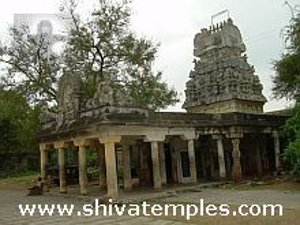
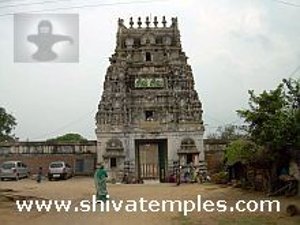
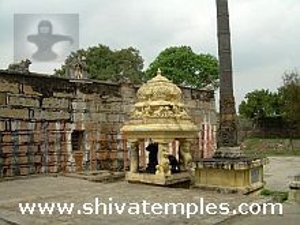
The Shiva temple spans an expansive area of about six acres along the banks of the Kuchasthalai River and is enclosed by protective walls on all sides. The temple is distinguished by its impressive three-tiered west-facing Rajagopuram and two concentric prakarams surrounding the sanctum. The outer prakaram is embellished with finely crafted stucco sculptures. Aligned along the western axis are the dwajasthambam, balipeetam, and Nandi, and a small opening is visible in the wall directly opposite Nandi.
Outer Prakaram Features
Nearby, a separate sannidhi for Vinayaka is present. The sannidhi of the Goddess is situated on the southern side of the outer prakaram, where Goddess Giriraja Kannigai stands facing north, bestowing protection through the gesture of Abhaya Varadam. Adjacent to her is the Subramanya sannidhi, with Valli and Deivanai by his side. An entrance located opposite the Goddess’s sannidhi leads towards the sanctum of the presiding deity. Along this path, devotees first offer prayers to Dwara Ganapati and Dwara Subramaniar, before proceeding to the Navagraha sannidhi.
Sanctum Deities
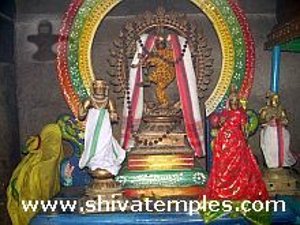
Further within the temple complex are the Utsava murtis of Somaskandar, Chandrasekhar, Bikshadanar, and the Nataraja Sabha. Beyond another gateway flanked by Dwarapalakas lies the sanctum sanctorum, which enshrines the sacred sand-formed Linga of the presiding deity. According to tradition, this Linga was fashioned from sand and is therefore treated with special care. To preserve its sanctity and structure, ritual Abhishekam is not performed directly upon the Linga; instead, the sacred ablutions are offered exclusively to the Avudaiyar.
Inner Prakaram and Deities
Sannidhis
The inner prakaram houses several sannidhis dedicated to deities including Shakthi Vinayaka, Subramanya, Pancha Linga, Mahalakshmi, Nataraja, Surya, Chandra, Bhairava, and the Saptha Mathas.
Goshta Murtha
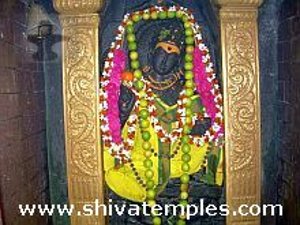
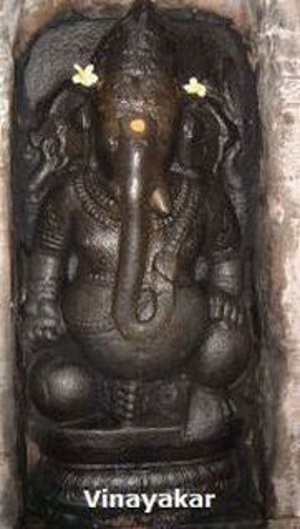
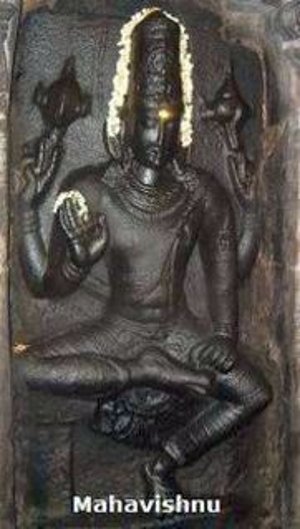
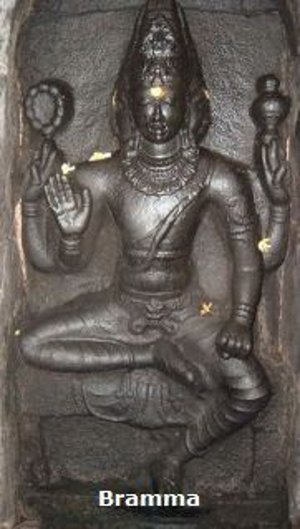
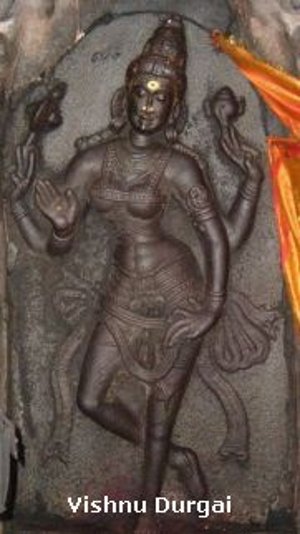
Encircling the sanctum, the Goshta murtis on the surrounding wall depict Vinayaka, Dakshinamurthy, Mahavishnu, Brahma, and Vishnu Durga. All are portrayed in seated postures, with the exception of Vishnu Durga, who stands in a graceful pose. Dakshinamurthy is shown with his right leg placed downward and the left leg folded, while Mahavishnu is depicted with the left leg down and the right leg folded, his right hand held in Abhaya Mudra, signifying reassurance, and his left hand resting on his thigh. Brahma is also seated, whereas Vishnu Durga stands elegantly—reminiscent of Krishna playing the flute—with one foot gently bent and the other placed upon Mahisha’s head, creating a striking and captivating visual.
Temple Legend
Sacred Origins
Thiru-Ooral, a place of great spiritual significance, is believed to have derived its name from remarkable divine events associated with the temple. According to local tradition, sacred water once flowed continuously from the mouth of Nandi, while another stream of holy water sprang forth from the earth beneath the presiding deity. These extraordinary manifestations sanctified the site and contributed to its revered status among devotees, eventually leading to the place being known as Thiru-Ooral.
Daksha's Yagna
This sacred site is also associated with the episode of Daksha’s Yagna. Filled with pride, Daksha performed a grand sacrificial ritual while deliberately excluding and disrespecting Shiva. Enraged by this insult, Shiva manifested Veerabhadra and dispatched him to destroy the Yagna and punish those who had participated in the sacrilege. According to local tradition, as Daksha realized the gravity of his actions and faced the consequences of his arrogance, he cried out in anguish, uttering the sound “Oh.” It is believed that this exclamation became associated with the locality, which later came to be known as Thakkolam.
Sathya Ganga Theertham
Adjacent to the northern boundary wall lies the revered water source known as Sathya Ganga Theertham, situated to the west of the Gangadharar shrine. This sacred spot holds special significance, as tradition holds that Nandi, following the guidance of Sage Uthathi, channelled the waters of the Ganga through his mouth. It is believed that even today, during periods when the Kallaru River flows in abundance, the water continues to pass through Nandi’s mouth, adding to the mystical and sacred aura of Thir-ural.
Historical Incident
This historic site is renowned as the battlefield of the Battle of Thakkolam, one of the most significant conflicts in South Indian history. Fought around 948–949 CE between the Chola Empire and the Rashtrakuta Empire, the battle marked a major turning point in the struggle for supremacy in the region. The conflict ended in a decisive Rashtrakuta victory and is particularly remembered for the death of the Chola crown prince Rajaditya Chola, who was killed while leading his forces on the battlefield. His death dealt a severe blow to Chola power and had far-reaching political consequences for the dynasty.
Map connecting Tiruvalangadu, Tiruvirkolam, Elambayankottur, Thakkolam and Tirumarperu.
Gallery - Temple Features