Panchanadeeswarar Temple, Tiruvaiyaru
Location
Tiruvaiyaru
Deity
Panchanadeeswarar, Iyaarappar
Female Deity
Dharmasamvardhini, Tripurasundari
Pathikam
Tirunavukkarasar - 12, Tirugyanasambandar - 5, Sundarar - 1
Gallery – Iyaarappar Temple, Tiruvaiyaru


How to Reach
The Shiva temple at Tiruvaiyaru is situated in the heart of Tiruvaiyaru town, about 12 km north of Thanjavur. The temple is well connected by frequent bus services from Thanjavur, while buses from Kumbakonam to Tiruvaiyaru operate at regular 30-minute intervals. The route from Thanjavur to Tiruvaiyaru also passes through Tirukandiyur, one of the revered Ashta Veeratta temples.
Temple Address
Thiruvaiyaru
Thiruvaiyaru Post
Thiruvaiyaru Taluk
Thanjavur District
PIN – 613204
Temple Hours
Morning : 6:00 AM - 12:30 PM
Evening : 4:00 PM - 8:00 PM
Nearby Paadal Petra Shiva Temples
Nearby Divya Desams
The Legend
Thiruvaiyaru, located about 15 kilometers from Thanjavur, derives its name from the five sacred rivers that flow through the region as tributaries of the River Kaveri. The presiding deity of this renowned temple is Panchanadeeswarar, affectionately known as Iyaarappar in Tamil. According to the temple legend, a king's chariot became firmly lodged in the ground at this site. While excavating the area around the wheels to free the chariot, workers discovered a self-manifested Shiva Lingam. Encouraged by his minister, the king continued the excavation and unearthed the divine idols of Goddess Dharmasamvardhini, Vinayaka, Muruga, and Nandi. To his astonishment, he also found a Siddhar immersed in deep meditation beneath the earth. The Siddhar instructed the king to build a temple at that sacred spot and revealed that sufficient wealth for the construction could be found beneath the hooves of Nandi. Following these divine instructions, the king established the temple, which later became one of the most revered Shiva temples on the northern bank of the Kaveri.
Another celebrated legend associated with Thiruvaiyaru relates to the great Saiva saints Sundarar and Cheraman Peruman Nayanar. When they arrived at Thiruvaiyaru, the River Kaveri was in spate, preventing them from crossing. Standing on the opposite bank, Sundarar fervently sang a devotional hymn seeking the grace of Shiva. Moved by his devotion, Vinayaka on the riverbank miraculously controlled the raging floodwaters, enabling the saint to cross safely and continue his pilgrimage. In remembrance of this divine intervention, the Vinayaka enshrined here came to be known as “Olamitta Vinayakar” (the Vinayaka who responded to the devotee's call). Thiruvaiyaru is also famed for a unique acoustic marvel within the temple premises. Devotees standing at the southwest corner of the third prakaram and calling out “Aiyarappa” towards the north can hear their voice echo seven times, a phenomenon that continues to inspire wonder and devotion among visitors.
Temple Layout
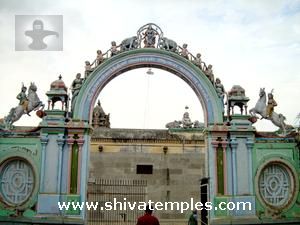
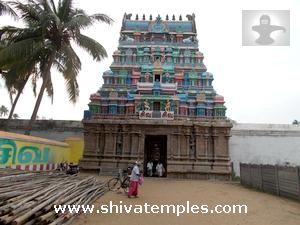
The magnificent Sri Iyaarappar Temple at Thiruvaiyaru occupies an expansive area of nearly 15 acres and is one of the largest and most celebrated Shiva temples in the Kaveri delta region. The temple is entered through a majestic seven-tiered Rajagopuram and is enclosed within five concentric prakarams. Revered for the greatness of its deity (Murthy), sacred site (Sthalam), and holy water bodies (Theertham), the temple enshrines numerous deities and sacred icons within its vast complex. The first prakaram is particularly noted for its revered Dakshinamurthy, while the second prakaram houses a separate sannidhi for Somaskandar along with the Pancha Bhootha Lingams, Saptha Mathas, Adi Vinayaka, Navagrahas, and sannidhis dedicated to Vinayaka, Subramanya, Nataraja, and other deities. The third prakaram features entrance towers on the eastern and southern sides, while the fourth prakaram contains the sacred Surya Pushkarani Theertham and the renowned Vada Kailayam e associated with Thirunavukkarasar. Four gopurams stand in the cardinal directions of this enclosure. The innermost fifth prakaram houses the east-facing sanctums of Iyaarappar and Goddess Dharmasamvardhini (Tripurasundari), each approached through beautifully adorned gateways.
Among the unique features of this temple is an unusual depiction of Ardhanareeswarar sculpted behind the vimana of the sanctum. Unlike the conventional form in which Shiva occupies the right half and Parvati the left, this rare representation places Shiva on the left and Parvati on the right. Another distinctive tradition observed here is the absence of circumambulation around the sanctum. Temple lore states that the matted locks of Shiva extend behind the sanctum, and devotees refrain from walking around it out of reverence for the divine presence.
Among the Shiva temples situated along the banks of the River Cauvery, six temples are traditionally regarded as being equal in holiness to Varanasi (Kashi) :
- Tiru-Chaai-Kaadu (Chaayaavanam)
- Tiru-Venkaadu
- Tiruvaiyaru
- Tiru-Vidai-Maruthur
- Mayiladuthurai
- Tiru-Vanjiam
Thiruvaiyaru is one of them.
Chola Heritage & Notable Features
Vadakailayam and Thenkailayam
The Thiruvaiyaru temple complex preserves several remarkable monuments that highlight the devotion and architectural contributions of the Chola dynasty. Within the temple are the celebrated Vadakailayam and Thenkailayam, both closely associated with the imperial Cholas. Vadakailayam, situated on the northern side of the third prakaram, was established by Queen Ulaga Mahadevi, the chief consort of the great Chola emperor Rajaraja I, and is also known as Ulaga Mathaveechuram. On the southern side stands Thenkailayam, which received significant patronage and renovation under Queen Panchavanmadevi, one of the queens of Rajendra Chola I. These shrines serve as enduring symbols of the spiritual devotion and cultural patronage of the Chola queens. The temple also features several architecturally significant mandapams, including the beautifully sculpted Sokkattan Mandapam located before the main sanctum and the impressive Nootrukaal Mandapam (Hundred-Pillared Hall) near the eastern entrance. Together, these structures showcase the artistic excellence and engineering skills of the Chola period. More than seventy stone inscriptions discovered within the temple provide valuable historical records of royal endowments, religious practices, and temple administration. Adding to the spiritual importance of Thiruvaiyaru is the samadhi of Saint Tyagaraja, one of the greatest composers of Carnatic music, which is located in the town and attracts devotees and music enthusiasts from across the world.
Presiding Deity & Goddess
The presiding deity, Iyaarappar (Panchanadeeswarar), is worshipped as a self-manifested Swayambhu Lingam and is revered as a Prithvi Lingam, representing the earth element. Owing to its sacred nature, the customary abhishekam is not performed directly on the Lingam. Instead, ritual ablutions are offered to the Avudayar, while the Lingam itself is reverentially anointed with fragrant punugu (civet) oil in accordance with ancient temple tradition. Similar worship practices are observed at other renowned Prithvi Lingam temples, including Thirukachi Ekambareswarar Temple and Thiruvarur Thyagaraja Temple. The divine consort, Goddess Dharmasamvardhini, is especially revered as the embodiment of righteousness and virtue. Temple tradition recounts that Shiva bestowed upon Her two 'naazhis' of rice, with which She performed the thirty-two acts of charity and virtue prescribed in the scriptures, thereby earning the name Dharmasamvardhini, “She who nurtures Dharma.” The Goddess is depicted in a unique form, with one hand gracefully resting on Her waist, while Her upper hands hold the conch and discus, attributes traditionally associated with Maha Vishnu. This distinctive iconography reflects Her universal divine nature and adds to the spiritual significance of the temple.
Special Sannishis
Tirupugazh Sthalam
Thiruvaiyaru is also revered as a celebrated Tirupugazh Sthalam, praised by Saint Arunagirinathar in his devotional hymns to Muruga. The deity is worshipped here in the distinctive form of Dhanu Subramaniya, a rare and majestic manifestation in which Muruga appears with four hands holding a bow, arrow, and spear, symbolizing His divine power to destroy evil and protect His devotees. Standing gracefully with a single serene face and accompanied by His divine peacock mount, He is flanked by His consorts Valli and Deivanai. This unique iconography have been extolled by Arunagirinathar, who sang in praise of the glory and compassion of the deity enshrined at this temple.
Hari-Guru-Shivayoga Dakshinamurthy
Among the most remarkable sannidhis within the temple is that of Hari-Guru-Shivayoga Dakshinamurthy, a rare and highly revered form of Dakshinamurthy. The deity is depicted with four arms, holding a kapala (skull bowl) and displaying the abhaya mudra in His right hands, while carrying a trident and the sacred Vedas in His left hands. Temple tradition recounts that after receiving the Sri Chakra through His intense devotion to Shiva at Thiruveezhimizhalai, Mahavishnu came to this place to receive profound spiritual instruction from Dakshinamurthy. Owing to this unique legend, the shrine symbolizes the transmission of supreme wisdom from the Guru of all Gurus. A distinctive feature of this icon is the image of a tortoise (Kurma) beneath the deity's feet, further enhancing its spiritual significance. Revered as a Guru Sthalam, the temple conducts special worship and abhishekams every month on the day of the Uttaratathi star. Devotees visit the shrine seeking the blessings of Dakshinamurthy for wisdom, education, prosperity, and the removal of obstacles, firmly believing that worship offered here dispels negativity and guides one towards spiritual growth.
Aatkondar Sannidhi
Another important sannidhi within the temple complex is the Aatkondar Sannidhi, situated near the southern entrance. Tradition holds that devotees should first worship Shiva in this form before entering the main temple. The sannidhi is associated with a fascinating legend in which Shiva manifested as Aatkondar to rescue a young boy named Sucharithan from a fearsome demon. As a result, devotees believe that worship at this sannidhi removes fears arising from evil influences, negative energies, and unseen obstacles. In front of the shrine is a sacred kundam (fire pit) where fragrant kungiliyam resin is continuously offered. Worshippers add their own offerings of kungiliyam into the kundam as an act of devotion, seeking divine protection, peace, and the grace of Aatkondar.
Sthala Puranam
Appar’s Vision of Mount Kailash
One of the most celebrated legends associated with Thiruvaiyaru concerns Saint Thirunavukkarasar (Appar) and his intense desire to behold the sacred abode of Shiva at Mount Kailash. Determined to reach the holy mountain, Appar journeyed northwards and eventually parted from his companions at Kasi, choosing to continue the arduous pilgrimage alone. As the terrain became increasingly difficult, he persevered with extraordinary devotion, even crawling when he could no longer walk. Moved by the saint's unwavering determination, Shiva decided to bestow His grace. Appearing in the guise of a sage, He advised Appar that the path ahead was nearly impossible and urged him to return. However, Appar declared that he would rather give up his life than abandon his quest without beholding Kailash. Pleased by such steadfast devotion, Shiva instructed him to bathe in a nearby pond. When Appar emerged from the waters, he found himself miraculously standing beside the sacred Surya Pushkarani Theertham at Thiruvaiyaru. There, Shiva granted him a divine vision of Mount Kailash and its celestial glory.
The Adi Shaiva Legend
Another remarkable legend connected with Thiruvaiyaru highlights the Deity's compassion towards His devotees. In ancient times, twenty-four Adi Shaivas were entrusted with performing the daily worship and rituals of the temple. When one of these priests departed on a prolonged pilgrimage to Kasi, the remaining priests unjustly appropriated his lands and possessions during his absence. Distressed by this injustice, the pilgrim's wife and son prayed earnestly to Shiva for protection and relief. Responding to their prayers, Shiva assumed the exact form of the absent Adi Shaiva and arrived at the temple carrying sacred Ganga water from Kasi. In this divine disguise, He performed the daily temple rituals, bringing comfort to the family and amazement to the townspeople. Some days later, when the real priest returned from his pilgrimage with Ganga water, confusion arose as two identical individuals appeared before the community. At that moment, the first priest suddenly disappeared, revealing Himself to be Shiva. Through this miraculous act, the truth was established, the pilgrim's rightful property was restored, and His devotee was protected from injustice. Thiruvaiyaru is therefore revered as the sacred place where Shiva Himself performed temple worship in the guise of an Adi Shaiva, demonstrating His boundless grace and commitment to upholding dharma.
Tiruvaiyaru — A Saptha Sthana Sthalam
Thiruvaiyaru is the foremost among the celebrated Saptha Sthana Sthalams, a sacred group of seven Shiva temples located in and around the Thiruvaiyaru region. These temples are closely associated with the grand annual Saptha Sthana Festival, one of the most important religious events in the Kaveri delta. The festival commemorates the divine marriage of Nandikeswara, the sacred bull and foremost devotee of Lord Shiva, with Suyasayambikai. During this unique celebration, the processional deities of Lord Aiyarappar, Nandikeswara, and Suyasayambikai are carried in beautifully decorated glass palanquins and taken in procession to the other six Saptha Sthana temples. The deities from each of these temples join the procession, symbolizing the spiritual unity of the seven sacred shrines. The festivities culminate at the Thillaistanam Temple, where the assembled deities are welcomed with dazzling fireworks and the traditional Poochorithal (flower shower) ceremony.
The seven Saptha Sthana temples are:
- Thiruvaiyaru
- Tiru-Pazhanam
- Tiru-Nei-Daanam or Thillaisthanam
- Tiru-Poonthuruthi
- Tiru-Kandiyur
- Tiru-Chotruthurai
- Tiru-Vedikudi
As all these temples are situated within a short distance of one another, devotees can conveniently visit all the seven in a single pilgrimage circuit, making the Saptha Sthana Yatra a cherished spiritual experience.
Gallery – Iyaarappar Temple, Tiruvaiyaru