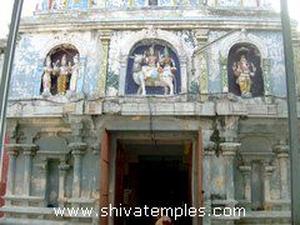
Brahmasirakandeesar Temple, Tiru-Kandiyur
Location
Tiru-Kandiyur
Deity
Brahma-Sira-Kandeesar, Veerattaneswarar
Female Deity
Mangala Nayaki
Pathikam
Tirunavukkarasar - 1, Sambandar - 1
Gallery – Brahmasirakandeesar Temple, TiruKandiyur


How to Reach
This Shiva temple is situated about 11 kilometers from Thanjavur and 3 kilometers from Tiruvaiyaru on the Thanjavur–Tiruvaiyaru road. Well-connected by frequent bus services from both towns, the temple is easily accessible to pilgrims and visitors. Adding to the significance of the area, Tirukkandiyur is also home to one of the revered 108 Divya Desams, located in close proximity to this ancient Shiva temple.
Temple Address
Thirukkandiyur
Thirukkandiyur Post
Via Tiruvaiyaru
Thanjavur District
PIN – 613202
Temple Hours
Morning : 6:00 - 1:00
Evening : 4:00 - 9:00
Nearby Paadal Petra Shiva Temples
Nearby Divya Desams
Temple Glory
Temple Legend
Tirukkandiyur is one of the celebrated Ashta Veeratta Sthalams, the eight temples where God Shiva is believed to have manifested His divine heroism through extraordinary deeds. According to the temple legend, Shiva, at the request of Goddess Parvati, severed one of the five heads of Brahma at this site to curb the latter’s pride and restore cosmic order. This heroic act earned the temple its distinction as Kandiyur Veerattam, and the presiding deity came to be revered as the One who subdued Brahma’s arrogance.
The Layout
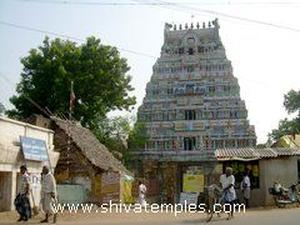
The temple faces west and is entered through an impressive five-tiered Rajagopuram that leads into the outer prakaram. Directly along the central axis are the Kodimaram, Balipeetam, Nandi, and Kodimara Vinayaka. Within this outer precinct, the sannidhi of Dhandapani is situated to the left inside the distinctive Vavval Nethi Mandapam, so named for its resemblance to a bat’s forehead. Nearby, the south-facing sannidhi of Goddess Mangala Nayaki enshrines the Goddess in a standing posture, bestowing blessings through the Abhaya and Varada Mudras, while a separate sannidhi for Vinayaka stands to the right. Passing through the inner gateway, devotees enter the inner prakaram, where sannidhis dedicated to Subramanya with Valli and Deivanai, Mahalakshmi, and the Nataraja Sabha can be seen. The circumambulatory path around the sanctum contains sannidhis for Vishnu Durga, Bhairava, various forms of Vinayaka, Surya, Ardhanareeswarar, and Chandeswarar, while the Goshta deities include Brahma, Lingodbhavar, Dakshinamurthy, and Bikshadanar. Beyond the entrance guarded by the Dwara Palakas, the Navagraha sannidhi features Surya with his consorts, and an image of Sage Sathathappa is also found nearby. The Artha Mandapam houses seven lingams representing the Saptha Sthana temples, five lingams symbolizing the Pancha Bhootha Sthalams, and an image of Kalathinathar associated with the sage’s worship. At the heart of the temple is the sanctum of Brahma Sira Kandeeswarar, who manifests as a self-originated (Swayambhu) Lingam of elongated form facing west. A particularly rare feature of the temple is the presence of Muruga on both sides of the sanctum entrance, adding to the temple’s unique significance.
Brahma & Saraswathi
One of the distinctive features of this temple is the presence of separate sannidhis for Brahma and Goddess Saraswathi, located adjacent to the sanctum of Brahma Sira Kandeesar. Here, Brahma is depicted in a majestic form, holding a lotus and a japa mala, while Goddess Saraswathi stands beside him, symbolizing wisdom, learning, and divine grace. According to the sthala purana, after Shiva severed one of Brahma’s five heads to quell his pride, Brahma undertook penance at this sacred site seeking forgiveness. Pleased with his devotion, Shiva not only absolved him but also blessed his remaining four faces with enhanced beauty and wisdom. Reflecting this important episode in the temple’s mythology, an image of Shiva in his fierce Vaduka form, representing the act of severing Brahma’s head, is enshrined opposite the main sanctum.
Sun Worship Festival
Every year, during the Tamil month of Maasi (February–March) on the 13th, 14th, and 15th, sun rays directly fall on the presiding deity between 5:45 PM and 6:15 PM, creating a divine spectacle.
Temple Puranic History
Saptha Sthanam Legacy
Tirukandiyur is recognized as the fifth temple among the Sapta Sthana Sthalams, with Thiruvaiyaru serving as the principal site.
Muruga Glory – Gyana Skanda
Muruga is depicted here in a distinctive iconographic form, holding a Japa Mala in his right hand and a Vajrayudha in his left. This representation is interpreted as symbolizing Gyana Shakti, the Power of Wisdom, leading to his appellation as Gyana Skanda.
Temple Glory – Adi Vilva Aranyam
According to temple tradition, Lord Shiva brought a sacred Vilva tree from Mount Kailash to fulfill the prayers of Sage Sadhatapa, giving rise to the temple’s ancient name, Adi Vilva Aranyam, meaning “the primordial forest of Vilva trees.” Sage Sadhatapa was a devoted worshipper of d Kalahasthinathar and regularly visited the famous temple at Kalahasthi on Pradosham days. On one occasion, when circumstances prevented him from reaching Kalahasthi in time, Shiva compassionately granted him the vision of Kalahasthinathar at Tirukkandiyur itself. The temple is also closely associated with the legend of Brahmahatthi Dosha, the sin incurred by killing Brahma or a Brahmin. According to the sthala purana, Shiva acquired this dosha after severing one of Brahma’s five heads. It is believed that the sin was ultimately removed at Tirukkandiyur through the grace of Mahavishnu, making this sacred site a symbol of divine forgiveness, redemption, and the harmonious relationship between Shaivite and Vaishnavite traditions.
Gallery – Brahmasirakandeesar Temple, TiruKandiyur