Mayuranathar temple, Mayiladuthurai
Location
Mayiladuthurai (also known as Mayavaram)
Deity
Mayuranathar
Female Deity
Abhayaambikai, Anjal Nayaki
Pathikam
Tirunavukarasar - 1, Sambandar - 2
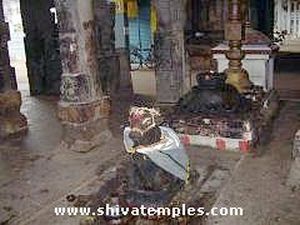
Gallery - Mayiladuthurai Temple


How to Reach
This Shiva temple is located in Mayiladuthurai, historically known as Mayavaram and Mayooram. The town is well connected by both road and rail to major cities across Tamil Nadu, making it easily accessible to pilgrims and tourists alike. Mayiladuthurai is also home to the renowned Tiru Indalur Parimala Ranganathar Temple, one of the 108 Divya Desams.
Temple Address
Mayiladuthurai
Mayiladuthurai Post
Mayiladuthurai Taluk
Mayiladuthurai District
PIN – 609001
Temple Hours
Morning : 6:00 AM - 12:30 PM
Evening : 4:00 PM - 9:00 PM
Nearby Paadal Petra Shiva Temples
Nearby Divya Desams
The Greatness of Mayiladuthurai
Mayiladuthurai—also known as Mayavaram and Mayuram—is a very ancient and sacred Shiva kshetra. The proverb "Even a thousand cannot equal Mayuram" itself reflects the greatness of this town. According to puranic tradition, this town was created by Brahma, and it is said that Brahma himself worshipped the presiding deity of this temple, Mayuranathar. Mayiladuthurai is one of the two places where Goddess Parvati is believed to have worshipped Shiva in the form of a peahen. The other is Tiru-Mayilai, in the Thondai region.
Considered on par with Kashi
Among the Shiva temples situated along the banks of the River Cauvery, six temples are traditionally regarded as being equal in holiness to Varanasi (Kashi) :
Sthala Purana - The Goddess as a Peacock
According to the Sthala Puranam, when Daksha performed a yajna without inviting or honoring Shiva, Goddess Parvati, against Shiva's wishes, attended the sacrifice and was humiliated there. Angered by this, Shiva instructed Her to undertake penance on the banks of the sacred River Kaveri for thirty days during the Tamil month of Aippasi. Assuming the form of a peahen (Mayil), the Goddess worshipped Shiva at this very spot. Since the Goddess performed Her penance here in the form of a peahen, the place came to be known as Mayiladuthurai. It is also believed that all the devas who had participated in Daksha's yajna incurred the consequences of their actions. Seeking absolution, they came to this kshetra, worshipped Mayuranathar, and, by His divine grace, were freed from their sins and restored to their former glory.
The Purification of Sacred Rivers
Once, as Sage Kannuva was on his way to bathe in the River Ganga, he encountered three young women in an unrefined guise. They bowed to the sage and revealed that they were none other than the sacred rivers Ganga, Yamuna, and Saraswati. They explained that the accumulated spiritual impurities of those who bathed in them had adhered to them, causing their appearance to change in this manner. Sage Kannuva advised them that in order to be freed from these impurities and to regain their original forms, they should bathe in the River Kaveri at Mayuram, located in the southern direction, during the Tula (Tamil month Aippasi). Acting upon his counsel, they immersed themselves in the sacred waters, whereupon the accumulated impurities were removed and they regained their true forms. It is believed that devas, sages, and divine beings such as Saraswati, Lakshmi, Gauri, and the Sapta Matrikas regularly come to bathe along the banks of the Kaveri at Mayuram.
Sacred Bathing in Tula Month (Aippasi)
Therefore, bathing in the River Kaveri at Mayiladuthurai during the Tula month (Aippasi) is considered highly auspicious. Among these, bathing on Kadaimugam, the final day of the Aippasi month, is regarded as especially auspicious. Even if one is unable to bathe in the river during the first twenty-nine days of the month, it is believed that bathing in the Kaveri on the thirtieth and final day, and worshipping Mayuranathar along with Goddess Abhayambikai on that day, bestows liberation (moksha).
Mudavan Muzhukku - Divine Extension of Time
The first day of the Tamil month of Karthigai is observed here as "Mudavan Muzhukku". According to the Sthala Puranam, a physically challenged devotee, having heard of the spiritual merits of taking a dip in the River Kaveri during the Tula month (Aippasi), set out for Mayiladuthurai seeking relief from the burden of his past actions. Owing to his disability, he reached the sacred town only after the month of Aippasi had ended and Karthigai had begun. Distressed that he had missed the auspicious period and unable to return the following year, he prayed earnestly to Mayuranathar. Moved by the devotee's unwavering faith, Shiva compassionately granted an extension of one additional day beyond the prescribed time. The devotee then took a holy dip in the Kaveri and was freed from the burden of his past deeds. In remembrance of this extraordinary act of divine grace, through which Shiva suspended the customary time itself for the sake of His devotee, the occasion has since been celebrated as "Mudavan Muzhukku."
Nadasarma and Anavidhyambikai - Divine Guidance
On the final day of the Tula month, known as Kadaimugam, a devout couple, Nathsharma and Anavidhyambikai, journeyed to Mayiladuthurai to take the sacred bath in the River Kaveri. However, by the time they arrived, the auspicious bathing on the thirtieth day had already concluded. Deeply distressed, they remained at the temple and prayed fervently to Mayuranathar. That night, Shiva appeared in Nathasharma's dream and assured him that taking a dip in the Kaveri before sunrise on the following morning would bestow the very same spiritual merit and cleanse them of all impurities. Following the divine command, the couple bathed in the sacred river at dawn on the first day of the Tamil month of Karthigai. In commemoration of this sacred event, the tradition of taking a holy bath in the Kaveri during the early hours of the first day of Karthigai continues to be observed by devotees to this day.
Temple Structure and Architecture
Temple Layout
Mayuranathar temple at Mayiladuthurai is managed and maintained by the Thiruvavaduthurai Adheenam. The temple complex is enclosed by compound walls on all four sides, with a majestic eastern Rajagopuram and smaller, unfinished (mottai) gopurams on the other three sides. Including the surrounding streets, the temple has five prakaras. Upon entering through the Rajagopuram, the temple tank is seen on the left, while the Kumarakattalai office is on the right. The eastern Rajagopuram rises grandly with nine tiers, adorned with beautiful sculptures, while the inner gopuram has three tiers.
Unique Features
A distinctive feature of this temple seen in one of the walls surrounding sanctum as the Goshta Murtha, is Jwaradeva positioned near the feet of Nataraja, an unusual arrangement not commonly seen. Nearby is Alingana Murthi. Beneath the feet of Goddess Durga lies Mahishasura, with two asuras positioned on either side—an exceedingly rare form of Durga.
Dual Chandikeswara
In this temple, two forms of Chandikeswara—Shiva Chandikeswarar and Tejas Chandikeswarar—are enshrined together in a single sanctum. As one circumambulates the prakara, the shrine of Ashtalakshmi can be seen, with Chattainathar positioned above her. Within the same prakara, there is also a Shiva Linga that is uniquely depicted as being worshipped by Maha Vishnu.
Nathasharma and Anavidhyambikai Sannidhi
In remembrance of the devout couple Nadasarma and Anavidhyambikai, a dedicated sannidhi for them is situated to the south of the Goddess's sanctum. According to the Sthala Purana, having granted the couple liberation and united them with Himself, Shiva further blessed them with a unique boon: devotees visiting Mayuram attain the full merit of their worship only after paying respects to this divine couple, following their reverence to all other deities within the temple complex.
Kumarakattalai - The Sannihi of Muruga
The Kumarakattalai within this temple is administered exclusively by the Dharmapuram Adheenam. The Asthana Mandapam belonging to the Kumarakattalai is situated in the inner prakara, to the north of the sanctum of Mayuranathar. Saint Arunagirinathar has glorified the Muruga enshrined here in a dedicated Tiruppugazh hymn. The deity faces east and is depicted with one face, four arms, and is accompanied by His consorts, Valli and Deivanai. Within the Kumarakattalai Mandapam, Periya Vinayaka is enshrined on the southern side, while Arumukha occupies the northern side.
Goddess Abhayambikai and Adi Mayuranathar
Along the northern wall of the outer prakara, facing east, is the sannidhi of Adi Mayuranathar. Goddess Abhayambikai has a separate sanctum, where She is enshrined in a standing posture with four arms. Her upper hands hold the conch and discus, while Her lower left hand rests gracefully on Her thigh and Her lower right hand holds a parrot, as She bestows Her divine grace upon devotees.
Gallery - Mayuranathar Temple