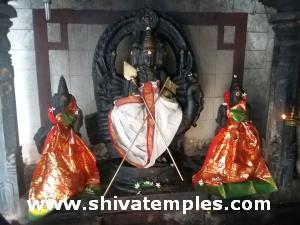
Vedhapureeswarar temple, Tiruvothur
Location
Tiruvothur (now known as Tiruvaththipuram)
Deity
Vedhanathar, Vedhapureeswarar
Female Deity
Bala Kusambikai, Elamulai Nayagi
Pathikam
Sambandar - 1
Gallery - Vedhapureeswarar Temple
How to Reach
This Shiva temple is situated on the banks of the River Seyyaaru, about 33 km south-west of Kancheepuram, along the Kancheepuram–Vandavasi bus route. The temple is located just 1 km from the Seyyaaru Bus Stand. Regular bus services are available from Kancheepuram.
Temple Address
Thiruvathipuram
Cheyyar Taluk
Tiruvannamalai District
PIN – 604407
Temple Hours
Morning : 6:00 - 12:00
Evening : 4:00 - 8:30
Nearby Paadal Petra Shiva Temples
Temple Layout and Significance
Nomenclature
The temple holds great historical and spiritual significance, as it is believed to be the sacred site where God Shiva imparted the teachings of the Vedas to the Devas and Sages. Owing to this divine act of preaching, the place came to be known as “Oththur,” meaning “the place of teaching or preach.” With the revered prefix “Tiru,” the sacred site is referred to as TiruOthur or Tiruvothur.
Temple Architecture
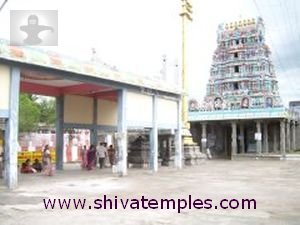
Situated on the northern banks of the Seyyaaru River, the temple complex extends over an area of about 5 acres. It features a majestic east-facing Rajagopuram with seven tiers, surrounded by two concentric prakarams. An elongated front enclosure lies beyond the main gateway, which leads to a secondary gopuram with five tiers, enhancing the grandeur of the temple layout.
Main Deities
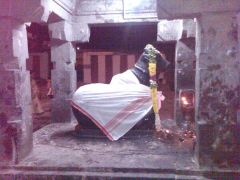
Located between the two gopurams are the Dwajasthambam, Nandi, and Balipeetam. Uniquely, Nandi faces the entrance rather than the presiding deity, symbolically serving as a guardian—preventing the unworthy from accessing the sacred wisdom of the Vedas. The presiding deity, Sri Vedhapureeswarar, is worshipped as a Swayambhu (self-manifested) Linga, enshrined on a square Aavudayar (the base or middle part of the Linga). This sacred kshetra is also revered as the site of God Shiva’s legendary valourous dance, adding to its profound spiritual and mythological significance.
Unique Feature - Nandi's Orientation
In this temple, Nandi faces the entrance instead of the presiding deity, symbolically acting as a guardian who restrains the unworthy from accessing the sacred knowledge of the Vedas. This distinctive orientation of Nandi is a rare feature, found only in very few Shiva temples.
Sthala Vruksham - The Sacred Palm Tree
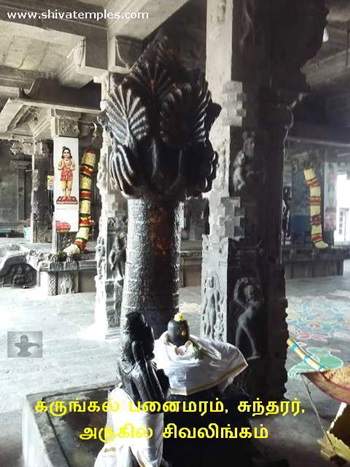
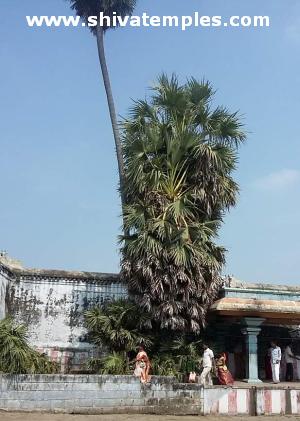
While circumambulating the inner prakaram, particularly at its south-eastern corner, devotees can see a remarkable sculpture depicting a palm tree beside a Shiva Lingam, with Thirugnanasambandar standing in reverence before the deity. This artistic representation commemorates a celebrated episode associated with the saint’s visit to the temple. According to tradition, Thirugnanasambandar met a devotee responsible for maintaining the temple grounds who had cultivated several palm trees within the premises. The devotee expressed his sorrow that the trees were all male and therefore unable to bear fruit. Moved by his concern, the saint sang a pathikam in praise of Shiva, and by divine grace, the male palm trees were transformed into female, fruit-bearing trees. This miraculous event is remembered through the sculpture, and the palm tree came to be revered as the temple’s Sthala Vruksham, holding a place of special significance in the temple’s sacred traditions. This is one of the five temples which have the palm as their associated sacred tree. The other four are:
The following temples have the palmyra tree (Panai Maram) as their Sthala Vruksham (sacred tree):
Prakaram Sannidhis and Deities
Goshta Murthas
The walls surrounding the sanctum are adorned with the traditional Goshta Murthas, including Vinayaka and Dakshinamurthy, who occupy their customary niches. The inner prakaram contains several important sannidhis dedicated to various deities and saints, reflecting the temple’s rich spiritual heritage:
- Vinayaka
- Subramanya
- Naganathar
- Nataraja
- 63 Nayanmars
- Saptha Mathas
- Pancha Bhootha Lingams
Pancha Bhootha Lingams - Special Significance
Among the sannidhis in the inner prakaram are the sacred Pancha Bhootha Lingams. Temple tradition holds that worshipping these five Lingams bestows spiritual merit equivalent to visiting the renowned Pancha Bhootha Sthalams of Kancheepuram, Tiruvannamalai, Tiruvanaikka, Chidambaram, and Kalahasthi.
Unique View from the Maha Mandapam
A distinctive feature of this temple can be experienced from the central portion of the Maha Mandapam, where devotees are blessed with a rare and unified darshan of Goddess Devi Balakusambikai together with Vinayaka, Muruga, and the Navagrahas. This exceptional spatial arrangement is considered unique to this temple and is not known to be replicated elsewhere.
NagaLinga - Remedies for Naga Dosha
The presence of the sacred Nagalingam in the inner prakaram adds a unique dimension to the temple’s spiritual significance. According to temple tradition, a notable event occurred in a nearby region known as Punathagaikuttu, where the Jains are said to have invoked a fearsome five-headed serpent from a sacrificial pit to challenge Thirugnanasambandar. In response, Shiva manifested as a snake charmer, effortlessly subdued the serpent, and safely escorted the saint into the temple. To commemorate this divine act of protection and grace, Shiva is believed to have established Himself here in the form of the Nagalingam. Devotees revere this sacred Lingam as a powerful remedy for Naga Dosha and other astrological afflictions. The presence of Sani Bhagavan opposite the Nagalingam further enhances the shrine’s importance as a parihara sthalam, with devotees believing that sincere worship here helps mitigate various doshas. Temple tradition also holds that lighting a lamp before the Nagalingam on Saturdays during Rahu Kalam can remove obstacles to marriage and bestow blessings for a harmonious married life.
Devi Balakusambikai - The Female Deity
Goddess Devi Balakusambikai is enshrined in a separate sanctum surrounded by its own prakaram, where she stands in a graceful posture with four benevolent hands, radiating divine compassion and bestowing blessings of protection and prosperity upon devotees.
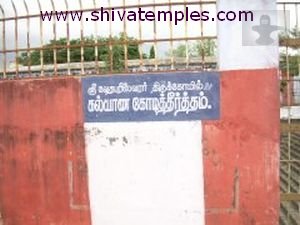
The temple is associated with two sacred water bodies: the Seyyaaru River, which flows near the shrine, and the Kalyanakoti Theertham situated within the temple premises.
Another notable feature of the temple is the presence of a sannidhi for Aadhi Keshava Perumal, reflecting the harmonious coexistence of Shaiva and Vaishnava traditions.
The sanctity of the temple is further enhanced by the belief that Muruga himself worshipped Sri Vedhapureeswarar at this sacred site. His shrine is located in the north-western part of the prakaram, where He is depicted facing east with twelve divine hands and accompanied by His consorts. The glory of this manifestation of Muruga was praised by the revered saint-poet Arunagirinathar in his celebrated Tiruppugazh hymns.
The temple is also glorified by the Thevaram hymns of Thirugnanasambandar, whose pathikam describing the miracle that transformed male palm trees into female, fruit-bearing ones is preserved in the 1st Tirumurai.
Gallery - Vedhapureeswarar Temple