Jambukeswarar Temple, Tiruvaanaikka
Location
Tiruvanaikaval
Deity
Jambukeswarar
Female Deity
Akilandeswari
Pathikam
Tirunavukkarasar - 3, Sambandar - 3, Sundarar - 1
Gallery – Jambukeswarar Temple, Tiruvaanaikka


How to Reach
This Shiva temple is situated near Srirangam in Trichy and is considered one of the Pancha Bootha temples associated with the five elements of nature.
Temple Address
Thiruvanaikaval
Thiruvanaikaval Post
Tiruchirappalli Taluk
Tiruchirappalli District
PIN – 620005
Temple Hours
Morning : 7:00 - 1:00
Evening : 3:00 - 8:00
Nearby Paadal Petra Shiva Temples
Temple Description
Temple Layout & Sanctum
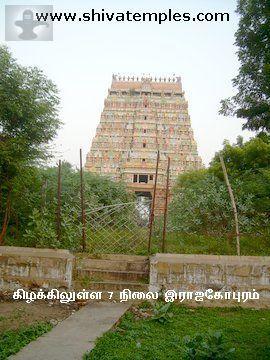
Tiruvanaikka, one of the most sacred among the Panchabhootha Sthalams, is a vast temple complex spread across nearly 18 acres. Surrounded by imposing fort-like walls and crowned with majestic towers facing the four cardinal directions, the temple stands as a remarkable example of architecture. The sanctum, which enshrines Jambukeswarar, is uniquely located below ground level. Owing to an underground natural water source, water continuously seeps into the sanctum, creating a serene and mystical atmosphere. Devotees pass through five spacious prakaras (circumambulatory corridors) before reaching the main sanctum, where Jambukeswarar is worshipped as the Appu Lingam, representing the Water element among the five primordial elements of creation.
Akilandeswari Sannidhi
In the fourth prakara stands the revered sannidhi of Goddess Akhilandeswari, gracefully facing east and radiating divine majesty. One of the most distinctive features of the Goddess is the pair of resplendent earrings, known as Thadakas, which immediately capture the attention of devotees. Temple tradition holds that these earrings, fashioned in the form of the sacred Sri Chakra, were installed by Adi Shankaracharya to transform and pacify the fierce aspect of the Goddess. It is believed that, in earlier times, Her intense divine energy inspired awe and fear among worshippers. To further balance and soothe this powerful manifestation, Vinayaka was installed facing Her sannidhi, while Muruga was positioned behind it, symbolically surrounding the Divine Mother with the presence of Her beloved children.
Daily Rituals & Worship
The daily rituals at Thiruvanaikka are rich in symbolism and steeped in centuries-old tradition. During Ushath Kala, the sacred period before sunrise, 'Go' Puja is performed, honoring and venerating cows as embodiments of divine beings. At Uchi Kala, the midday worship, the ritual of Annabhishekam is conducted with great devotion. The most distinctive and significant ceremony takes place during this Uchi Kala puja, when the Shivacharya, dressed in feminine attire and adorned to resemble Goddess Akhilandeswari, proceeds in a ceremonial procession accompanied by an elephant and the rhythmic sounds of traditional drums. Entering the sanctum of Jambukeswarar, the priest performs the sacred abhishekam, symbolically reenacting the Goddess’s eternal worship of Shiva at this temple.
Temple History & Legend
According to legend, the region now known as Tiruvanaikka was once a dense forest of jambu (jamun) trees, nourished by the waters of the River Cauvery and a tank called Chandratheertham. Beneath one of these ancient trees, Shiva manifested Himself as a self-existent Lingam, which came to be revered as Jambulingam. The legend further recounts the story of two of Shiva’s attendants, Pushpadanta and Malyavan, who were cursed and reborn as an elephant and a spider. Both became ardent devotees of the deity and worshipped the Jambulingam in their own unique ways. The elephant performed daily worship by offering flowers and bathing the Lingam with water brought from Chandratheertham, while the spider spun delicate webs above the deity to shield it from falling leaves and debris. Unaware of the spider’s devotion, the elephant repeatedly removed the webs, considering them unsuitable for worship. This led to a bitter conflict between the two devotees, culminating in a struggle that claimed both their lives. Pleased with their unwavering devotion, Shiva granted them liberation. The spider, however, was subsequently reborn as the celebrated Chola king Ko-Chenkannan. Retaining memories of his previous birth, the king became a great patron of Shaivism and is credited with constructing nearly seventy Maadakovils (elevated temples), including the renowned Jambukeswarar Temple at Tiruvanaikka. These temples were deliberately built with sanctums raised above ground level and accessible only by steep steps, preventing elephants from entering—an architectural feature believed to reflect the king’s memories of his earlier life as the spider-devotee.
The rich history of the temple is adorned with many fascinating legends. One such tradition narrates that, during the construction of the temple’s fourth enclosure wall, Shiva Himself appeared in the guise of a Siddhar and supervised the work. Upon completion of their tasks, the laborers were not paid with conventional wages; instead, the Siddhar distributed Tiru Neeru (sacred ash) to each worker. To their amazement, the sacred ash later transformed into gold, with the amount received corresponding to the sincerity and effort of each individual’s work. In remembrance of this divine miracle, the fourth enclosure wall came to be known as the “Thiruneetran Madhil” (the Wall of Sacred Ash).
Gallery – Jambukeswarar Temple, Tiruvaanaikka