Aadimoolanathar Temple, Tiru-Patrurai
Location
Tiru-Patrurai (present-day Tiru-Palathurai)
Deity
Aadimoolanathar
Female Deity
Megalambikai
Pathikam
Sambandar - 1
Gallery – AdiMoolanathar Temple, Tiruppattrurai
How to Reach
The Shiva Temple is located about 2 kilometers from Panayapuram, a village situated on the Tiruchirappalli–Tiruvanaikaval–Kallanai route. Although the temple is accessible by road, public transportation facilities from Panayapuram are limited. Therefore, devotees and visitors are advised to arrange private transport, such as an auto-rickshaw or taxi from Tiruvanaikaval, for a convenient and hassle-free journey to this temple
Temple Address
Thiruppalathurai
Thiruppalathurai Post
Via Thiruvanaikaval
Tiruchirappalli Taluk
Tiruchirappalli District
PIN – 620005
Temple Hours
Morning : 7:00 - 10:30
Evening : 4:30 - 8:00
Nearby Paadal Petra Shiva Temples
Temple Description
Temple Layout & Presiding Deity
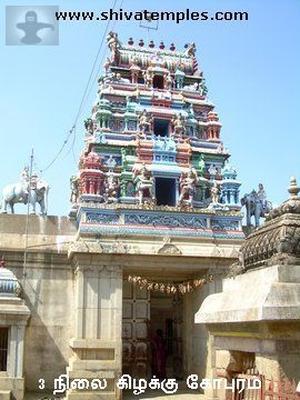
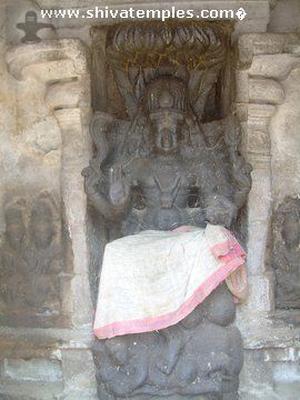
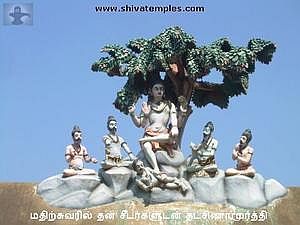
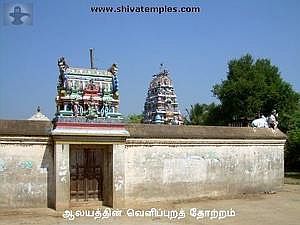
The temple is adorned with an impressive three-tiered east-facing Rajagopuram, which welcomes the rays of the rising sun each morning. In front of the temple stand a stone Nandi and Balipeetam. The presiding deity is enshrined in the sanctum as a Swayambhu Linga. A remarkable solar phenomenon occurs during certain days of the Tamil months of Purattasi and Panguni, when the sun’s rays fall directly upon the deity, creating a sacred and awe-inspiring sight. One of the temple’s most distinctive features is its rare depiction of Dakshinamurthy on the goshta walls of the sanctum. Unlike the conventional iconography, Dakshinamurthy is portrayed holding a Veena, the classical stringed instrument, and is not accompanied by the usual Sanakadi sages. This uncommon representation is especially revered by musicians and devotees of the arts, who offer special abhishekams and prayers seeking excellence in music and learning. A sannidhi for Bikshadanar is also found nearby. Another noteworthy aspect of the temple is the presence of Sankara-Narayanan, the combined form of Shiva and Vishnu, on the rear wall of the sanctum in place of the customary Lingodbhava. The temple prakaram further houses a sannidhi dedicated to Venugopala along with his consort Rukmini, reflecting the harmonious integration of Shaivite and Vaishnavite traditions within the temple complex.
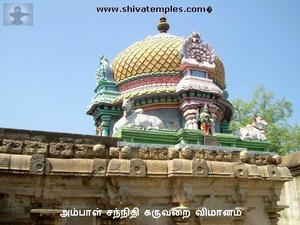
The Artha Mandap of the temple complex features an area known as the Deva Sabha, which is supported by four ornately carved artistic pillars. This space is believed to be the divine abode of Shiva, who resides here in his majestic form as the supreme ruler and king of all creation. In a south-facing sannidhi, stands the revered female consort deity Mekalambikai. She is depicted in a magnificent standing posture, adorned with four divine hands that symbolize her immense power and grace. Devotees who have experienced the profound grief of losing a child come to this temple with unwavering faith to conceive again, seeking the blessings of the compassionate goddess . They offer a yellow garment to the Goddess and perform dedicated worship at her sannidhi, believing that their sincere devotion will be rewarded with the gift of a healthy child blessed with longevity. On every full moon night, a special puja is conducted at Mekalambikai’s sannidhi, drawing fervent devotees from far and wide. Newlywed couples also participate, earnestly praying for the boon of virtuous and prosperous offspring to grace their lives.
Temple History & Legend
According to the Sthala Purana, a Chola king who ruled over this region was once passing through the area on a hunting expedition with his army. During a brief rest, the king’s attention was captured by a mysterious white bird that suddenly flew out from a nearby bush. Determined to capture this elusive creature, the king shot an arrow at it but the bird managed to escape unharmed. Several days later, when the king’s hunting party passed by the same location, he once again spotted the white bird. Believing the bush to be the bird’s dwelling place, the king concealed himself there, hoping to ambush and catch the creature when it returned. However, instead of the bird’s appearance, the king noticed the entire area was permeated with the aroma of milk. Perplexed and suspicious, the king cut down the bush only to discover a curious lump in the ground. Upon excavating the mound, a stream of milk burst forth from the earth, greatly alarming the king and causing him to hastily retreat back to his palace. That very night, as the king slept, God Shiva appeared to him in a dream as a disembodied voice, revealing that he existed in the form of a linga at the exact spot where the milk had flowed from the ground. Awestruck by this divine revelation, the king ordered the construction of a grand temple at that location and began worshipping the Shiva Linga that resided there. The deity became known as Patrurai Nathar, meaning “Lord of the Place of Milk,” in reference to the miraculous event that led to the discovery of the linga. Correspondingly, the site itself came to be called Patrurai or Palthurai. The Thala Purana also mentions that Kubera, the lord of wealth, visited Patrurai to offer his veneration to the deity as well.
It is said that when the revered sage Markandeya visited this temple to perform puja rituals honoring the deity, he found there to be an insufficient quantity of milk, which was necessary for properly carrying out the sacred rites. Faced with this impediment to completing his devotional act, Markandeya fervently prayed, and in response to the sage’s earnest pleas, God Shiva benevolently intervened, miraculously increasing the milk supply so that Markandeya could proceed with his rituals. This divine act too is the reason that the temple became known as Patrurai, which in the Tamil language means “the town of milk.”
Gallery – AdiMoolanathar Temple, Tiruppattrurai