Aamravaneswarar Temple, Tirumaanthurai
Location
Tiru-Maanthurai
Deity
Aamravaneswarar
Female Deity
Azhagammai, Balambikai
Pathikam
Sambandar - 1
Gallery – Aamravaneswarar Temple, Tirumaandurai
How to Reach
This Shiva Temple is situated at Tirumanthurai, about 3 kilometers from Lalgudi on the Tiruchirappalli–Lalgudi route, and approximately 15 kilometers from Tiruchirappalli. The temple is easily accessible by road, with frequent city bus services operating from Tiruchirappalli towards Lalgudi via Tirumaandurai.
Temple Address
Maanthurai
Maanthurai Post
Lalgudi S.O.
Lalgudi Taluk
Tiruchirappalli District
PIN – 621703
Temple Hours
Morning : 7:00 - 11:30
Evening : 4:30 - 7:30
Nearby Paadal Petra Shiva Temples
Temple Description
Temple Layout & Presiding Deity
The name “Amram” means mango, and since this region was once abundant with mango groves, it came to be known as “Manthurai.” This site is specifically referred to as “Vadakarai Manthurai” to distinguish it from another place of the same name located near Aduthurai on the Kumbakonam–Mayiladuthurai route. That temple, situated on the southern bank, is known as “Thenkarai Manthurai” and is revered as a Thevara Vaippu Sthalam.
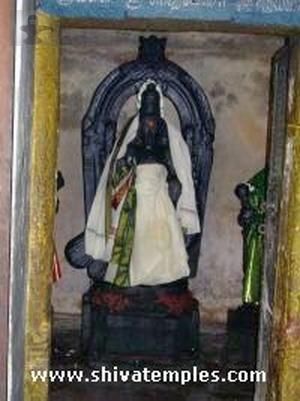
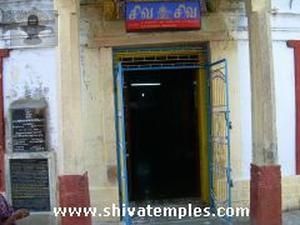
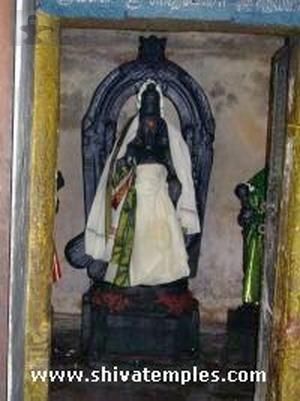
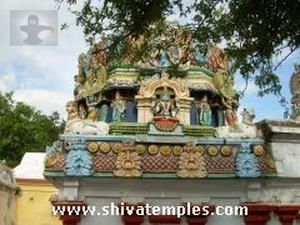
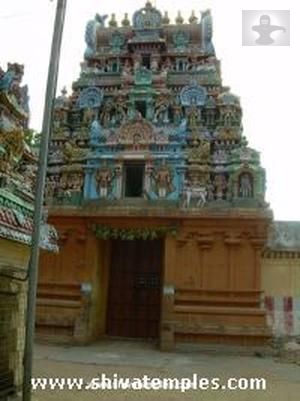
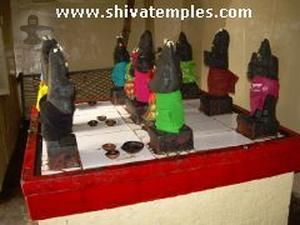
The temple features an east-facing Rajagopuram. As devotees enter the complex, they can see beautiful mural paintings depicting the sage Mrugandu engaged in intense penance and worship of Shiva. The temple premises house the sacred Sthala Vriksham and sannidhis dedicated to Vinayaka, Muruga, Lakshmi, the Navagrahas, and Bhairava. The Goshta deities enshrined around the sanctum include Dakshinamurthy, Mahavishnu, Brahma, and Goddess Durga. Among the four principal Nayanmars represented in the temple, Sundarar is uniquely depicted holding a staff. The Navagraha sannidhis is another notable feature, where Surya Bhagavan is portrayed with his two consorts, while the other eight planetary deities face him in reverence. A separate shrine for Surya is also located nearby.
The presiding deity, Aamravaneswarar, is enshrined in the sanctum as a Swayambhu Lingam and faces east. A remarkable solar phenomenon occurs during the first three days of the Tamil month of Panguni, when the rays of the rising sun fall directly upon the deity. The shrine of the Goddess faces south. The temple celebrates several important festivals throughout the year, including Aadi Velli, Navaratri, Annabhishekam, the Mondays of the Karthigai month, Tiruvadhirai, and Maha Shivarathri, attracting devotees from far and wide.
Tirupugazh Sthalam
The western section of the prakaram (circumambulatory path) is home to the magnificent sannidhi of Muruga. Here, the deity stands majestically at 5 feet tall in an impressive posture, displaying four divine hands and flanked by his beloved consorts, Valli and Deivanai. This powerful representation of Muruga has been gloriously praised by the poet Arunagirinathar in his renowned Tirupugazh hymns.
The Significance
According to temple legend, Brahma, the creator deity, once falsely claimed that he had seen the crown of Shiva’s infinite form. Angered by this untruth, Shiva cursed Brahma. Seeking forgiveness and redemption, Brahma came to this place and performed intense penance, eventually receiving the deity’s grace. Another legend is associated with Samyadevi, the consort of Surya, the Sun God. Unable to bear the brilliance and intense radiance of her husband, she sought refuge here and undertook severe austerities. Through her devoted penance, she was blessed with the strength to withstand Surya’s powerful effulgence. The temple is also connected with Indra, the king of the Devas. Having incurred the curse of Sage Gautama for his improper conduct towards Ahalya, Indra worshipped the deity here and performed penance to obtain relief from the effects of the curse. In addition, it is believed that Surya himself came to this sacred shrine to worship the deity and seek absolution for the sin he had incurred by participating in Daksha’s Yajna. Owing to these divine associations, the temple is revered as a place of atonement, spiritual purification, and divine grace.
Temple History & Legend
According to the temple’s sacred legend, this region was once a dense forest filled with flourishing mango trees. A Maharishi who had been performing severe penance in this serene woodland incurred a grave sin and was consequently cursed to be reborn as a deer. He was born in this very forest to a demon couple who had themselves been transformed into deer as a result of their past misdeeds. One day, while the deer parents had gone in search of food, the young fawn was left alone in the forest. At that time, Shiva and Goddess Parvathi, assuming the guise of a hunter and huntress, released arrows that liberated the deer couple from their curse. Unaware of what had transpired, the young deer anxiously awaited the return of its parents. As night deepened and hunger overcame it, the helpless fawn cried out in distress. Moved by compassion, Shiva and Goddess Parvathi appeared before the young deer in the form of its parents. Goddess Parvathi lovingly fed the starving fawn, while Shiva comforted and protected it as a caring father. Thereafter, the Divine Couple revealed their true forms to the young deer, instantly freeing it from the curse and restoring it to its original state as a revered Maharishi. Overwhelmed with gratitude, the sage prayed that the divine couple should remain at the site in the form of a Swayambhu Lingam so that future generations could worship Him. Even today, a beautiful sculptural panel above the temple entrance commemorates this touching legend, depicting Shiva and Parvathi lovingly appearing as the deer’s parents and bestowing their divine grace upon the young fawn.
Special Day Worship
According to temple tradition, the liberation of the cursed demon couple and the Maharishi is believed to have occurred on a Tuesday that coincided with Chaturthi, the fourth lunar day of the fortnight. In remembrance of this sacred event, special pujas and worship services are conducted whenever Chaturthi falls on a Tuesday, drawing devotees from nearby regions and beyond. It is believed that sincere worship of Aamravaneswarar on this auspicious occasion helps devotees overcome the effects of past sins and karmic obstacles, leading them towards a life of purity, peace, and spiritual well-being. The pathikam composed by Sambandar on Tirumanthurai is included in the Second Thirumurai.
Gallery – Aamravaneswarar Temple, Tirumaandurai