Karkadeswarar Temple, Thirunthudevankudi
Location
Thirunthu-Devan-Kudi (now known as Nandankoil)
Deity
Karkadeswarar, Devadevesar
Female Deity
Arumarundhu Nayaki, Apoorva Nayaki
Pathikam
Sambandar - 1
Gallery – Karkateshwarar Temple, Tirundudevankudi


How to Reach
Tirundudevankudi, officially named Nandaangkovil, is a small village situated approximately 10 kilometres from Kumbakonam bus stand, surrounded by lush paddy fields and coconut groves. It is 2 km from the neighbouring Paadal Petra Shivasthalam at Tiruviyalur (Tiruvisainallur). Bus services are available from Kumbakonam directly to Nandaangkovil, and a well-maintained road connects the village from the nearby town of Tiruvisainallur.
Temple Address
Nandankovil
Thiruvisalur Post
Thirundhudevankudi
Kumbakonam Taluk
Thanjavur District
PIN – 612105
Temple Hours
Morning : 8:30 - 18:30
Nearby Paadal Petra Shiva Temples
Temple Layout
Setting and Outer Enclosure
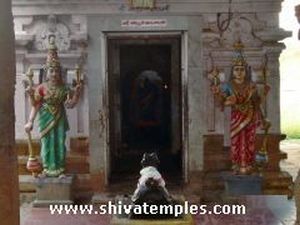
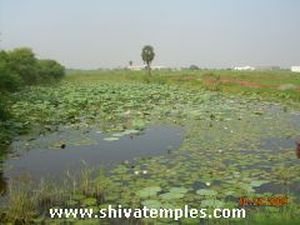
The Karkateshwarar temple stands amidst a tranquil expanse of paddy fields and has preserved its rustic charm and aura of sanctity. A moat filled with water surrounds the temple walls on three sides, serving as a natural protective barrier, while the eastern side remains open. The temple’s architecture reflects its evolution over time, with the original brick structure later renovated and fortified with stone. Upon entering through the first gateway, visitors are greeted by the sight of Vinayaka, the altar, and Nandi. The front hall houses two sannidhis dedicated to the goddess consorts — Goddess Arumarundu Nayaki and Apoorva Nayaki — both facing southward. Devotees believe that consuming the sacred water offered to Goddess Arumarundu Nayaki during abishekam can cure ailments; this anointing water is made available for purchase within the temple premises.
Inner Sanctum and Shrines
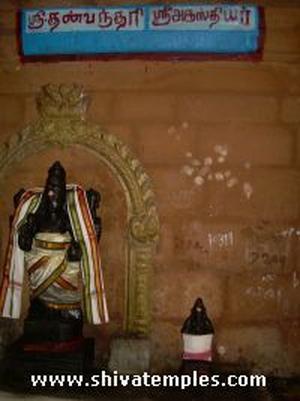
Passing through the second gateway, one enters the inner sanctum where the presiding deity, Karkateshwarar, is enshrined facing east. The western inner courtyard surrounding the sanctum features sannidhis dedicated to Ganapathi, Muruga, and Goddess Gajalakshmi. The Goshta Murthas of Dakshinamurthy and Durga face south and north respectively. The outer courtyard further accommodates sannidhis for Dhanvantari, the divine physician, and for Sage Agasthiya.
The Moon Deity – A Unique Representation
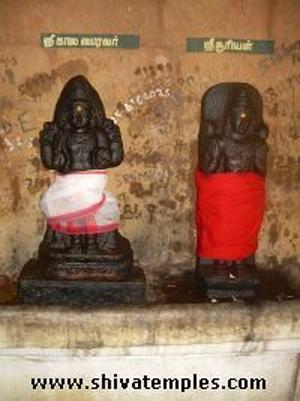
Tirundudevankudi is renowned as a place of worship for those seeking to alleviate the negative influences of the moon. Unlike most Shiva temples where the moon deity is depicted in a standing posture, here the moon is portrayed in a seated position engaged in yoga. This unique representation is believed to bestow all forms of yogic blessings upon devotees. Those born under the astrological sign Kataka (Cancer), encompassing the stars Punarpoosam, Poosam, and Aayilyam, are said to find special relief from all afflictions by visiting and offering prayers at this sacred site.
Sthala Puranam
Goddess Umadevi, Indra, and the Sacred Crab
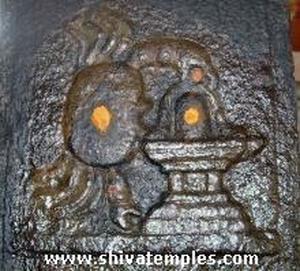
Nandaangkovil, known as Thirundudevankudi during the Thevara period, holds great significance for those born under Kataka Rasi (Cancer). According to the Sthala Purana, the temple was the site of a remarkable event involving Goddess Umadevi and the celestial god Indra. Umadevi once journeyed from Kailash to worship the deity here, assuming the form of a crab. She gathered lotus flowers that bloomed in the temple’s surrounding moat to offer in her devotions. Coincidentally, Indra arrived at the same time to pay homage to the presiding deity. Upon seeing a crab collecting the lotus blooms he had cultivated, Indra became enraged — unaware that it was Parvati in disguise. In his anger, he climbed atop the Shiva Linga and attempted to slay the crab with his knife. The first strike landed on the crab’s jaw, while the second fell upon the Linga’s forehead. Desiring to protect Umadevi in her crab form, Shiva created an opening at the apex of the Linga and merged the crab’s essence with his own divine being. Realising his grave error, Indra was filled with remorse and sought forgiveness — and so the temple came to bear the name Thirundu-devan-kudi, meaning the place where the deva Indra felt remorseful. A stone pillar within the temple bears a carving depicting a crab worshipping a Shiva Linga, forever commemorating this legendary event.
The Gandharva Cursed by Durvasa
A second legend is associated with this shrine. A Gandharva was cursed by the sage Durvasa for mocking him during his performance of Shiva puja. As penance, the Gandharva was transformed into a crab. Seeking redemption, he beseeched Durvasa for forgiveness. The sage instructed him to carry out Shiva puja using a lotus flower that bloomed in the temple moat. When Devendra, king of the gods, arrived simultaneously to offer worship and saw the crab using the lotus flowers he had planted, he flew into a rage and attempted to slay the creature. In a miraculous act of compassion, Lord Shiva created an aperture atop the Linga and allowed the Gandharva in crab form to seek sanctuary within. This act of divine grace not only spared the Gandharva’s life but also lifted Durvasa’s curse, granting him liberation and restoration to the celestial realms.
The Sacred Linga of Karkateshwarar
The Shiva Linga of the presiding deity Karkateshwarar bears the marks of these legends: its surface carries distinctive cut scars, and a mysterious opening can be observed at its apex. According to the Vasishta Mahatmiya, a remarkable phenomenon occurs when the Linga is anointed with precisely 21 jugs of milk from a KArAmpasu (a pure, fully black cow) during the auspicious confluence of Aadi Amavasya and Poora Nakshatra. It is said that if this ritual is performed at night, a crab miraculously emerges from within the Linga and appears atop the sacred stone. The esteemed scholar Dr. U.V. Saminatha Iyer further records that anointing the Linga with ten jugs of milk from a single-coloured cow will reveal an even more wondrous sight — a golden-coloured crab gracefully emerging at the pinnacle of the Shiva Linga.
Temple Significance
Reference in Sambandar’s Pathikam
The Karkateshwarar temple’s spiritual significance is affirmed by its inclusion in the Third Tirumurai, a collection of devotional hymns composed by the revered saint Tiru-Gyanasambandar in praise of Lord Shiva.
Healing Grace of Goddess Arumarundu Nayaki
The name Arumarundu Nayaki translates as the goddess who bestows rare and precious medicine. Devotees believe that the sacred abisheka water offered to her possesses curative properties and can heal ailments. This water is made available within the temple premises, drawing pilgrims seeking relief from illness as well as those seeking her general blessings.
More Gallery – Karkateshwarar Temple, Tirundudevankudi