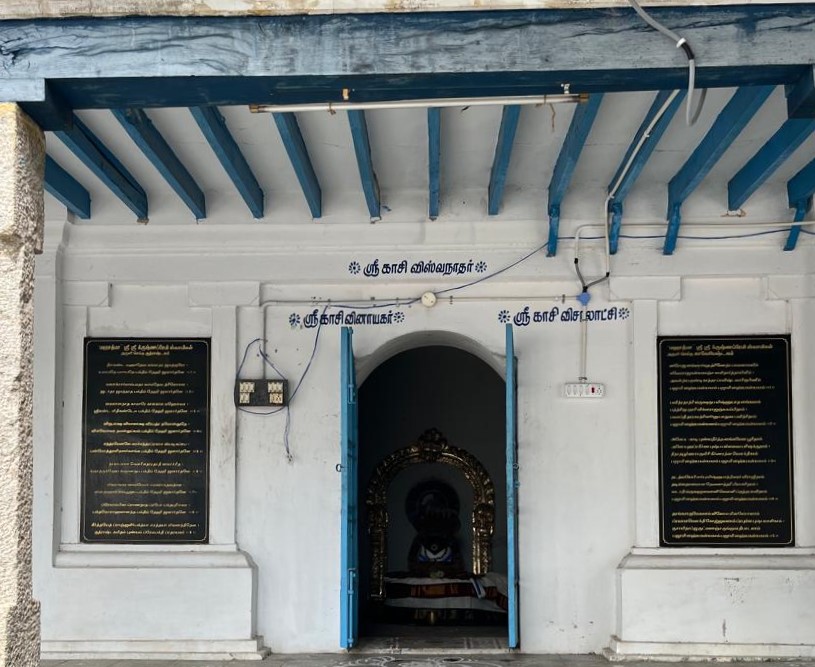
Satyagireeswarar Temple, TiruSeingyallur
Location
Tiru-Seingyallur (now known as Senganoor)
Deity
Satyagireeswarar
Female Deity
Sakhi Deviyammai
Pathikam
Sambandar - 1
Gallery – Sathyagireeswarar Temple, Tiru-Seingyalur


How to Reach
Tiru-Seingyalur, also known as Chenganur or Senganur, is situated near Kumbakonam and is easily accessible by road. Kumbakonam, a major town with excellent bus and rail connectivity, serves as the nearest transport hub. From there, visitors can conveniently reach the temple by auto-rickshaw or other local transport services. The temple is also located close to Tiru-Aappadi, the revered temple associated with Chandesa Nayanar’s attainment of liberation, making it convenient for pilgrims to visit both temples during the same journey.
Temple Address
Senganur
Thiruppanandal Post
Thiruvidaimarudur Taluk
Thanjavur District
PIN – 612504
Temple Hours
Morning : 7:00 - 9:00
Evening : 5:00 - 7:00
Nearby Paadal Petra Shiva Temples
Nearby Divya Desams
Temple Layout
Architecture and Structure
The Sathyagireeswarar Temple is one of the Maada-Koil temples built by Ko-Chengat-Chola, and exemplifies the distinctive architectural style of this sacred type. The main temple building sits atop a raised platform, with the sanctum facing eastward in accordance with traditional orientation principles. Two prakarams are present — one encircling the main sanctum on the elevated level, and another at ground level surrounding the base of the platform. The temple’s core structure comprises the garbhagriha (sanctum), artha mandapa (intermediary pavilion), and maha mandapa (main hall).
Shrines and Sannidhis
Within the maha mandapa, sannidhis are dedicated to Nataraja, Bhairava, and the four principal Nayanmars. Notably, tapping the bronze idol of Bhairava produces an audible resonance. Along the raised prakaram are additional sannidhis housing Vinayaka, Subramanya, Gajalakshmi, and Chandeswara. The Chandeswara idol here is uniquely depicted bearing iconic attributes — adorned with a crescent moon, loose-flowing hair, jhumka earrings, and the sacred river Ganges flowing from the matted locks — all defining characteristics of the divine form revealed to Visarasarmar Nayanar. The presiding deity, Sathyagireeswarar, manifests as a self-emanated (swayambhu) Linga. In a departure from the typical layout, the sanctum of the goddess consort is situated in the outer prakaram at ground level.
Broader Significance of Seingyalur
Seingyalur is one of the five prominent Chola towns. It is also the birthplace of Periya-Vaachan-Pillai, who wrote the VyAkyAnams (commentaries) for the Nalayira Divya Prabandam, a collection of 4,000 Tamil verses composed by the 12 Alvars. A temple opposite the main shrine is dedicated to him.
Sthala Puranam
Birthplace of Chandesa Nayanar
Tiru-Seingyalur is the birthplace of Chandesa Nayanar, the first and foremost of the 63 Nayanmars. It was here that a divine soul named Visarasarmar was born to the pious couple Yechaththan and Pavithrai. From a tender age, Visarasarmar immersed himself in the profound wisdom of the Vedha Agamas, mastering their esoteric teachings and cultivating a deep appreciation for the sacred arts. One fateful day, while with his fellow scholars in a pasture, he witnessed a herdsman strike a cow. Moved by compassion, he gently admonished the herdsman and took upon himself the noble task of tending the cows. Under his loving stewardship the cattle flourished, their udders brimming with an abundance of milk.
Inspired by this bounty, Visarasarmar crafted a Shiva Linga from the silken sands by the banks of the river Manni, beneath the sheltering canopy of an Aththi tree, and reverently anointed it with the cows’ milk. A misguided onlooker reported this to the cow owners as wasteful, and they summoned Yechaththan. The following day, Yechaththan trailed his son and, enraged at the sight, raised his staff and struck him. Visarasarmar, lost in the rapture of his Shiva puja, remained wholly oblivious. Further inflamed, Yechaththan kicked the Shiva Linga — a grave Shiva aparatham. Recognising the gravity of the transgression even in his own father, Visarasarmar cast the staff before him; it miraculously transformed into an axe and severed Yechaththan’s leg. Undeterred, Visarasarmar completed his puja with single-minded focus. Moved by this supreme devotion, Lord Shiva manifested before him, enfolded him in a divine embrace, declared himself his father, and bestowed upon him the exalted title of Chandesa. In a gesture of ultimate grace, Shiva removed the garland from his own braided locks and placed it upon Visarasarmar, who thereafter became known as Chandesa Nayanar. Of all the 63 Nayanmars, Chandeshwarar Nayanar is the only one who has the suffix ‘Eeswarar’ attached to his name. The nearby temple of Tiru-Aappadi, where Visarasarmar worshipped the Shiva Linga and attained liberation, is in the vicinity.
Muruga and the Sarvashankara Weapon
Sathyagireeswarar Temple holds great significance as it is closely associated with Lord Muruga. According to legend, when Lord Muruga came to destroy the demon Suran, it was here that he received the powerful Sarvashankara weapon and the Rudra Pasupatha from his father Lord Shiva, in order to defeat Suran. The name “Sei” in Seingyalur refers to Lord Muruga, and the village itself was named “Sei-Nal-Oor” meaning the town that was auspicious for the divine child Muruga. Over time, the name evolved into its present form of Senganur. In the Vazhi-Nadai-Padalam of Skanda Purana, the unique features and importance of the Seingyalur temple are described in great detail. A large, separate shrine dedicated to Lord Muruga within the temple complex highlights his pivotal role in the temple’s history and the village’s name.
Temple Significance
Reference in Sambandar’s Pathikam
The First Tirumurai contains a pathikam composed by the revered saint Tiru-Gyanasambandar for this temple. The 7th stanza of this composition makes reference to the legend of Chandeshwara Nayanar, a devoted follower of Shiva.
Gnanasambandar’s Act of Reverence
The Periya Purana elaborates on a touching detail related to this temple: when Gyanasambandar was travelling to this place, upon reaching the birthplace of Chandeshwara Nayanar, he demonstrated his profound respect by stepping down from his palanquin and walking the remaining distance on foot. This humble gesture honoured the sanctity of Chandeshwara Nayanar’s birthplace, and underscores the deep spiritual bond and mutual admiration that existed among the Nayanmars. It also exemplifies Gyanasambandar’s humility — that despite his own exalted status as a saint, he recognised the greatness of his fellow devotees and the sacred spaces associated with their lives.
More Gallery – Sathyagireeswarar Temple, Tiru-Seingyalur