Mahalakshminathar temple,Tirunindriyur
Location
Tiru-Nindriyur
Deity
Mahalakshminathar, Jamadhagneesar, Parikeshwarar, LakshmiPureeswarar
Female Deity
LokaNayaki
Pathikam
Sambandar - 1, Tirunaavukarasar - 1, Sundarar - 2
Gallery – Mahalakshminathar Temple, Tirunindriyur
How to Reach
Tiru-Nindriyur is situated on the Sirkazhi – Mayiladuthurai route. The temple can be conveniently reached by road from both towns.
Temple Address
Tirunindriyur
Tirunindriyur Post
Mayiladuthurai Taluk
Mayiladuthurai District
PIN – 609118
Temple Hours
Morning : 7:00 - 1:00
Evening : 4:00 - 7:30
Nearby Paadal Petra Shiva Temples
Temple Overview
Entrance & Courtyard
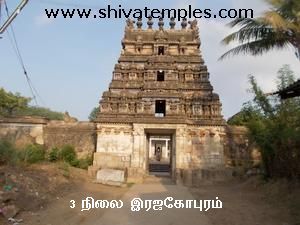
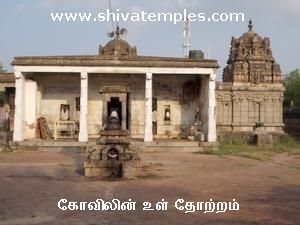
The temple’s majestic facade is adorned with a resplendent three-tiered Rajagopuram, serving as a grand entrance that leads devotees into the spacious courtyard housing the Balipeetam, Nandi, and Kodimara Vinayaka.
Sannidhis in the Outer Prakaram
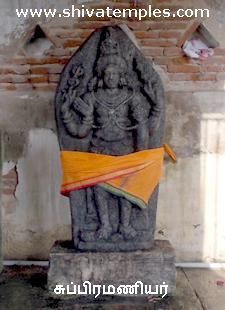
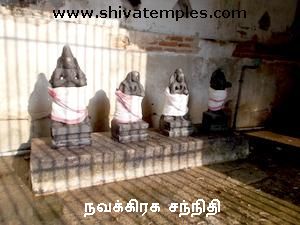
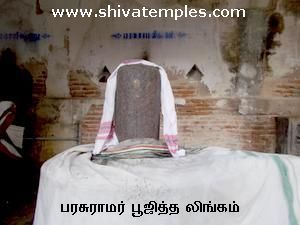
As devotees traverse the outer Prakaram, they are greeted by a series of sannidhis. Selva Pillayar graces the first sannidhi, followed by the sacred Lingam worshipped by Parasurama. The majestic Muruga, seated atop his celestial peacock mount, is accompanied by his consorts Valli and Deivanai. The revered Nayanmars and Mahalakshmi also have their abode within this precinct. Proceeding further, the sannidhi of the Navagraha comes into view. Bhairava and Chandra share a sannidhi within the temple complex.
Inner Sanctum
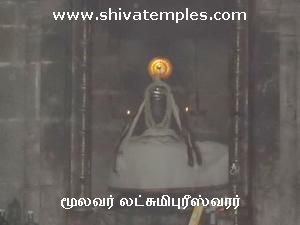
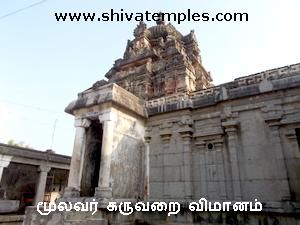
After completing the traditional circumambulation of the prakaram, devotees proceed towards the inner sanctum, where they first offer prayers to Dwara Ganapathy, Dwara Subramanya, and the ever-watchful Dwara Paalaks. The sacred precinct enshrines the sannidhi of the presiding deity at its heart, while the elegant sannidhi of the divine consort is situated gracefully to the right.
Significance & Sthala Purana
Parashurama & Jamadagni
Parasurama, the son of Jamadagni, committed the grave sin of slaying his mother Renuka in obedience to his father’s command. Tormented by the burden of matricide, Parasurama sought redemption through fervent prayers to Shiva. Meanwhile, Jamadagni, overcome with remorse for his harsh decree, also implored Lord Shiva to grant them absolution. Moved by the sincerity of their repentance, Shiva manifested before the penitent father and son and bestowed His divine grace upon them.
The very Shiva Lingam worshipped with deep devotion by Parasurama is enshrined within the prakaram and is reverently known as the Parashurama Lingam. The divine form of Jamadagneeshwarar — the Lord who manifested before Jamadagni — is worshipped in the form of a Lingam distinguished by its diminutive ‘Baana’. Situated close to the sannidhi of Jamadagneeshwarar is the sacred sanctum of Mahavishnu.
The Chola King & the Sacred Linga
According to the Sthala Purana, a devout Chola king who was an ardent worshipper of Nataraja undertook a daily pilgrimage to Chidambaram. His journey led him through a dense forest, where a mysterious phenomenon occurred each night — the fire-lit torches carried by the king and his entourage would suddenly extinguish upon entering the woodland, only to miraculously rekindle once they emerged beyond its boundaries.
Intrigued by this recurring mystery, the Chola king sought the counsel of a cowherd who tended cattle in the region. The herdsman revealed that at a particular spot within the forest, the cows would instinctively gather and offer their milk of their own accord, hinting at the presence of something divine. Moved by curiosity and reverence, the king ordered the area to be excavated. To his astonishment, a sacred Shiva Lingam was unearthed, and it is believed that blood flowed from the spot where the axe struck the Lingam during the excavation. Deeply distressed and filled with remorse, the king prayed earnestly for forgiveness. In response, he received divine guidance commanding him to build a temple at that very site. The magnificent temple that stands today is traditionally believed to have been erected by the Chola king as an act of devotion and atonement. Even now, devotees can witness the mark of the axe upon the sacred Swayambhu Lingam of the presiding deity.
Origin of the Name ‘Thirunindriyur’
Combining the Tamil words “thiri” meaning wick and “nindra” meaning stopped or extinguished—referring to the unique phenomenon where torch flames would suddenly cease to burn—this sacred place came to be known as “Thiri-Nindra-oor.” Over time, through continuous usage and linguistic evolution, the syllables gradually merged and transformed, eventually becoming the present-day name of Tiru-Nindriyur.
History & Thevara Hymns
Historical Background
During the period of the Thevaram hymns, the temple at Thirunindriyur is believed to have exhibited the architectural features of a Maadakoil, a distinctive style attributed to the Chola king Kochengat Cholan. Historical accounts further suggest that around a century ago, the Nagarathar community undertook significant renovation works at this sacred site, reshaping and reorganizing the temple complex into its present-day layout while preserving its spiritual essence.
Nayanmars & Pathikams
Tiru-Nindriyur is one of the revered 'Paadal Petra' Sthalam, sanctified through hymns composed by all three illustrious Saivite saints. The temple and its presiding deity are glorified in the devotional compositions of the three revered Nayanmars — Tirugyanasambandar, who composed one pathikam; Tirunavukkarasar, who also composed one pathikam; and Sundarar, who composed two pathikams, though one of his hymns survives only in a partially preserved form due to damage over time. In addition, Tiru-Nindriyur is mentioned in several other devotional compositions that praise the deity in neighbouring temples, further enhancing its spiritual significance within the Saiva temple tradition.
Sacred Narratives in Sundarar's Hymns
Sundarar’s hymns richly allude to several sacred traditions associated with Tiru-Nindriyur. These verses recall the legend of a spider attaining rebirth as a king after faithfully weaving a web over the Shiva Lingam, symbolizing unwavering devotion. They also reference the divine grace bestowed upon Tirunavukkarasar, Chandesura Nayanar, and Kannappa Nayanar, all of whom were blessed by God Shiva through their intense devotion. Further, the hymns recall the Sthala Purana of Parasurama worshipping at the temple, as well as the legend of a cow attaining divine union with Shiva after offering its milk to the Lingam. The glory of Indra is also mentioned, describing his worship and subsequent restoration to celestial sovereignty. In addition, the hymns refer to Sage Durvasa being granted residence in the sacred Podhigai Hills, along with the story of Airavata, who, cursed to become a wild elephant by Durvasa, ultimately regained his divine status through penance and devotion.
Gallery – Mahalakshminathar Temple, Tirunindriyur