Mukkona Natheswarar temple, Palliyin Mukkudal
Location
Palliyin Mukkudal
Deity
Mukkona Natheswarar
Female Deity
Anjanakshi
Pathikam
Tirunavukkarasar - 1
Mukkona Natheswarar Temple Photos


How to Reach
From Tiruvarur, take the road via Kadai Theru towards Kekkarai. After crossing the railway level crossing and reaching Kekkarai, continue for about 1 km along the same road. After crossing the small bridge, take the left fork where the road divides into two. Proceed for another 1 km along this road to reach the village. The temple can also be accessed via the Tiruvarur–Mayiladuthurai road.
Temple Address
Tiruppalli Mukkoodal
Kekkarai Post
Via Tiruvarur
Tiruvarur Taluk
Tiruvarur District
PIN – 610002
Temple Hours
Morning : 11:00 - 12:00
Evening : 6:00 - 7:00
Nearby Paadal Petra Shiva Temples
Temple Layout & Shrines
Temple Layout
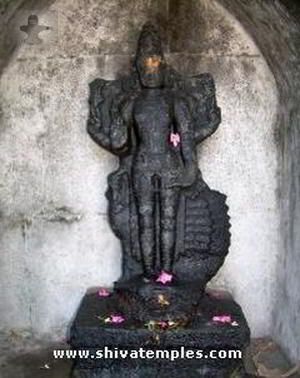
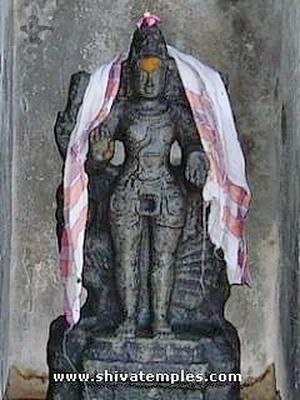
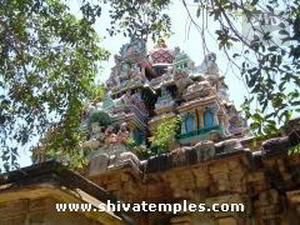
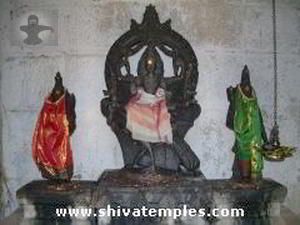
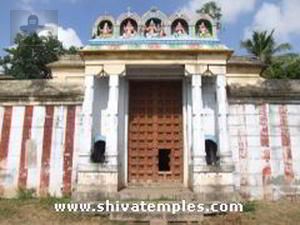
This temple does not have a Rajagopuram, but has a single entrance gateway facing east. The niches on either side of the gateway house idols of Ganesha and Muruga, while the façade above the entrance is adorned with stucco figures of Shiva, Rama, Jatayu, Ganesha and Subramanya. On entering the temple, the sannidhis of Surya and Chandra can be seen to the right. Proceeding through the inner mandapa, one comes directly to the sanctum, where the presiding deity, a beautiful Swayambhu Linga (self-manifested) of Lord Shiva, graces the devotees. A unique feature of the temple is that during the month of Masi, on the day of Shivaratri, the rays of the Sun fall directly upon the Linga. The outer prakara houses sannidhis for Naga, Bhairava, Sanaischara, Valli, Surya and Chandra, along with separate sannidhis for Arumukha with Valli and Deivanai, Subramanya, and Gajalakshmi.
Origin of the Name
In Sanskrit, the deity of this temple is known as Trinethra Swami, meaning the three-eyed Lord. Accordingly, the Tamil name should have been Mukkann Nathar. However, over time, the name became distorted in common usage and came to be known as Mukkona-Nathar, which has no apparent connection to the original name.
Sthala Puranam
Jatayu's Boon
The history of this temple is closely associated with Jatayu from the Ramayana, and hence the local people also refer to this place as “Kuruvi-Raameswaram”. It is believed that Jatayu performed penance here with the desire to bathe in the sacred waters of Kasi and Rameswaram at the same time, worship both holy places together, and attain liberation. Pleased with his penance, God Shiva appeared before Jatayu and told him, “When Ravana carries Sita away, you will try to stop him. He will then sever your wings, causing you to fall and die.” Hearing this, Jatayu prayed, “O Lord, if this happens, I will not be able to bathe in the sacred waters of Kasi, Ganga, Rameswaram and Sethu and receive their spiritual benefits. What shall I do?” In response, Shiva created the sacred Mukkoodal Theertham and instructed Jatayu to bathe in its waters. Jatayu did so and received the spiritual benefits he had sought. It is said that this legend is the reason why the locality came to be known as “Kuruviraameswaram”. The sacred tank opposite the temple is therefore regarded as being equivalent to the Triveni Sangam, where the Ganga, Yamuna and Saraswati are believed to meet. Bathing in these waters is said to bestow sixteen times the sacred merit associated with bathing in the waters of Ganga and Sethu, and hence the theertham is also known as “Shodasa Sethu”.
The Grace of Anjanakshi Amman
A queen named Tapovadhani worshipped Anjanakshi Amman at this temple, praying for the blessing of a child. Pleased with her devotion, the Goddess appeared as a beautiful child seated upon a lotus flower. When the child came of age, Lord Shiva is said to have appeared in the form of a Vedic scholar and married her.
The Glory of Mukkoodal Theertham
The Mukkoodal Theertham tank at this temple contains sixteen wells within it. Bathing in these sacred waters is believed to confer the merit of bathing in the Mahamagam Theertham. It is also believed that bathing in this tank on twelve Amavasya days and worshipping the Deity can remove obstacles related to childbirth and marriage. This is also one of the places where Rama is said to have performed the rites of offering water to his father, King Dasaratha. As performing Tarpanam for one's ancestors here is believed to confer the merit of performing it at Gaya, the place is also known as “Kekkara”.
Glory of the Thevaram Hymn
The Thevaram hymn on this sacred shrine, composed by Tirunavukkarasar (Appar), is included in the Sixth Thirumurai. In every verse, Appar poignantly reflects on his own life, expressing regret that he had wandered and struggled meaninglessly, without repeatedly contemplating and meditating upon the Lord who resides at Mukkoodal of Pallipadi.
Mukkona Natheswarar Temple Photos