Ganapatheeswarar temple, Tiruchengattankudi
Location
Tiru-Chengattan-Kudi
Deity
Ganapatheeswarar
Female Deity
Choolikambal
Pathikam
Tirunavukarasar - 1, Sambandar - 2
Ganapatheeswarar Temple Photos


How to Reach
This Shiva temple is situated about 9 km from Nannilam via Tiru-Pugalur, and approximately 4.5 km from Tiru-Pugalur. Another Paadal Petra Sthalam, Ramanatheechuram, is located about 2 km away.
Temple Address
Thiruchengattangudi
Thirukkannapuram Post
Nagapattinam Taluk
Nagapattinam District
PIN – 609704
Temple Hours
Morning : 6:45 - 12:00
Evening : 5:00 - 8:30
Nearby Paadal Petra Shiva Temples
Temple Layout
Outer Prakaram Layout
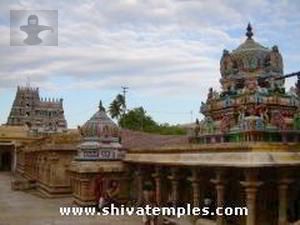
This east-facing Shiva temple is adorned with a five-tiered Rajagopuram. The temple tank, Sathya Theertham, is situated opposite the entrance. Just inside the Rajagopuram stands the temple's Sthala Vriksham, the sacred Athi tree. Also found here is a sculptural depiction of Siruthondar inviting Lord Shiva to partake of a divine meal. In the front mandapam, to the right, is the separate sannidhi of the Goddess, who blesses devotees in a graceful standing posture.
Shrines in the Inner Prakaram
The inner prakaram surrounding the sanctum houses the sannidhis of Bhikshadanar, Siruthondar, his wife Thiruvenkattu Nangai, their son Seeraladevar, and their attendant Santhana Nangai. The idols of the 63 Nayanmars are also enshrined here. Other sannidhis include those of Brahma, Arthanareeswarar, Siddhi Vinayaka, the Nalvar, and the Sanga-Paduma Nidhis. This temple is also home to the renowned and historically significant Vatapi Ganapathi, who is enshrined in a separate sannidhi.
Ashtamoorthy Mandapam
The Ashtamoorthy Mandapam in this temple is a remarkable hall that is well worth visiting. It houses exquisitely carved idols of Durga, Veeratta Lingam, Viswa Lingam, Bhujangalalithar, Gajasamharar, Oorthuva Thandavar, Kalasamharar, Kangalar, Bhikshadanar, Tripurari, Bhairavar, and Vinayaka.
A Thiruppugazh Sthalam
The saint-poet Arunagirinathar extolled Lord Murugan of this temple in his sacred Thiruppugazh hymns, dedicating one hymn specifically to the deity enshrined here. Murugan is enshrined in an east-facing sanctum with a single face and four arms, accompanied by His two consorts.
Sthala Puranam
The Slaying of Gajamukhasura and the Origin of the Temple's Name
Gajamukhasura, an elephant-faced demon, tormented the Devas, who sought refuge in God Shiva. In response to their prayers, Shiva sent His son, Ganesha, to slay the demon. Having slain Gajamukhasura, Ganesha incurred the dosha associated with taking a life. To atone for it, He came to Bhooloka (Earth), installed a Shiva Lingam, and performed intense penance. Pleased with His devotion, Shiva absolved Him of the dosha and, at Ganesha's request, manifested Himself as a Lingam at the very spot where Ganesha had worshipped Him. Since the Lord appeared in response to Ganesha's penance, He came to be known as Ganapatheeswarar, and the temple became famous as Ganapatheechuram. According to the Sthala Puranam, the blood of Gajamukhasura flowed across this region after he was slain, giving the place the name Tiru-Chengattan-Kudi, which literally means "the place that turned red."
The History of Vatapi Vinayaka
The renowned Vatapi Ganapathy enshrined in this temple is closely associated with the popularisation of Ganesha worship in Tamil Nadu. Paranjothi, the commander-in-chief of the Pallava king Narasimhavarman I, led a successful military campaign against the Chalukya king Pulikesi II and captured Vatapi, the Chalukya capital. As a symbol of victory, he brought the idol of Ganesha from Vatapi to Tamil Nadu and consecrated it in his native village, where this temple stands today. Since the idol was brought from Vatapi, the deity came to be known as Vatapi Ganapthy. A unique feature of this idol is its compact, tucked-in abdomen. Special pujas are offered to the deity every year on Vinayaka Chaturthi.
The Story of Siruthondar Nayanar
After returning victorious from the battle of Vatapi, Paranjothi renounced his military career and dedicated his life entirely to the service of Lord Shiva and His devotees. Because of his humble service, he came to be known as Siruthondar. Wishing to reveal the greatness of Siruthondar to the world, Shiva came to Siruthondar's house disguised as Bhairava. Siruthondar was away from home at the time, and his wife, Tiru-Venkattu Nangai, along with their maidservant, invited the visitor to partake of a meal. Bhairava declined, saying that he would not dine in a house where the master was absent, and waited beneath the sacred Athi tree in the temple.
When Siruthondar returned and learned what had happened, he respectfully invited the divine guest home. Bhairava agreed to dine only on the condition that Siruthondar prepare a meal using the flesh of his own son, Seeraladevar. Without the slightest hesitation, Siruthondar and his devoted wife obeyed the guest's command. Moved by their unparalleled devotion, Lord Shiva revealed His true form, restored their son to life, and blessed the family. Siruthondar was thereafter honoured as one of the 63 Nayanmars.
To commemorate this divine episode, the temple celebrates the famous Pillaikkari Amudhu Padaitha Vizha every year on the day of the star Bharani in the Tamil month of Chithirai. During the festival, a symbolic offering called Pillaikkari is prepared using roasted grated coconut and sixty-three medicinal herbs. After being offered to the deity, it is distributed as prasadam. Devotees believe that consuming this prasadam blesses childless couples with the boon of progeny.
The Legend of Uthirapasupatheeswarar
Aiyadigal Kadavarkon, the Pallava king who is also revered as one of the 63 Nayanmars, heard about the divine vision granted to Siruthondar and prayed for the same blessing. He was divinely assured that if an idol of Uthirapasupatheeswarar was consecrated on the day of the Thiruvonam star in the Tamil month of Chithirai, the Lord's divine presence in the consecrated idol would be revealed through the sweet fragrance of Champaka flowers.
When the sculptors attempted to cast the idol of Uthirapasupatheeswarar, they repeatedly failed to produce a flawless image. At that moment, a devotee approached them and asked for some water. Frustrated by their unsuccessful efforts, the sculptors mockingly handed him the molten metal mixture instead. The devotee drank it without hesitation and instantly transformed into the very idol they had been trying to create. Realising that the devotee was none other than God Shiva Himself, the king joyfully consecrated the idol in the temple. As divinely assured, the Lord's presence in the consecrated idol was revealed through the sweet fragrance of Champaka flowers. This annual celebration came to be known as the Champaka Flower Festival.
Uthirapasupatheeswarar is enshrined in a separate sannidhi to the right of the main deity, Ganapatheeswarar. The deity appears in a standing posture, clad in saffron robes and holding a bowl, a trident, and an udukkai (hourglass drum). According to the Sthala Puranam, while the sculptors were giving the finishing touches to the idol, they noticed a small projection on its forehead and attempted to chisel it away. To their astonishment, blood began to gush from the spot. Alarmed, they applied green camphor and saffron to the wound, whereupon the bleeding ceased. Even today, the deity bears this sacred mark on His forehead, and green camphor and saffron are applied to it only during the evening Sayaraksha Pooja. Abhishekam is performed for Uthirapasupatheeswarar only on ten sacred occasions each year—on the first day of the Tamil months of Chithirai, Aadi, Aippasi, and Thai, and twice each on Chithirai Bharani, Vaikasi Thiruvonam, and Aippasi Bharani.
Sacred Dance and Thevaram Hymns
Of the nine forms of Shiva's cosmic dance (Nava Thandavam), the dance performed at Thiruchengattangudi is known as Ubhaya Pada Narthanam. This temple has been glorified in three Thevaram hymns—two by Saint Thirugnanasambandar and one by Saint Appar. After worshipping at Thirunagaikaronam and Keezhvelur, Thirugnanasambandar arrived at Thiruchengattangudi, where he was warmly received by Siruthondar. Together they entered the temple and offered their worship to the deity. In one of his hymns Thirugnanasambandar praises, in every verse, the selfless service rendered by Siruthondar to the Lord of this sacred temple.
Ganapatheeswarar Temple - Gallery