Kadambavaneswarar temple, Tirukadambanthurai
Location
Tiru-Kadambanthurai
Deity
Kadambavana Natheswarar
Female Deity
Mutrila-Mulai-Ammai
Pathikam
Tirunavukarasar - 1
Gallery – Kadambavaneswarar Temple, Tirukadambanthurai

How to Reach
This Shiva temple near Kulithalai is at a distance of 42 kms from Karur and 34 kms from Trichy. Kulithalai is situated on the Karur–Tiruchirapalli section of the Southern Railway, making it easily accessible by both road and rail.
Temple Address
Kulithalai
Kulithalai Post
Karur District
PIN – 639104
Temple Hours
Morning : 6:00 - 1:00
Evening : 5:00 - 7:45
Nearby Paadal Petra Shiva Temples
Temple Description
Temple Layout
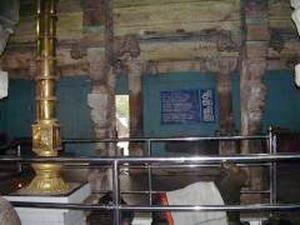
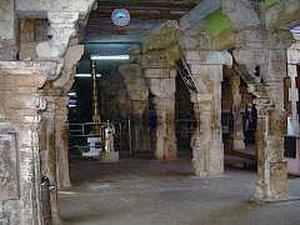
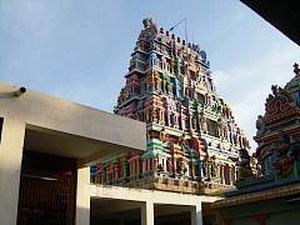
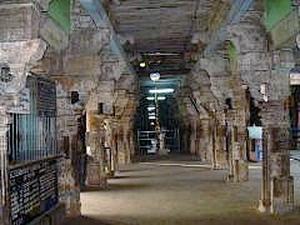
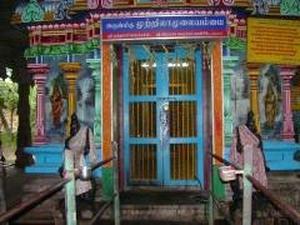
The Kadambavaneswarar temple, situated on the banks of the sacred Cauvery River, stands as a unique and remarkable testament to the rich spiritual heritage of the region. The temple's architectural grandeur is immediately evident upon approach, with its majestic five-tiered Rajagopuram rising towards the heavens, flanked by an expansive 16-foot mandapam that serves as a grand entrance. As devotees pass through the ornate gopuram gate, they are greeted by a long, inviting mandapam housing the temple's flagpole, altar, and the revered Nandi. Within the outer courtyard, nestled in the north-west corner, lies the sannidhi dedicated to Goddess Mutrila Mulaiammai, her serene countenance facing eastward. Proceeding through the next gate, devotees find themselves in the presence of the sanctum of the presiding deity Kadambavaneswarar.
North-Facing Sanctum & the Kasi Vishwanath Parallel
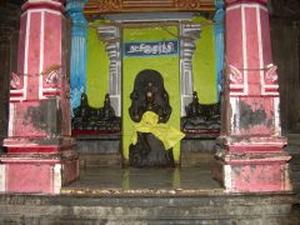
Unlike most Shiva temples, which traditionally face either east or west, this temple is oriented towards the north, mirroring the alignment of the renowned Kasi Vishwanath Temple on the banks of the holy Ganges. This distinctive northward orientation sets it apart as the sole temple along the Cauvery to embrace this northerly direction, lending the site a singular spiritual character among the Paadal Petra Sthalams.
Inner Prakaram & Sacred Icons
Behind the Linga of the presiding deity stand the stone statues of the 'Saptha Kanya', a group of seven celestial maidens; it was here that the 'Brahmahatti dosha' afflicting these seven maidens was alleviated, and so they take their place behind the deity. The inner prakaram of the temple complex is a treasure trove of further sannidhis, dedicated to Vinayaka, Subramanya, Navagraha, Jeshta Devi, the primary four Nayanmars, along with stationary and procession idols of all 63 Nayanmars. Kasi Viswanath and Goddess Gajalakshmi also have their own dedicated spaces within the prakaram. Two striking idols of Somaskandha, depicting Shiva with his consort Parvati and son Skanda, grace the prakaram, alongside two captivating Nataraja idols showcasing the cosmic dancer in his divine form – one featuring the demon Muylaka crushed underfoot, symbolizing the triumph of good over evil, while the other idol does not depict this scene.
The Sacred Kadamba Tree
The sacred Kadamba tree stands as a silent witness to the divine play unfolding within the temple precincts, with the Cauvery River as the associated sacred water body. This site holds immense significance, as it is believed that the presiding deity appeared before the sage Kannuva under the Kadamba tree, granting him a divine vision. Sage Kannuva, along with celestial gods, worshipped and venerated the deity here, seeking blessings and enlightenment. The temple's rich history also includes worship and veneration by Brahma, Mahavishnu, Muruga, the Saptha Kanyas, and Sage Agasthya, each of whom is said to have experienced the grace and benevolence of the presiding deity.
Temple History & Legend
The Legend of the Saptha Kanya & Dhumralochana
The legend of the Sapta Kanya and their battle against the demon Dhumralochana is a captivating tale that illustrates the complex interplay between divine beings, demons, and sages. When the gods were suffering under the tyranny of Dhumralochana, they beseeched Goddess Parvathy to intervene on their behalf. In response, Parvathy manifested in her fierce form as Durga and engaged the demon in combat. However, owing to a powerful boon Dhumralochana had received, he was able to fight Durga on equal footing, gradually sapping her strength. Recognizing her predicament, Durga summoned the Sapta Kanya to aid her in the battle, and their combined might proved too much for Dhumralochana, forcing him to flee into the forest and seek refuge in the ashram of Karthiyayana Maharishi.
The Sapta Kanya pursued the demon into the ashram, where they mistakenly identified the meditating sage as Dhumralochana in disguise. In a tragic case of misidentification, the Sapta Kanya slew the innocent sage, inadvertently committing the grave sin of Brahmahatti, the killing of a Brahmin. Realizing their error, the Sapta Kanya prayed to Goddess Parvathy for forgiveness and the removal of the curse that now afflicted them. The Goddess directed them to this very temple to offer their prayers to God Shiva and seek redemption. Appearing before the penitent maidens under the Kadamba tree, God Shiva lifted the curse from the Sapta Kanya, and at their request, went on to destroy Dhumralochana, bringing an end to his reign of terror.
Lord Muruga & the Tirupugazh
The revered Tamil saint-poet Arunagirinathar, in his Tirupugazh, composed a song extolling the glory of Lord Muruga enshrined at this ancient temple. This iconic representation of Muruga portrays him in his magnificent form with six divine faces and twelve mighty arms, standing majestically facing the eastern direction, flanked by his two consorts, Valli and Deivanai. Interestingly, the 'Urchava' idol, which is taken out in procession during festivals, presents a contrasting facet of Muruga – depicted with a single serene face, seated gracefully upon his vahana, the resplendent peacock. The Pathikam composed by Tirunavukkarasar in honour of this temple appears in the 5th Tirumurai.
The Triveni Pilgrimage Tradition
The three Shiva temples located near Kulithalai in the Karur district hold great significance as part of a revered pilgrimage circuit. According to tradition, visiting and worshipping at all three temples on the same day – in the morning, afternoon, and evening respectively – is considered highly auspicious. The northernmost of the three, Tiru-Eengoi-Malai, sits on the northern bank of the Cauvery River, while the remaining two temples, Tiruvatpokki and Tirukadambanthurai, are situated on the river's southern bank. The prescribed order of visitation commences with Tirukadambanthurai in the morning, followed by Tiruvatpokki at noon, and culminates with Tiru-Eengoi-Malai in the evening.
Gallery – Kadambavaneswarar Temple, Tirukadambanthurai