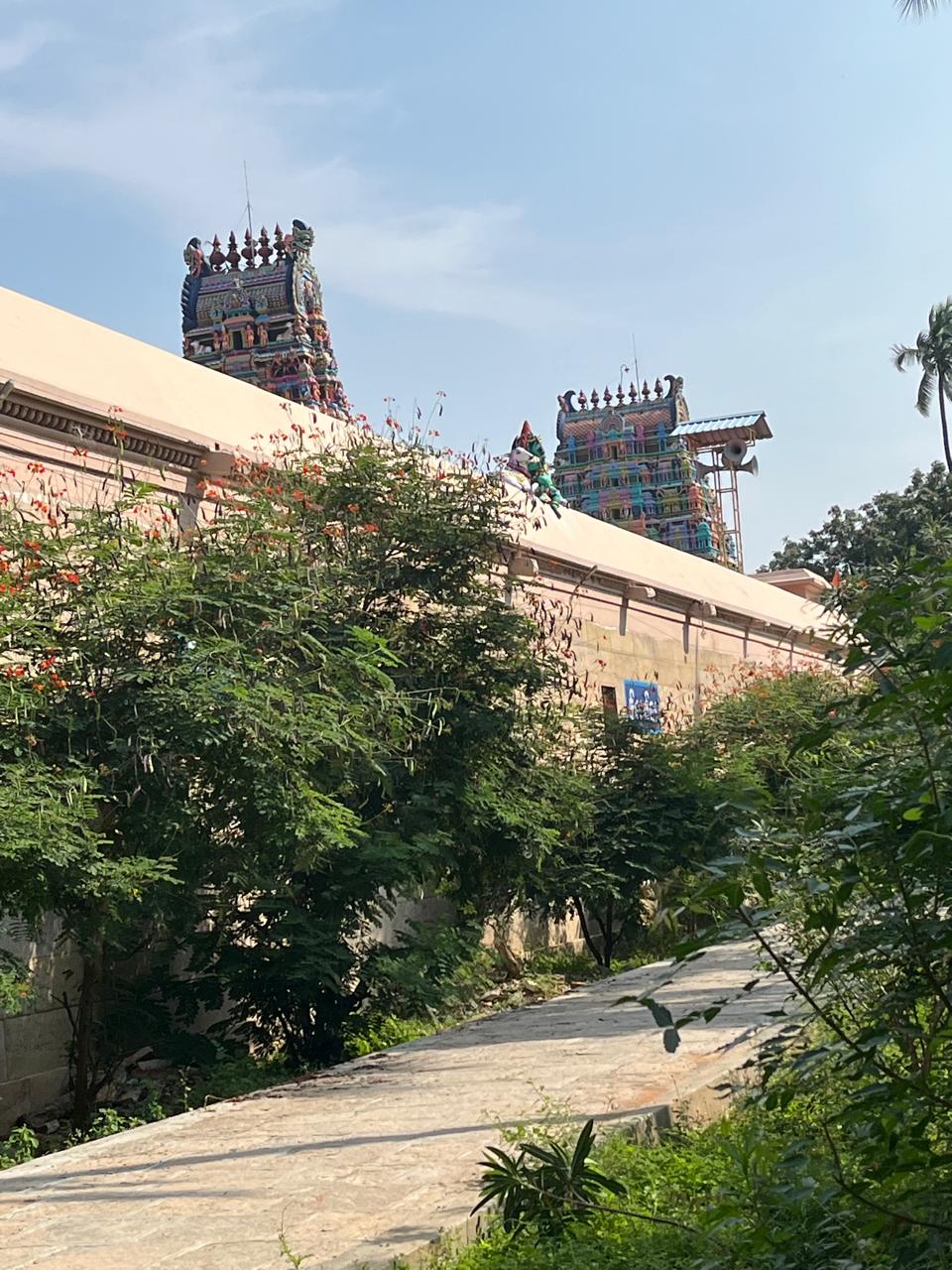
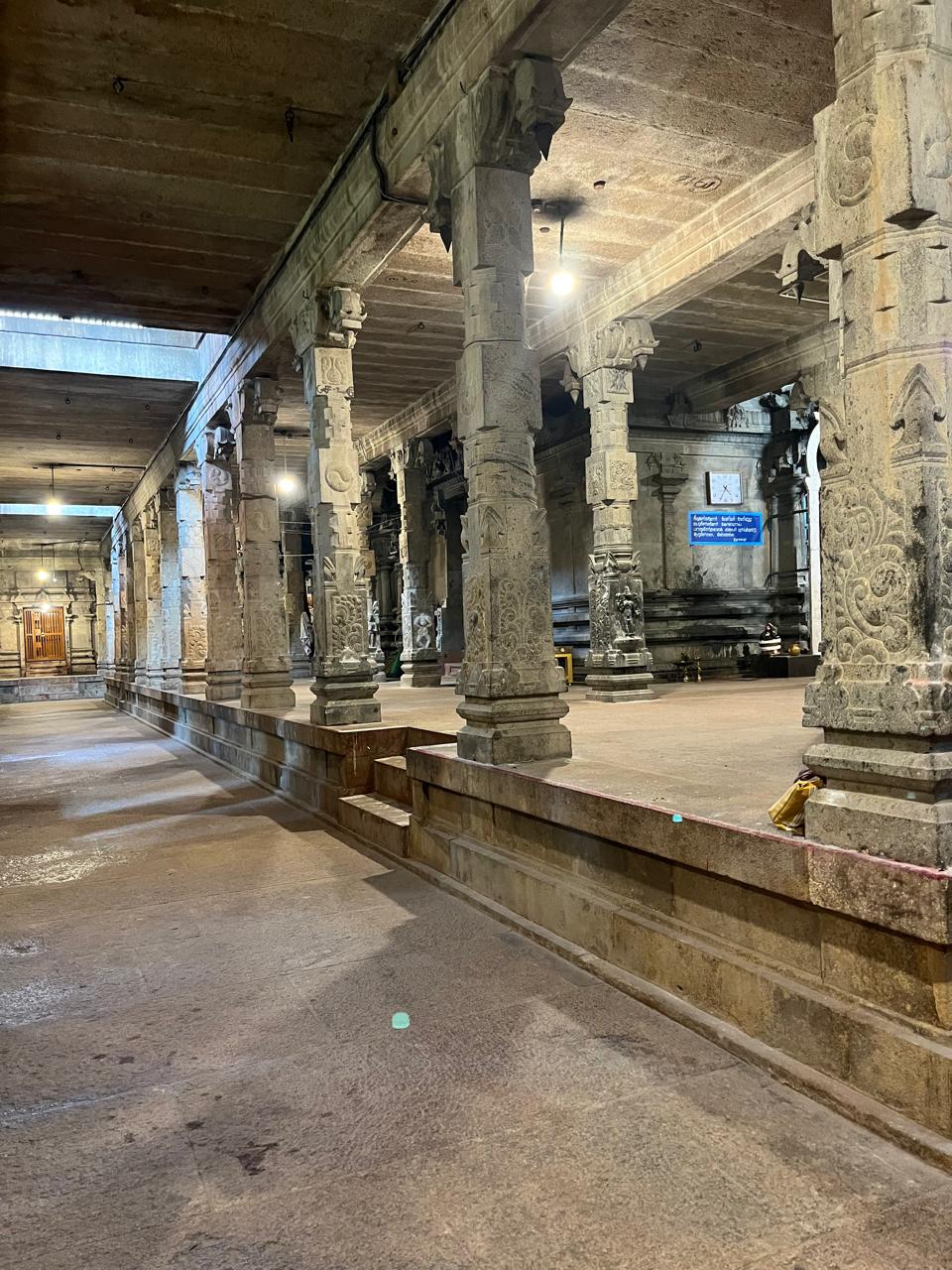
Paraithurainathar temple Tirupparaithurai
Location
Tiru-ParAithurai
Deity
ParAi-thurai-nAthar, ThArukA-Vana Nathar
Female Deity
Pasumpon Nayaki, Hema-varnaambikai
Pathikam
Tirunavukarasar - 1, Sambandar - 1
Gallery – Paraithurainathar Temple, Tirupparaithurai

How to Reach
The Shiva temple is located on the Trichy–Karur main road, about 16 kilometers from the Chatram Bus Stand in Trichy. Its close proximity to the Tirupparaithurai bus stop makes the temple easily accessible for devotees and visitors using public transportation.
Travel Note - When planning a trip from Trichy, the temples Tiru-Paraithurai, Tiru-Kadambanthurai, Ayyar Malai, and Eengoi Malai all lie along the same route. It is advisable to have breakfast in Trichy beforehand, as there are no eateries along the way.
Temple Address
Tiruparaitturai
Tiruparaitturai Post
Karur District
PIN – 639115
Temple Hours
Morning : 8:00 - 12:00
Evening : 4:30 - 8:00
Nearby Paadal Petra Shiva Temples
Temple Description
Historical Significance
Tiruparaithurai Temple is one of the oldest among the 128 'Paadal Petra' temples located on the southern bank of the sacred River Cauvery. At this spot, the river flows in great breadth, earning it the revered name "Akanda Cauvery."
The Sacred ParAi Tree (Sthala Vruksham)
The region surrounding the temple came to be known as ParAithurai due to the abundant growth of parAi trees, also called toothbrush trees or pari trees (Salvadora persica). These small to medium-sized trees, native to parts of India, Sri Lanka, and Southeast Asia, are well known for their medicinal properties and traditional uses.
Medicinal Properties
- The leaves are traditionally used in the treatment of dysentery.
- Milk extracted from the bark is applied externally to heal cracked heels.
- According to local belief, devotees suffering from cancer or certain skin ailments seek relief by pouring water on the sacred parAi tree behind the temple sanctum, lighting a lamp, burning incense, and offering prayers.
- In northern parts of India and in Burma, the leaves are used as a substitute for tea; Ayurvedic traditions state that this preparation enhances virility.
- The roots of the tree are traditionally employed as an antidote for snakebites.
- The seeds are used in traditional medicine to control nosebleeds, piles, and dysentery.
Main Deity
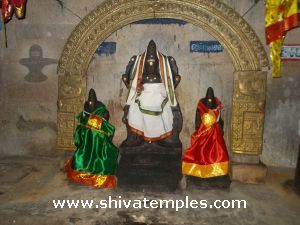
The presiding deity of Tharukavaneswarar Temple at Paraithurai is a self-manifested (Swayambhu) Linga, facing east. The Goddess of the temple, worshipped as Pasumpon Mayilambikai and also known as Hema Varnambikai, faces south in Her sanctum (sannidhi).
Temple Entrance and Mandapams
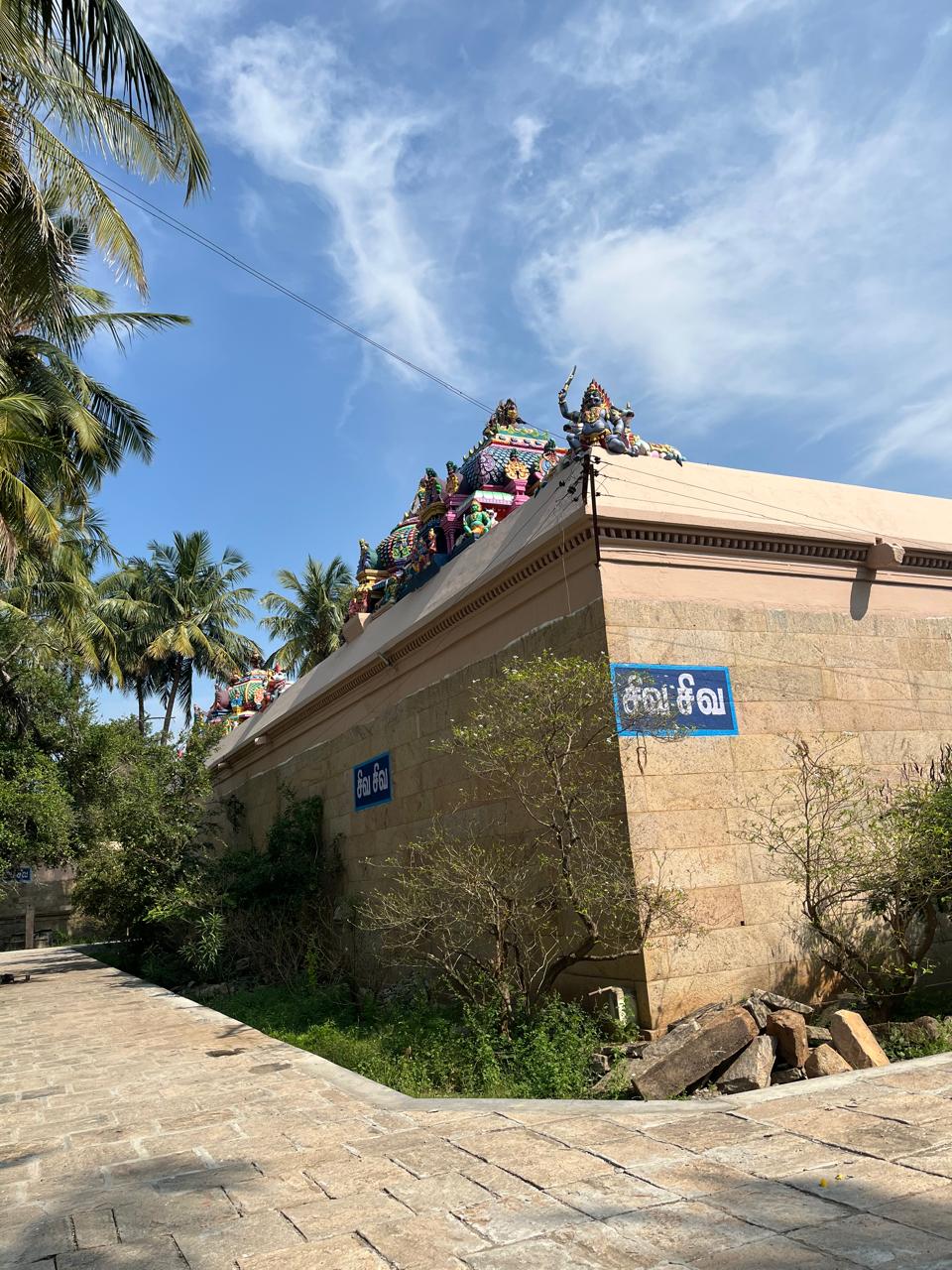
A striking stone sculpture of Rishabaruda adorns the temple's entrance gateway. Just inside the gate, a serene pond for ritual ablutions lies to the left, while to the right stands the impressive stone Vasantha Mandapam, which presently houses the Vivekananda Primary School.
Facing the entrance rises a majestic seven-tiered Rajagopuram, crowned with a sculpted image of Vinayaka on its façade. Beyond the Rajagopuram, devotees encounter a resplendent copper-clad Dhvaja Stambha (flagstaff) set within a pillared hall, along with the principal altar and the sacred Nandi – together forming the Nandi Mandapam. This hall also houses reverential images of the illustrious Nayanmars – Sambandar, Appar, and Manickavasagar – as well as the likeness of a benefactor who generously supported earlier temple renovations.
Inner Sanctum and Shrines
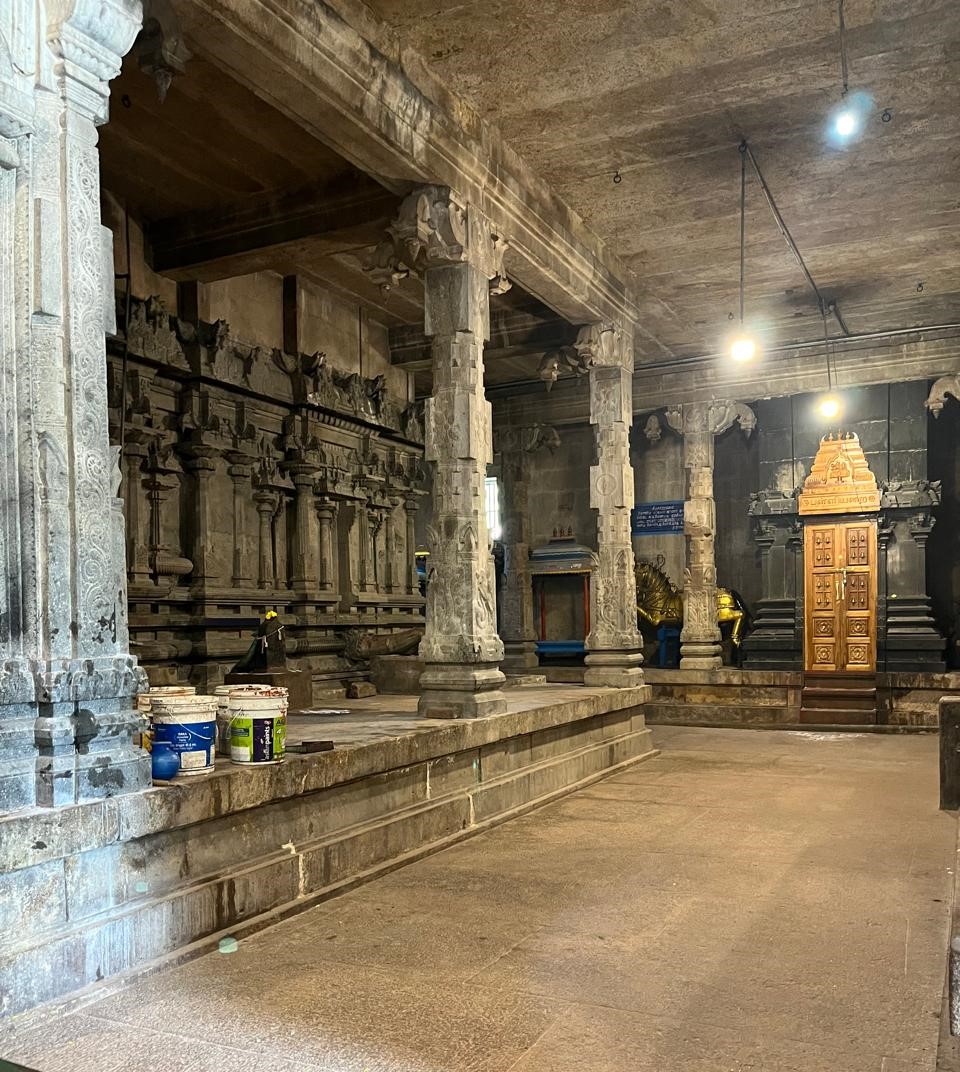
The next gopuram within the temple complex rises to five tiers, beyond which the east-facing main sanctum comes immediately into view. Within the inner prakaram, devotees encounter sannidhis dedicated to Valampuri Vinayaka, the Saptakannyas, and an impressive ensemble of the revered Sixty-three Nayanmars.
Radiating from this central area are sannidhis dedicated to a rich pantheon of deities, including Somaskanda, Maha Ganapati, the Panchabhootha Lingams symbolizing the five primordial elements, Arumukha, Bikshadana, Brahma, Durga, Gajalakshmi, and Shanmukha. Notably, among the Navagrahas, only Shaniswara is depicted with his traditional vahana, the crow. A separate sannidhi for Bhairava is also situated within this prakaram.
Goshta Murthas
The Goshta Murthas, or subsidiary deities enshrined in wall niches, include Vinayaka and Dakshinamurthy. In the niche typically reserved for Lingothbhava, the temple instead features Arthanariswar – the half-male, half-female form of Lord Shiva – alongside Brahma and Durga. A sannidhi for Chandeswarar is also present within this arrangement.
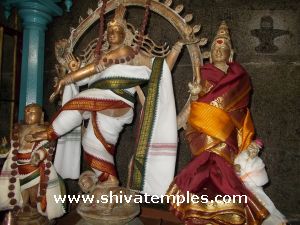
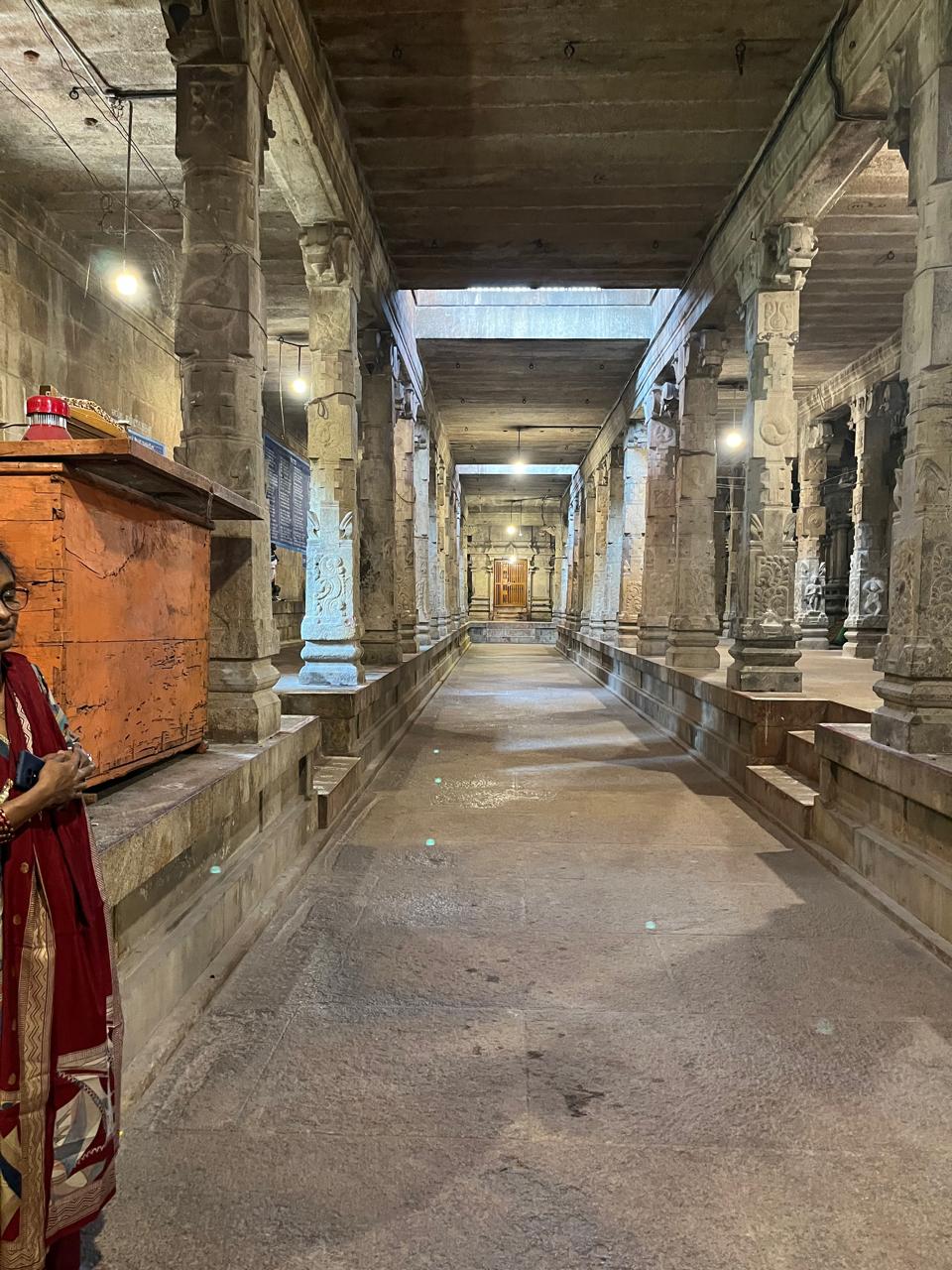
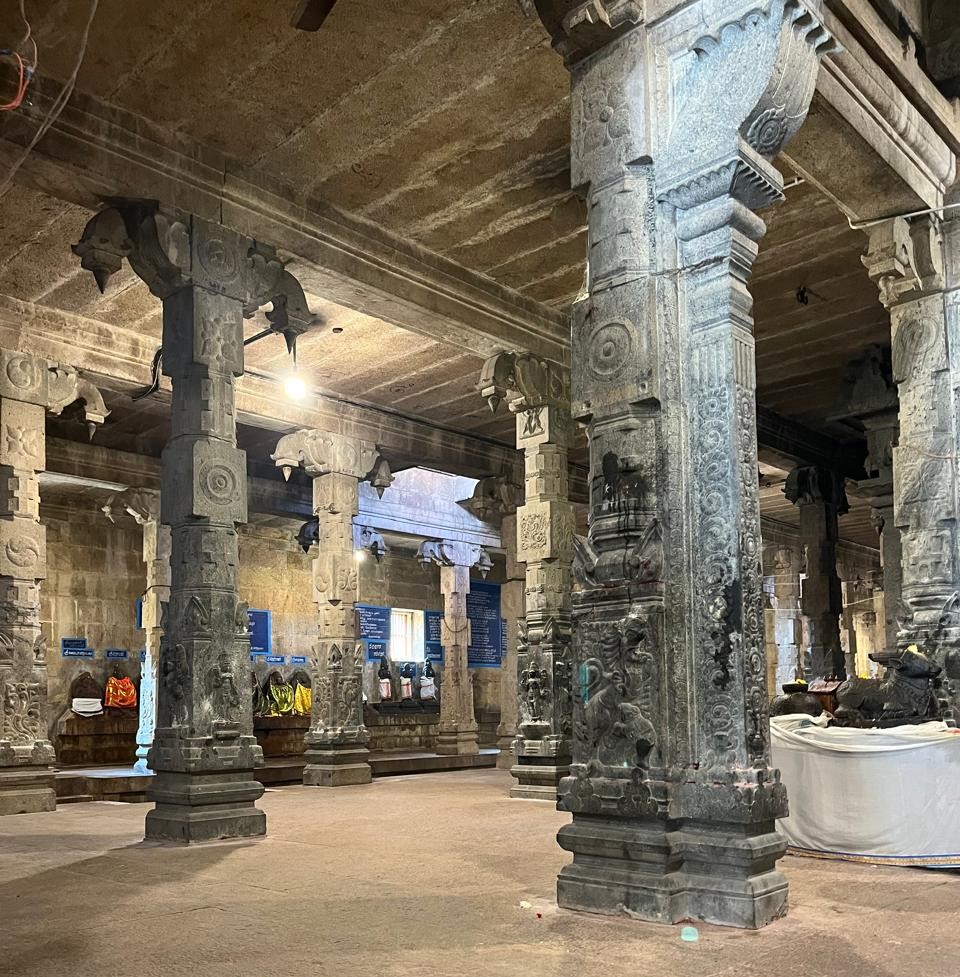
The intricately carved pillars, adorned with lions at their bases, highlight the extraordinary stone and woodworking skills of the temple artisans. A separate sannidhi is dedicated to Nataraja.
Goddess Sanctum
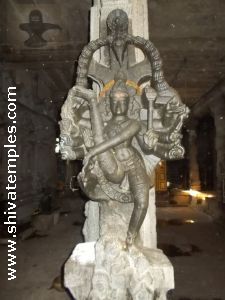
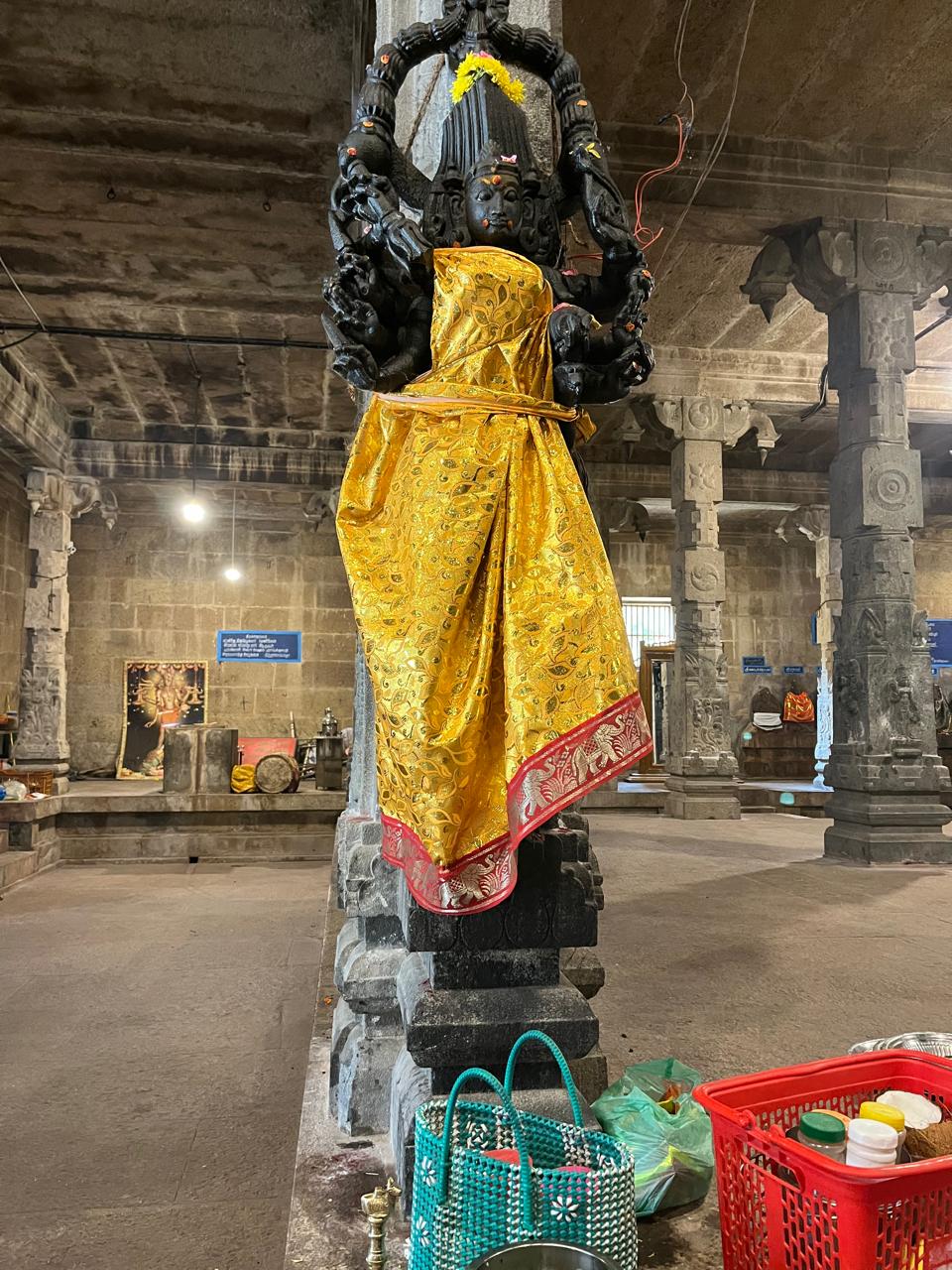
The Goddess's sanctum faces south, and the pillars of her mandapam are adorned with captivating sculptures. One depicts Shiva performing the Urdhva Tandava, a vigorous dance symbolizing the destructive aspect of the cosmic cycle, while another portrays the fearsome Goddess Kali in all her formidable glory.
Temple History & Legend
The Legend of the Tharukavana Sages
The Sthala Purana recounts a captivating episode of the deity's encounter with the sages of Tharukavana, serving as a profound allegory that highlights the perils of arrogance and underscores the importance of humility before the Divine. According to legend, the sages dwelling in Tharukavana had grown haughty and self-important as a result of their intense penances and elaborate sacrificial rites. Believing their spiritual practices to be supreme, they felt no need to offer praise or reverence to God Himself.
To subdue their arrogance and impart a profound lesson, Shiva assumed the form of Bikshadanar, an alluring mendicant whose divine charm captivated the wives of the sages. Incensed by this perceived transgression, the sages invoked fierce tigers from their sacrificial fire and unleashed them upon Bikshadanar. Yet, Shiva effortlessly subdued the ferocious beasts and adorned Himself with their skins, revealing His supreme and transcendent nature.
Undeterred, the sages next conjured deer to assail Bikshadanar, but He skillfully subdued them and bore them in His left hand. In a final attempt, the sages unleashed venomous serpents, yet Bikshadanar transformed them into His divine ornaments, revealing His supreme power to transmute even the most perilous forces into symbols of beauty, grace, and spiritual mastery.
In their final act, the sages summoned the Bhutaganas, yet they too proved powerless before the deity. Acknowledging the futility of their efforts and realizing the true identity of Bikshadanar, the sages at last perceived the error of their arrogance and sought refuge at the feet of Shiva. Moved by compassion, Shiva forgave them and revealed Himself as Tharukavaneswar. This sacred kshetra enshrines a ceremonial idol of Shiva in His Bikshadanar form within the sanctum, along with a separate statue of Bikshadanar in the prakaram. Together, these sacred forms stand as an eternal reminder of the virtues of humility and devotion, and of the all-encompassing, transformative nature of the Divine.
Tirupugazh – Muruga
Tiruparaithurai has been glorified in the sacred hymns of the revered saint-poet Arunagirinathar. Here, Muruga is worshipped in a captivating form, bearing a single radiant face and two divine hands, majestically seated upon His vahana, the resplendent peacock, and accompanied by His beloved consorts, Valli and Deivanai.
The Utsava idol, the temple's processional deity, reflects this same mesmerizing iconography, enabling devotees to behold the same beatific vision during festival processions. Arunagirinathar's Tirupugazh includes a hymn composed exclusively in praise of Tiruparaithurai. This lyrical offering beautifully encapsulates the essence of Lord Muruga's grace and the ineffable bliss experienced by devotees in His divine presence at this sacred kshetra.
The First Holy Dip of Aippasi
According to traditions passed down through generations, the first day of the Tamil month of Aippasi is a momentous occasion at this sacred temple. On this day, the holy dip in the Cauvery is considered the inaugural cleansing ritual of the season. The presiding deities are brought in a grand procession to the riverbank, where they sanctify the waters and bless the assembled devotees.
This time-honored tradition finds its counterpart on the final day of Aippasi at the Mayiladuthurai temple downstream, where devotees partake in the "final dip." The sanctity of Paraithurai is further emphasized by the long-held belief that a pilgrimage to this sacred site can absolve sins, bestowing spiritual purification and inner peace upon those who approach with a pure heart and steadfast devotion.
Gallery – Paraithurainathar Temple, Tirupparaithurai