Satchi Natheswarar Temple, Tirupurambiyam
Location
Tiru-Purambiyam
Deity
Sakshi Natheswarar
Female Deity
Karumbanna Sollammai
Pathikam
Tirunavukkarasar - 1, Sambandar - 1, Sundarar - 1
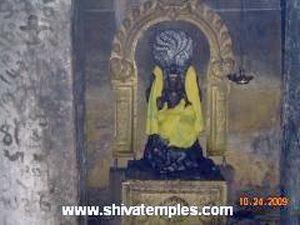
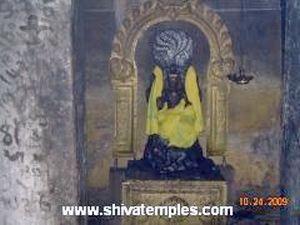
Gallery – Sakshi Natheswarar Temple, Tirupurambiyam
How to Reach
This Shiva Temple in Tirupurambayam is located approximately 11 kilometers from Kumbakonam. One can reach Tirupurambayam by taking a bus from Kumbakonam, which travels via Puliancheri and stops at two other notable Paadal Petra Sthalams along the way – Tirukkottaiyur and Tiru-Innambar.
Temple Address
Thirupurambiyam
Thirupurambiyam Post
Kumbakonam Taluk
Thanjavur District
PIN – 612303
Temple Hours
Morning : 9:00 - 12:00
Evening : 5:00 - 8:00
Nearby Paadal Petra Shiva Temples
Sthala Puranam
Origin of the Name Tirupurambiyam
According to legend, the town received the name Thirupurambiyam due to an extraordinary event that occurred during a great flood. It is said that when the deluge was ravaging the land, this place remained unaffected and beyond its reach (puram). As a result, the place came to be known as Thirupurambiyam, meaning “the sacred place that remained beyond the reach of floods.” During the deluge or pralaya, Vinayaka contained the waters of the Sapta Sagara, the seven legendary oceans, within a well located in Thirupurambiyam, thus preventing the floodwaters from engulfing the town. Consequently, the Vinayaka worshipped here is reverently referred to as the “Vinayaka who saved the place from flood,” acknowledging the divine protection believed to have been bestowed upon the town during this catastrophic event.
The Legend of Sakshi Nathar
A merchant from the ancient city of Madurai visited his ailing uncle in Thirupurambiam. Upon visiting, he found himself entrusted with his uncle’s daughter as the elder man drew his final breaths. Before departing for his home in Madurai, the merchant and his newfound charge spent the night at the temple. Tragedy struck when a venomous snake bit the merchant, causing him to succumb to the lethal poison. The distraught young woman, now alone and desperate, turned to Lord Shiva, the presiding deity of the temple, seeking his divine aid. In a miraculous display of compassion, Shiva manifested before her, not only reviving the merchant but also bearing witness to their impromptu wedding.
The merchant, now accompanied by his new wife, returned to Madurai, where he revealed the extraordinary events to his first wife. However, the first wife accused her husband of deceiving her, claiming that the second marriage had never taken place. Determined to prove the legitimacy of her union, the second wife journeyed back to Tirupurambiam and beseeched Lord Shiva once more. Shiva accompanied her to Madurai to give evidence (Sakshi in Tamil), along with the Vanni tree under which they were married, the cook house or kitchen (madapalli in Tamil) where the couple had stayed, and the well near which the incident occurred — testifying to the validity of the marriage and earning the appellation Sakshi Nathar, the one who bore witness. This miraculous tale is chronicled in the Thiruvilayadal Puranam and Sthala Puranam. To this day, the Vanni tree that gave evidence can be found in the north-eastern corner of the Madurai Sundareswarar temple complex. However, the Vanni tree standing in the second courtyard of the Thirupurambiam temple is not revered as the temple’s sthala vruksham — that honour is reserved for the Punnai tree.
Temple Layout
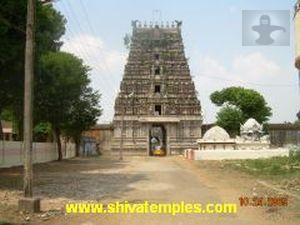
The Rajagopuram of this magnificent temple faces east and rises to an impressive height of 5 levels, serving as a grand entrance to the sacred complex. Just outside the gopuram gate, on the right side, stands a separate temple dedicated to Guru, who resides here as an auspicious deity bestowing blessings upon devotees. Notably, this is the only place in all of Tamil Nadu where Guru Bhagwan is enshrined in his own separate temple, making it a unique and significant pilgrimage site.
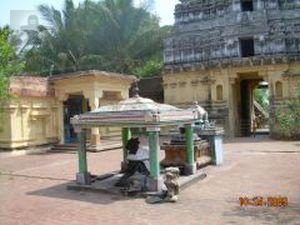
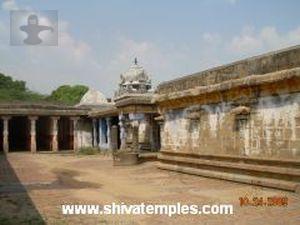
Upon passing through the ornate gopuram gate, visitors enter a spacious eastern outer courtyard. From here, one can see the main altar, the Nandi Mandapam, and the dwajasthambam directly ahead. The vimana of the Nandi Mandapam is adorned with beautifully carved sculptures, showcasing the exceptional artistry and devotion of the temple’s creators. Within the first atrium, there are several lingams worshipped by revered saints such as Agasthiyar, Pulastiyar, Sanaka, Sanandana, and Viswamitra, among others.
The Presiding Deity
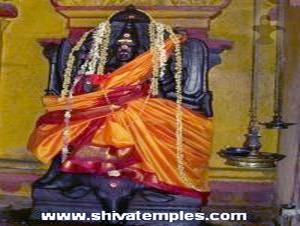
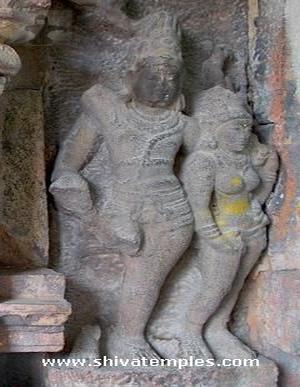
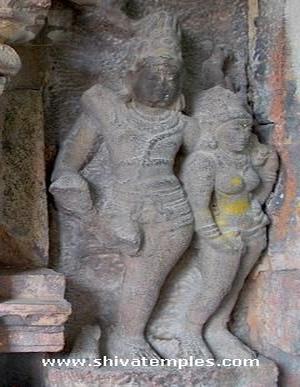
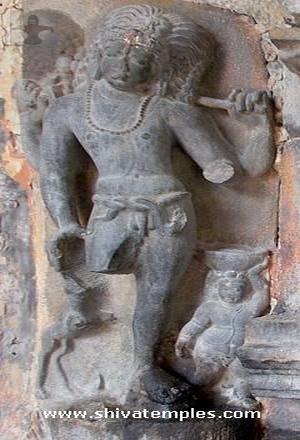
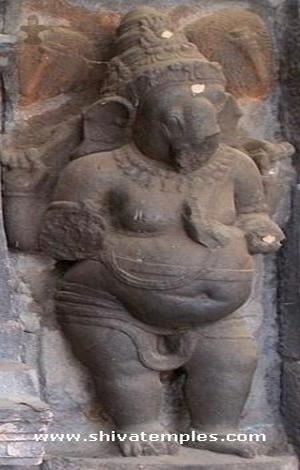
At the heart of this temple, the presiding deity Sakshi Nathar is enshrined as a swayambumurthy, a self-manifested deity, drawing countless devotees to seek his divine blessings. The walls surrounding the sanctum are embellished with intricately carved sculptures depicting various mythological scenes and divine figures. However, many of these precious sculptures are either broken or damaged, underscoring the urgent need for their careful preservation.
Other Shrines
In the second courtyard, devotees will find the sannidhi dedicated to Goddess Ikshu Vani. On the southern bank of the temple pond stands the Dakshinamurthy temple, which holds special significance — it is believed that Lord Shiva himself appeared here in the form of Dakshinamurthy to bless a poor man who had brought firewood as an offering. Above the Dakshinamurthy temple is the sannidhi for Sattainathar, making this temple one of the important places dedicated to Dakshinamurthy.
Temple’s Significance
The idol of Ganesha residing in this temple is a unique and remarkable creation, crafted by none other than Varuna himself, the god associated with the sky, oceans, and water. In a fascinating departure from typical sculptural materials, Varuna fashioned this Ganesha entirely from elements sourced from the sea, including delicate snail shells, iridescent seashells, and ethereal sea foam. The temple’s annual Vinayaka Chaturthi celebrations revolve around an extraordinary nocturnal abhishekam ceremony dedicated to this exceptional Ganesha. Throughout the entire night, devotees continuously anoint the idol with copious amounts of pure honey, which is gradually absorbed into its very essence. Intriguingly, this honey abhishekam remains exclusive to the Vinayaka Chaturthi festivities; on all other days, the Ganesha receives no such ablutions, underscoring the singular significance and sacredness of this annual rite.
More Gallery – Sakshi Natheswarar Temple, Tirupurambiyam