Arasilinathar temple, Tiru-Arasili
Location
Tiru-Arasili (Known as Olundiyapattu - Near Pondichery)
Deity
Arasilinathar
Female Deity
Periya Nayaki
Pathikam
Sambandar - 1
Gallery – Arisilinathar Temple, Tiruarisili


How to Reach
This Shiva temple is located about 16 km from Puducherry. The village of Ozhinthiapattu lies on the Puducherry – Kilianur – Tindivanam (NH32) route. From the main road junction at Ozhinthiapattu, a branch road leads east for about 2 km to the temple. Devotees visiting from Tiruvakkarai can return to the main road, travel towards Puducherry via Vaanur, reach the Tiruchchittrambalam junction, proceed in the Tindivanam direction, and then turn right at the Ozhinthiapattu signboard to reach the temple. The next Paadal Petra Sthalam, Irumbai Magaalam, is about 8 km away, and Kilianur is around 8.1 km from here. Please note that there are no shops for puja items or eateries near the temple, so visitors are advised to plan accordingly.
Temple Address
Ozhindiyapattu Post
Via Vanur
Vanur Taluk
Villupuram District
PIN – 605109
Temple Hours
Morning : 6:30 - 12:00
Evening : 4:30 - 7:30
Nearby Paadal Petra Shiva Temples
Parikara Sthalam
The sacred temple of Tiruarisili is regarded as a Parikara Sthalam for those born under the Pushya (Poosam) nakshatra. The Peepal tree, which is the sacred tree associated with this star, is also the Sthala Vruksham of the temple. It is believed that worshipping Arasilinathar and Periyanayaki brings prosperity, auspiciousness, and divine blessings to devotees born under the Pushya star.
Temple Layout
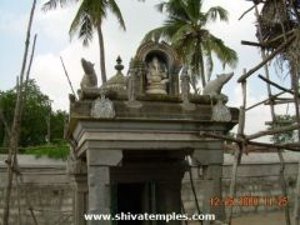
This Shiva temple is spread across about 2.5 acres and has a 3-tier Rajagopuram with a surrounding prakaram. The presiding deity, Arasilinathar, appears as a Swayambhu Linga facing east, while Goddess Periyanayaki has a separate south-facing sanctum. As devotees walk clockwise around the prakaram, they can have darshan of Vinayaka, Arumukha with Valli and Deivanai, Navagrahas, Chandeshwarar, and the four principal Nayanmars. The idols of Surya and Bhairavar are also seen facing the main sanctum.
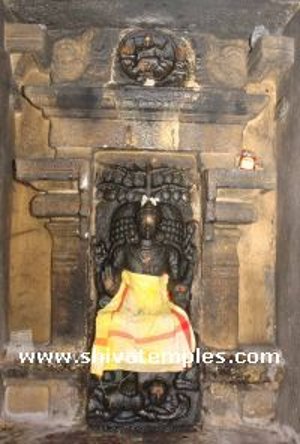
The Dakshinamurthy at this temple is especially unique and captivating. Muyalakan, who usually faces the right, is seen here turned to the left holding a serpent in his hands. Above Dakshinamurthy, Nataraja appears performing the Ananda Thandavam, symbolizing Shiva’s cosmic dance. Witnessing these two divine forms together—Shiva as the Guru imparting wisdom below and Shiva as the cosmic dancer above—is considered highly auspicious. Other goshta deities include Brahma, Durga, and Vaishnavi, while the usual place of Lingothbhavar on the rear wall is uniquely occupied by Mahavishnu. The Swayambhu Linga of Arasilinathar stands beneath a canopy of 108 Rudraksha beads. The head of the Linga bears a scar believed to have been caused by an arrow, and as a mark of reverence, a cloth is tied over it before every puja.
Sthala Vruksham
The Sthala Vruksham of this temple is the Peepal tree (Arasamaram), revered as the king of trees. Since Shiva manifested here as a Swayambhu Linga beneath this sacred tree, the place came to be known as Arasili. According to the temple legend, a sage named Vamadeva, who was seeking relief from a curse, visited many Shiva temples. When he reached this place, he rested under the cool shade of a Peepal tree and thought how wonderful it would be if a temple for God Shiva existed there. Knowing the sage’s pure devotion, Shiva manifested as a Swayambhu Linga beneath the tree. The joyful sage then bathed in the nearby theertham, worshipped Arasilinathar, and was finally freed from his curse.
Sthala Purana
Centuries after the time of Sage Vamadeva, the Swayambhu Linga at this place gradually became buried beneath the earth. During that period, a Chalukya king named Sathyavrathan, a great devotee of Shiva who ruled the region, maintained a flower garden to offer fresh blossoms for his daily worship of Shiva. One day, his servant returned from the garden without any flowers, saying none could be found. The same thing happened again the following day. Suspecting that someone was secretly taking the flowers, the king decided to keep watch over the garden himself. To his surprise, he discovered that a deer had been entering the garden and eating the flowers meant for king's worship.
In a moment of anger, the king shot an arrow at the deer, which immediately fled and hid inside a hollow beneath a Peepal tree. The king shot another arrow into the hollow, but to his astonishment, blood began to flow from within. When he looked inside, there was no deer—instead he saw the ancient Shiva Linga once worshipped by Sage Vamadeva, with blood flowing from the spot where the arrow had struck the Bana of the Linga. Realizing his mistake, the shocked king prayed earnestly to Shiva, who then appeared before him and revealed that He Himself had taken the form of the deer and blessed the king with a son. Filled with devotion and gratitude, the king built a temple at this sacred spot, which continues to be worshipped by devotees today.
Indrasenan, the son of King Sathyavrathan, was also a great devotee of Arasilinathar. Following the path of devotion in her family, Indrasenan’s daughter lived at this sacred place in deep and unwavering devotion to the deity. Through her sincere worship and spiritual dedication, she ultimately attained oneness with God Shiva at this very place, making the it even more sacred for devotees.
Gallery – Arisilinathar Temple, Tiruarisili