Vedhagireeswarar temple, Tiru-Kazhu-Kundram
Location
Tiru-Kazhu-Kundram
Deity
Vedagireeswarar, Bhakthavathsaleshwarar
Female Deity
Thri-Pura-Sundhari, Sokka-Nayaki
Pathikam
Tirunavukarasar - 1, Sambandar - 1, Sundarar - 1
Gallery – Vedhagireeswarar Temple, Tirukkazhukkundram


How to Reach
This Shiva temple is located on the Chengalpattu–Mahabalipuram route, about 14 km from Chengalpattu and 10 km from Mahabalipuram.
Temple Address
Thirukazhukundram
Kanchipuram District
PIN – 603109
Temple Hours
Morning : 6:00 - 13:00
Evening : 4:00 - 9:00
Nearby Vaipu-Sthalam
Overview
Tirukazhukundram is one of the 44 'Paadal Petra' temples, sanctified by the hymns by three revered Saivite saints Tirugnanasambandar, Tirunavukkarasar, and Sundarar. The place is believed to have derived the name Vedhagiri because the sacred Vedas manifested themselves as mountains at this site. Over time, the temple town came to be known by several names such as Vedhachalam, Kathalivanam, and Kazhukkundram. There are two Shiva temples. One temple is situated on the hilltop, called Tirumalai, while the other lies in the town below and is known as Thazhakoil. The main deity of the hill temple is Vedhapureeswarar, whereas the town temple is dedicated to Bhakthavathsaleswarar. According to temple tradition, the four Vedas — Rig, Yajur, Sama, and Atharvana — are believed to have taken the form of large rocks, and the hill on which Vedhapureeswarar resides is associated with the Atharvana Veda.
Temple Layout
Hill Temple – Tirumalai
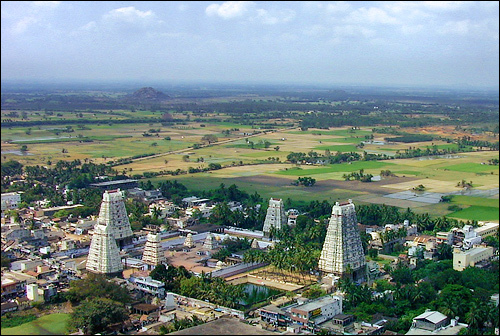
The temple hill, surrounded by a perimeter of about 4 kilometers, rises to a height of nearly 500 feet. At the summit stands a temple with a single prakaram and a magnificent Rajagopuram, and devotees can reach the temple through well-built steps leading up the hill. The presiding deity, Vedhapureeswarar, is worshipped as a Swayambhu Linga that resembles a banana flower, while the goddess Chokka Nayaki is also reverentially known as Pennin-nallall Ammai. This place is called Kazhukkundram because, according to tradition, eagles (Kazhugu in Tamil) worshipped the deity here seeking salvation. It is believed that in each of the four yugas, a pair of eagles visited this site, prayed to the deity, and ultimately attained liberation. Until recent years, it was a remarkable sight for devotees to witness two eagles arriving at the temple around noon to receive the food offered to them, a tradition closely associated with the sanctity of this temple.
One way to descend from the hill temple is by taking the steps that lead down the mountain. Another path leads to a historic cave temple dating back to the reign of Mahendravarman I (610–640 CE) of the Pallava dynasty. This ancient cave houses a Shiva Linga, reflecting the early rock-cut architectural style patronized by the Pallava rulers.
Temple Layout
Thazhakoil – Town Temple
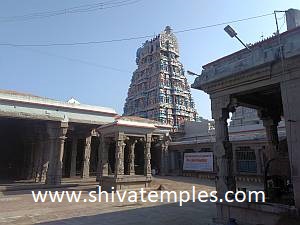
The temple located at the base of the hill spreads across nearly 12 acres and is architecturally impressive, featuring four gopurams and three concentric prakarams. The main entrance on the eastern side is marked by a seven-tiered rajagopuram, which leads into a four-pillared hall. Adjacent to this hall is another mandap that now functions as the temple’s administrative office, where a striking eight-armed sculpture of Durga can be seen carved on the stone wall. To the left of the four-pillared hall stands another mandap supported by 16 beautifully carved pillars. Moving further inside, devotees come across another gopuram, flanked by the shrines of Ganesha and Murugan. In the outer prakaram on the northern side, there is the sacred Nandi Theertham, where a statue of Nandi is gracefully positioned along the bank of the temple tank.
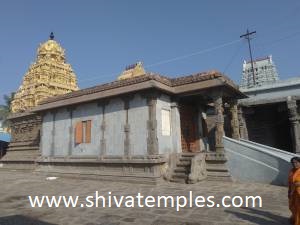
The second gopuram connects the outer and inner prakarams. Within this area are several sannidhis dedicated to different deities, including Athmanathar, Manikkavacakar, Ekambaranathar, Vanduvana Vinayaka, Jambukeshwarar, Arunachaleswarar, and Murugan. There is also a sannidhi for the goddess Tripurasundari, which has a mandap in front of it. The goddess stands facing east, and the ritual Abishekam is usually performed only on her feet. However, on three special occasions — Aadi Pooram, the ninth day of Navaratri, and the night of Panguni Uthiram — the entire idol of the goddess is ceremonially anointed with sacred offerings. Next is the Prathyaksha Vedhagireeshwar sannidhi, followed by the Nataraja Sabha dedicated to Nataraja. The innermost prakaram contains sannidhis for Surya, Ganesha, the 63 Nayanmars, and seven Shiva Lingas arranged in a row. The presiding deity, Bhakthavathsaleswarar, is installed on a square Avudayar facing east. The goshta images around the sanctum include Ganesha, Dakshinamurthy, Lingodbhava, Brahma, and Durga, along with separate shrines for Bhairava and Chandikeshwara.
Shangu Theertham
At the end of the road near the eastern entrance of the temple lies the pond known as Shangu Theertham. This tank is famous for a remarkable phenomenon — once every 12 years, a new conch (Shangu) is believed to emerge naturally from its waters. These sacred conches are carefully collected and preserved within the temple. According to legend, when the sage Markandeya did not have a vessel to perform his rituals, Lord Shiva appeared and presented him with a conch. Since then, it is believed that a new conch is born in this sacred pond every 12 years. Devotees also believe that taking a holy bath in Shangu Theertham at dawn and performing giri valam (circumambulating the hill) can bring relief and healing from various ailments, making it a spiritually significant practice for pilgrims visiting this site.
Gallery – More Pictures