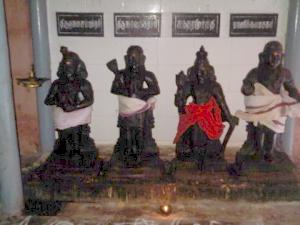
Pasupatheeswarar temple, Tirukondeeswaram
Location
Tiru-Kondeeswaram
Deity
Pasupatheeswarar
Female Deity
Shantha-Nayaki
Pathikam
Thirunavukarasar - 2
Gallery – Pasupatheeswarar Temple, Tirukondeeswaram

How to Reach
This temple is located about 17 km north of Tiruvarur Bus Stand, on the southern bank of the Mudikondan River. Nannilam, another Paadal Petra Sthalam, lies approximately 2.5 km to the west. Travellers on the Nagapattinam–Nannilam, Mayiladuthurai–Tirutturaippundi (via Nannilam), or Nagapattinam–Kumbakonam (via Nannilam) routes should look for the “Thoothukudi Stop” turn-off just before entering Nannilam town; the temple is a short distance down that road.
Temple Address
Tirukondeeswaram
Thoothukudi Post
Via Sannanallur
Nannilam R.M.S.
Tiruvarur District
PIN – 609504
Temple Hours
Morning : 8:00 - 12:00
Evening : 4:00 - 8:30
Contact
T.K. Venkatesa Gurukkal
9443038854
Nearby Paadal Petra Shiva Temples
Temple History
The Legend behind the Deity’s Name
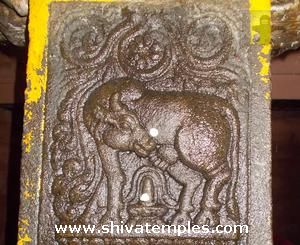
Once, at Kailasha, Shiva was imparting the secrets of the Vedas to Goddess Parvati. As she was not paying full attention to His teachings, Shiva cursed her to be born on earth as a cow. Obeying His divine will, the Goddess descended from Kailasa and took the form of a cow. While wandering through the Bilva forest, she dug deep into the ground with her sharp horns. During this act, her horns accidentally struck a Shiva Lingam that was hidden beneath the earth. The impact split the top of the Lingam into two parts, and blood began to flow from it.
Witnessing this, the Goddess, still in the form of a cow, poured her milk over the Lingam in an attempt to stop the bleeding. The moment the milk touched the Lingam, she regained her original divine form. However, when she saw that blood was still flowing, she gently held the top of the Lingam with her hand. Instantly, the bleeding ceased, and Shiva emerged before her, granting her liberation from the curse. Even today, devotees can see the visible crack on the Shiva Lingam caused by the cow’s horn — a mark that preserves the memory of this cherished legend for generations of worshippers.
Temple Structure
Temple Layout
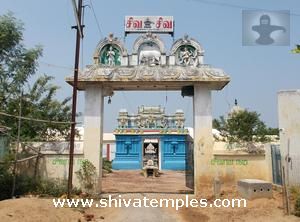
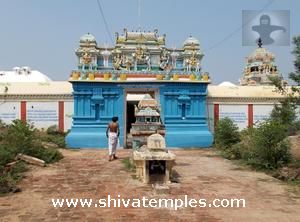
This east-facing temple, situated on the southern bank of the Mudikondan River, consists of a single prakaram and is uniquely surrounded on three sides by a water-filled moat known as Ksheera Theertham. The temple has only one main entrance, above which is a stucco sculpture depicting the divine cow Kamadhenu pouring milk over a Shiva Lingam.
Shrines and Sanctums
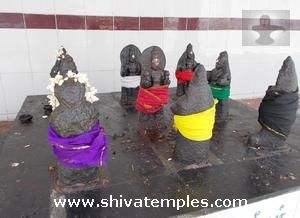
Upon entering through the main gateway, devotees first encounter Kodimara Vinayaka, the Bali Peetam, and the Nandi Mandapam. The outer prakaram houses sannidhis dedicated to Kannimoola Ganapathi, Subramanya, and Gajalakshmi.
The presiding deity is worshipped here as a self-manifested (Swayambhu) Lingam. The small Lingam appears deeply marked, giving the impression that it is split into two parts. In front of the sanctum, devotees can also see a representation of Kamadhenu offering milk to the Lingam. The inner prakaram contains sannidhis for Vinayaka, Dakshinamurthy, Subramanya, Mahalakshmi, Chandikeswarar, the Navagrahas, Bhairavar, and Tirunavukkarasar.
Jvarahareswarar
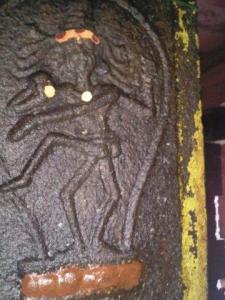
One of the unique features of this temple is the idol of Jvarahareswarar, carved on a pillar in the Swami Mandapam. The deity is depicted with three heads and three legs. According to legend, Sage Agastya once visited this temple to worship Shiva but was afflicted with a severe fever. Shiva appeared as Jvaradeva and cured him of the illness.
Even today, devotees suffering from fever and related ailments offer abhishekam with warm water and worship the deity with pepper rasam and cooked rice, seeking relief and recovery. Another pillar in the mandapam features sculptures of Kamadhenu and the Goddess.
Goddess Shrine
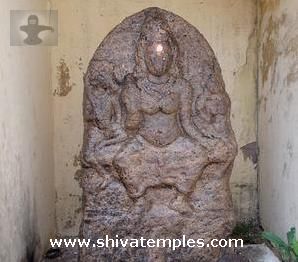
The sannidhi of Goddess Shanthanayaki is situated as a separate sanctum on the right side of the Vavval Nethi Mandapam. The idol of Abhat-Sahaya Maharishi can also be seen in this hall. This sacred temple is praised in two Thevaram hymns composed by Tirunavukkarasar (Appar), one in the Fourth Thirumurai and another in the Fifth Thirumurai.
More Gallery – Pasupatheeswarar Temple, Tirukondeeswaram