Aappudaiyar Temple, TiruAappanur
Location
TiruAappanur
Deity
Aappudaiyaar, Annavinodhar, Vidabeshwarar
Female Deity
Sugandha Kundhalambikai
Pathikam
Sambandar - 1
Gallery - TiruAappanur Temple


How to Reach
This temple is at Sellur in Madurai. Route No.17, 17A, 17C from Periyar bus stand go via this temple. Alight at 'Tiruvaappudaiyar Kovil' bus stop. From Simmakkal bus stop a narrow street lead to Vaigai river and this temple is at a short distance form the bridge.
Temple Address
Appudaiyar Temple Post
Madurai
Madurai District
PIN – 625002
Temple Hours
Morning : 6:30 - 11:30
Evening : 4:30 - 9:00
Nearby Paadal Petra Shiva Temples
Temple Legend
The Story of King Cholanthakan
The Pandya ruler, Cholanthakan, was a devout devotee of God Shiva who observed a strict vow — he would partake of food only after completing his daily Shiva Puja. On one occasion, while on a hunting expedition deep within the forest, the king became weary and eventually collapsed amidst the dense wilderness.
Concerned for the king’s health, his guards pleaded with him to have some food to regain his strength. However, the devout ruler steadfastly declared that he would not eat before performing his daily Shiva Puja. At that moment, a wise minister took a piece of wood from the forest and firmly fixed it into the ground. Pointing to it, he said to the king, “O noble one, behold! Here stands a Swayambhu Linga—a self-manifested form of God Shiva. You may offer your worship here and then take your meal.”
The weary king, in his exhaustion, believed the wooden wedge to be a sacred Swayambhu Linga and worshipped it with utmost devotion before partaking of his meal. After regaining his strength, he realized that what he had venerated was not a Shiva Linga but merely a piece of wood. Overcome with remorse, the king prayed earnestly to Lord Shiva, declaring that he would rather give up his life if his act of worship had been in vain. With deep devotion, he pleaded with the Lord to manifest Himself within that very wedge and bless him.
Moved by the king’s unwavering devotion, Shiva manifested Himself within the very wedge and bestowed His divine blessings upon the ruler. From that moment, the deity became known as Appudayar, signifying “the One who appeared in the wedge” (Aappu meaning wedge). In due course, the place came to be called Appanur, and the sacred temple built there was revered as the Appudayar Temple.
The Miracle of Annavinodhar
Once, a severe famine struck the Pandya kingdom, causing immense suffering and starvation among the people. During this difficult time, the priest of the Appudaiyar Temple managed to cultivate a small crop solely for use in the Shiva Puja. Seeing this, the villagers questioned his act of offering nivedhana (food offering) to the deity when people all around were going hungry.
Distressed by the people’s outcry, the priest turned to God Shiva in earnest prayer. Moved by his devotion, Shiva instructed him to collect sand from the Vaigai River, place it in a furnace, and cook it as an offering. By the divine grace of Shiva, the sand miraculously transformed into rice, satisfying the hunger of the starving villagers and filling their hearts with gratitude. From that wondrous event, the deity came to be known as Annavinodhar, meaning “the One who delights in providing food.”
Temple Architecture
Temple Layout
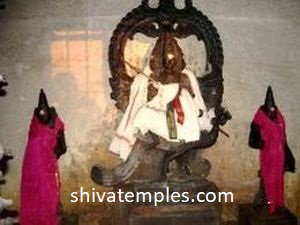
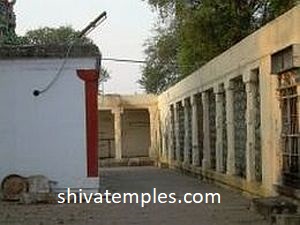
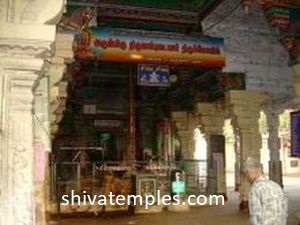
This Shiva temple does not have a gopuram. Above the entrance gateway is a graceful depiction of Rishabarudar — Shiva seated with Goddess Parvathi, Muruga, and Vinayaka on the sacred bull, Rishabha. Upon entering the temple, one can see the Dwajasthambam, Balipeetam, and Nandhi in the outer prakaram. The presiding deity, Sri Appudaiyar, enshrined in an east-facing sanctum, radiates serenity and divinity. Between the sanctums of Appudaiyar and Sri Sugandha Kundhalambikai lies the Subramanya sannidhi, forming the sacred Somaskanda arrangement — symbolic of divine family unity and grace.
Sacred Tree and Other Features
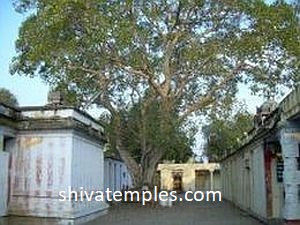
The Sthala Vruksham, the sacred Vanni tree, is located along the circumambulatory path of the prakaram. Beneath this holy tree is a sannidhi for Lord Vinayaka, radiating divine grace. Nearby, there is also a sannidhi for Lord Muruga, majestically seated on His peacock vehicle, accompanied by His divine consorts Valli and Deivanai.
Nataraja Sabha
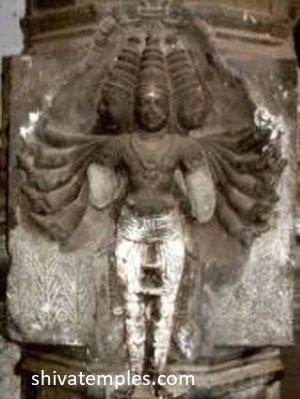
In the Nataraja Sabha, Nataraja appears in a graceful dancing posture along with Goddess Shivakami, while Nandhi is depicted playing a drum in accompaniment. The temple is renowned for its exquisite and intricate sculptures that exemplify the artistic brilliance of the era. There is also a sannidhi for the Navagrahas within the temple premises.
Pathigam Reference
The pathigam composed by Thirugnana Sambandar is found in the First Thirumurai. In the second verse of this hymn, he refers to the Goddess as ‘Kuravangamazh Kuzhalal’, meaning “the One with fragrant hair adorned with Kuravanji flowers.”
Gallery - TiruAappanur Temple