Maatruraivaradeeswarar Temple, Thiruvaasi
Location
Tiru-Pachila-Chiram (present-day Tiruvaasi)
Deity
Maatrurai-Varadeeswarar, Sameevaneswarar
Female Deity
Balambikai, Balasundari
Pathikam
Sambandar - 1, Sundarar - 1
Gallery – Maatruraivaradhar Temple, Tiruppaachilasramam
How to Reach
This Shiva temple is located on the northern bank of the River Kollidam, about 12 km from the Chathiram Bus Stand in Tiruchirappalli (Trichy). The temple is easily accessible by road, and visitors can take the Tiruchirappalli–Musiri route and alight at the Tiruvaasi bus stop, which is situated very close to the temple. Regular bus services are available from Trichy.
Temple Address
Thiruvaasi
Via Pichandarkovil
Tiruchirappalli District
PIN – 621216
Temple Hours
Morning : 7:00 - 12:00
Evening : 5:00 - 8:00
Contact
Mohan Gurukkal
0431-2908109, 98656 64870
Nearby Paadal Petra Shiva Temples
Temple Description
Temple Layout
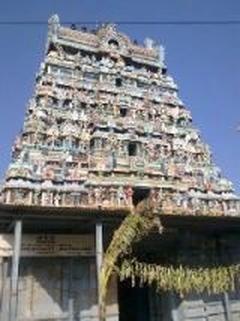
The Thiruvasi temple boasts a magnificent five-tiered Rajagopuram and two spacious courtyards. At the heart of the temple, the presiding deity is enshrined as a self-manifested Swayambhu Linga, sheltered beneath an ornate Rudraksha Pandal. Directly below the towering Rajagopuram stands Nandi, accompanied by his consort. The temple also features a unique Navagraha sannidhi, where Surya, the Sun god, is depicted flanked by his wives, Usha and Pratyusha, while the remaining planets are positioned facing him in reverence. According to local legend, Goddess Parvathy, born as the daughter of a merchant named Kamalan in Thiruvasi, undertook rigorous penance and ultimately wed Shiva. She is venerated in this temple as Balambikai, with the Artha Jama puja, the concluding ritual of the day, performed first in her honour. A sannidhi for Selva Vinayaka is located opposite the Goddess's sannidhi, and the sacred Annamam Poikai Theertham lies in close proximity. Two Dwarapalakiyars stand sentinel before the Goddess's sannidhi, invoked by unmarried women seeking suitable grooms and those facing obstacles to marriage; childless couples also offer cradles to them, believing their requests will reach the Goddess through these divine guardians. The ritual of offering milk abhishekam to Balambikai is believed to alleviate the ill effects of 'Balarishta Dosha', an affliction said to affect a person during infancy or childhood.
Daily Worship & Festivals
TiruGyanaSambandhar, Sundara Murthy Nayanar, and Iyadigal Kaadavarkon have all praised this deity in their hymns. The festival of Vaikasi Visakam involves the celebration of Tiru Ther, featuring the procession of the deity in a grand chariot. Daily worship is structured around four distinct Kaala Pujas, or periods of reverence. It is believed that worshipping Natarajar at this temple for a continuous span of 48 days can bring relief from chronic ailments such as digestive issues, gallstones, and arthritis. Devotees also hold the belief that worshipping Matruraivaradeswarar on Mondays, with the lighting of a ghee lamp, leads to an improvement in financial circumstances.
Temple History & Legend
The Healing of the King's Daughter
The ancient temple of Tiru-Pachilasramam in the historic Mazhava Nadu is renowned for a remarkable legend that highlights the healing grace of Lord Shiva and the divine power of the hymns of Tirugnanasambandar. According to the temple tradition, Kolli Mazhavan, the ruler of the region, was greatly distressed by the severe epileptic condition suffered by his daughter. Despite seeking every possible remedy, the king was unable to cure her illness. Following the advice of his ministers and spiritual guides, he surrendered to the will of this deity and brought the princess to the temple, praying earnestly for divine intervention. At that time, the young saint Tirugnanasambandar arrived at Tiru-Pachilasramam during his pilgrimage to various sacred Shaivite shrines. Hearing of the king's plight, the saint was moved by compassion and sang a Thevaram Pathikam in praise of Shiva. As the sacred hymns resonated through the temple, a miracle occurred—the princess was instantly cured of her affliction. Temple lore further recounts that Shiva transformed the disease into a serpent and performed His divine cosmic dance upon it, symbolizing the destruction of suffering and the triumph of divine grace over illness. This extraordinary event is reflected in the temple's unique idol of Nataraja, who is depicted dancing upon a serpent rather than upon the dwarf demon Muyalakan, as is customary in most Shiva temples. Because of this association, the temple is regarded as a powerful place of worship for those seeking relief from ailments and afflictions. Devotees visit the temple to pray for cures from epilepsy, nervous disorders, rheumatism, Sarpa Dosha (serpent-related astrological afflictions), and menstrual disorders. Within the temple complex, the Avudayapillai Mandapam preserves artistic depictions of this miraculous episode, portraying the moment when Tirugnanasambandar's divine hymn cured the king's daughter.
The Naming Legend of Matrurai Varadhar
The presiding deity of this sacred temple is worshipped as Matrurai Varadhar. According to temple tradition, Sundarar once visited this temple seeking gold to fulfill his needs. Wishing to test the depth of His devotee's faith and devotion, Shiva initially withheld the boon. In his anguish and longing, Sundarar sang a passionate Thevaram Pathikam, even questioning the deity's presence and compassion. Pleased by Sundarar's unwavering devotion, Shiva eventually granted him a bag of gold. Although overjoyed, Sundarar remained uncertain about the purity and quality of the gold he had received. At that moment, two merchants appeared before him and offered to examine the metal. Using a touchstone, the first merchant carefully tested the gold and declared it to be of the highest purity. The second merchant confirmed this assessment, assuring Sundarar that there was no flaw in the treasure bestowed upon him. Soon afterwards, the two merchants mysteriously disappeared. Through divine revelation, Sundarar realized that the first merchant had been none other than Shiva Himself, while the second was Maha Vishnu, who had accompanied Him in disguise. By personally testing and certifying the purity of the gold through the act of rubbing it against a stone (maatru urai), the deity came to be known as Matrurai Varadhar—"the Lord who verified the gold upon the touchstone."
Gallery – Maatruraivaradhar Temple, Tiruppaachilasramam