Shivanandeswarar temple, Tiru-Penu-Perunthurai
Location
Tiru-Penu-Perunthurai (Better known as Tiru-Panthurai
Deity
Shivanandeswarar, Pranaveshwarar
Female Deity
Mangalaambikai
Pathikam
Sambandar - 1
Gallery – Sivanandeswarar Temple, Tiru-Penu-Perunthurai


How to Reach
This Shiva temple is located about 10 km from Kumbakonam on the southern bank of the Arisalaru River. Take the Kumbakonam – Natchiarkovil – Poonthottam road. The temple is situated approximately 1 km after Natchiarkovil, currently known as Tiru-Panthurai.
Temple Address
Tirupandurai
Natchiar Kovil Post
(Tiru-Penu-Perunthurai)
Kumbakonam Taluk
Thanjavur District
PIN – 612602
Temple Hours
Morning : 8:00 - 9:00
Evening : 5:00 - 6.30
Nearby Paadal Petra Shiva Temples
Temple Layout
Structure and Arrangement
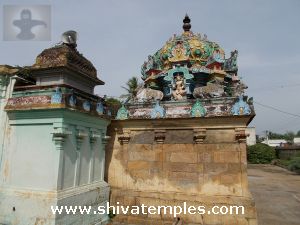
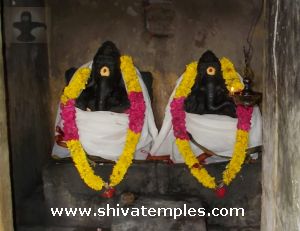
This ancient Shiva temple welcomes devotees with a majestic three-tiered Rajagopuram facing east, standing gracefully opposite the sacred Mangala Theertham. Along the serene banks of this theertham, adjacent to the temple, are the twin Vinayaka sannidhis—Guha Vinayaka and Sakshi Vinayaka—where devotees traditionally offer their prayers before proceeding inward. Passing through the Rajagopuram, one is greeted by the aligned presence of the Kodimaram (flagstaff), Balipeetam, and Nandi, creating a spiritually uplifting pathway toward the sanctum. The temple has a single prakaram, and the Goshta niches around the sanctum enshrine Narthana Vinayaka, Dakshinamurthy, Lingodbhava, Brahma, and Durga. The prakaram further houses separate sannidhis for Vinayaka, Muruga, Gajalakshmi, and the Navagrahas, completing the temple's harmonious spiritual layout.
Special Features
Muruga stands out as the most distinctive and revered presence in this temple, with his idol placed prominently in front of the main sanctum. Worshipped here as Dhandayuthapani, he appears in a rare and deeply meditative form—standing with eyes gently closed, displaying the Chinmudra, and radiating inner stillness. His elongated ears and the unique tuft (kudumi) on his head enhance the spiritual symbolism of this form. Depictions of Muruga in such a contemplative posture, especially with a topknot, are exceptionally rare, making this a truly mesmerizing and soul-stirring darshan for devotees.
Adding to the temple's charm is the beautifully crafted idol of Bhikshadanar, noted for its artistic elegance. Goddess Mangalambigai graces devotees from her south-facing sannidhi, bestowing blessings with compassion and grace. The sacred Vanni tree, revered as the Sthala Vriksham, further enhances the spiritual significance of this holy site.
Another unique aspect of this temple can be seen in the Navagraha mandapam, where Surya is depicted along with his consorts, while the other planetary deities are installed individually—an uncommon and noteworthy arrangement.
Special Pujas
Inscriptions reveal that this temple, originally constructed in brick, was later rebuilt in stone during the reign of the great Karikala Chola. Interestingly, the temple does not observe a Brahmotsavam. However, it comes alive with devotion during special occasions such as Krittikai and Sashti for Murugan, as well as Pradosham and Maha Shivaratri for Shiva, when special pujas are conducted with great fervour and spiritual significance.
Sthala Purana
Introduction
To distinguish this site from the Tirupperundurai associated with Manickavasagar, this temple is known as TiruppenuPerundurai. In common usage, however, it is popularly referred to as Tiruppandurai.
Muruga and Shivanantheswarar
According to legend, Muruga once imprisoned Brahma for not understanding the meaning of the Pranava Mantra. However, this act later filled Muruga with deep remorse, as he felt troubled for having punished the elder Brahma despite being younger in age. Seeking relief from this inner turmoil, he approached his uncle, Mahavishnu, for guidance. Vishnu advised him to worship Shiva in the form of a Shiva Linga, as Shiva is known for his boundless compassion and for forgiving all transgressions of his devotees.
Following this guidance, Muruga consecrated a Shiva Linga at Shenganoor near Tiruppanandal and worshipped it with devotion. Yet, his distress did not subside. Overwhelmed by his emotions, he gradually withdrew into silence and wandered as if mute. In this state, he eventually reached Tiruppandurai, situated along the banks of the Arisil River, a tributary of the sacred Kaveri. There, beneath the Vanni tree, he beheld Shivanantheswarar. The very sight filled his heart with joy and spiritual awakening.
In a state of deep devotion, Muruga resumed worship in a unique form—as Dhandayuthapani, with a tuft (kudumi) on his head and displaying the Chinmudra. Pleased with his sincere devotion, Shiva cast a compassionate glance upon him. In that divine moment, Murugan's silence was broken, his sorrow dissolved, and he regained his former glory, becoming once again the master of all arts and knowledge.
A key ritual observed here is the offering of honey abhishekam to Dhandapani. It is widely believed that performing this ritual in the name of those with speech impairments—especially children—and continuing it for 45 days can bring significant improvement in speech. Consuming the honey used in the abhishekam for 45 consecutive days is also believed to enhance clarity in speech, improve articulation, and aid concentration in studies.
Additionally, devotees believe that bathing in the sacred Mangala Theertham on Thursdays and worshipping Ganesha, Shiva, Goddess Mangalambikai, and Muruga at this temple can help alleviate skin-related ailments and bring overall well-being. The pathigam (hymn) on this sacred temple, composed by Tirugnanasambandar, is enshrined in the First Thirumurai.
This sacred temple is revered as a powerful haven for relief from mental distress and emotional burdens. It is also celebrated as the divine site where the mute Murugan regained his speech, and is therefore believed to bless devotees with clarity of expression, eloquence, and confidence in speech. Many visit this temple seeking relief from speech-related challenges, including stammering and delayed speech development, with deep faith in the grace bestowed here.
Gallery