Maakaalanathar temple, Ambar Maakaalam
Location
Ambar Maakaalam
Deity
Maakaalanathar
Female Deity
Raja-Mathangi, Bhakshayambikai
Pathikam
Sambandhar - 3
Gallery – Maakaalanathar Temple, Ambar Maakaalam

How to Reach
This Shiva temple is located about 3 km from Poonthottam, a small town on the Tiruvarur–Mayiladuthurai road.
Temple Address
Ambar Maakaalam
Poonthottam Post
Via Poonthottam
Tiruvarur District
Temple Hours
Morning : 6:00 - 12:00
Evening : 4:00 - 8:00
Nearby Paadal Petra Shiva Temples
Makalam
There are three Shiva temples in India that are known by the name “Makalam.” These are Ujjaini Makalam in North India, Irumbai Makalam in Thondai Nadu, and this temple, Ambar Makalam, located on the southern bank of the river Kaveri.
Historical Significance
The Yaga
This is the place where Shiva and Parvati are believed to have personally attended the yaga (sacrificial ritual) conducted by Somasimara Nayanar, one of the 63 Nayanmars. Somasimara Nayanar requested Sundarar to invite Shiva to the yaga he was performing. Sundarar agreed to his request and prayed to the deity. In response, God Shiva promised that he would attend the yaga, which was to be held on the day of the star Ayilya in the Tamil month of Vaikasi.
Since Shiva Himself had promised to attend, the yaga was conducted with great grandeur, with Vedic scholars, sages, learned men, and devotees gathering from many parts of the country. As desired by Somasimara Nayanar, Shiva personally came to the Somayaga that he had organized. However, He appeared in a humble and unconventional guise. He arrived holding the four Vedas symbolically as four dogs, and carrying a drum, a pot of liquor, and beef, thus approaching the sacrificial ritual in this unusual form.
When the priests conducting the yaga saw this man entering the sacrificial arena, they believed that the ritual had been defiled and fled from the place in fear. At that moment, Vinayaka subtly indicated to Somasimara Nayanar that the visitor was none other than Shiva Himself, thereby removing his fear and doubt. Realizing that, Somasimara Nayanar, along with his wife, respectfully welcomed the couple in that humble guise and offered them the avirbhagam (the sacred offering from the yaga). Then the humble man cast aside His assumed form and appeared in His divine form, seated on Rishabha (the sacred bull), granting a blessed vision to Somasimara Nayanar and his wife. The Vinayaka who helped Somasimara Nayanar recognize that the humble man was none other than God Shiva, and dispelled his fear, is worshipped here as Achcham Theertha Vinayakar, meaning the Vinayaka who removed fear.
The Somayaga festival is celebrated here every year on the Ayilya star day in the Tamil month of Vaikasi. A unique feature of this festival is that the deity is decorated and adorned with sandals on His feet and a drum in His hand, accompanied by Goddess Parvati who carries a pot, symbolizing the divine episode associated with Somasimara Nayanar. On this occasion, Thyagaraja Swamy from Thiruvarur ceremonially arrives here to participate in the festival. As the deity proceeds to this temple for the celebration, no abhishekam or regular worship is performed for Thyagaraja at Thiruvarur on that day.
Sacred Yaga Kundam
Between Ambar Perunthirukkoil and Ambar Makalam, along the roadside, there is a sacred yaga kundam (sacrificial pit) believed to be the very spot where Somasimara Nayanar performed the yaga. Every year, on the day of the star Ayilya in the month of Vaikasi, a special yaga is conducted at this place to commemorate that divine event.
Sthala Purana
Devendra and Sattainathar
According to legend, Indra, the king of the Devas, was defeated by a powerful adversary named Samsarasheelan, who belonged to the lineage of sage Pulastya. Distressed by his defeat, Indra sought refuge at this temple and prayed to the presiding deity. Responding to his prayers, Shiva assumed the fierce form of Bhairava, destroyed Samsarasheelan, and manifested here as Sattainathar. By His grace, Indra was restored to his rightful position as the ruler of Amaravati, the celestial abode of the Devas. Because of this divine event, this place also came to be known as Indrapuri. A separate sannidhi for Sattainathar can be seen within this temple.
Viswamithra and Manmathan
At the behest of the Devas, Manmatha (the god of love) shot his flower arrows at sage Viswamitra in order to disturb the sage's intense penance. Angered by this act, the sage cursed Indra, who had instigated the attempt. Seeking relief from the curse, Indra worshipped Makalanathar at this place and was eventually freed from the effects of the curse. Because of this episode, the place also came to be known as Marapuri.
Vasuki and Naga Dosha
Vasuki, one of the Ashta Nagas (the eight sacred serpent deities), is believed to have come here to worship the deity in order to be relieved of the Brahmahatti Dosha that had afflicted him. By worshipping the presiding deity here, Vasuki was freed from this sin. It is believed that devotees who suffer from Naga Dosha, Putra Dosha (obstacles related to progeny), or delays in marriage can obtain relief by worshipping Vasuki at this temple. Performing milk abhishekam to Vasuki during Rahu Kalam on Fridays and Sundays is considered especially beneficial and is believed to bring positive results.
Sacred Tree and Maadakovil
Sage Makala and Goddess Kali are believed to have worshipped the presiding deity, Makalanathar. It is said that the presiding deity revealed His divine vision of ‘Tirumana Kolam’ to a Chola king. According to temple tradition, it was here that the Goddess destroyed the demon Ambaran. The Punnai tree (Calophyllum inophyllum) is the sthala vriksha (sacred temple tree) of this temple. Within the temple, there are bronze images of Shiva and Parvati depicted in the humble guise associated with the legend, as well as statues of Somasimara Nayanar and his wife. The temple is situated on an artificial hill (Kattumalai). It is also believed to be one of the temples built by the Chola king Kochengat Chola, who is known for constructing several Maadakovils (temples built on elevated platforms).
Temple Layout
Main Gopuram
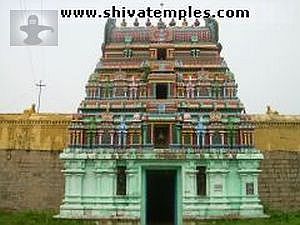
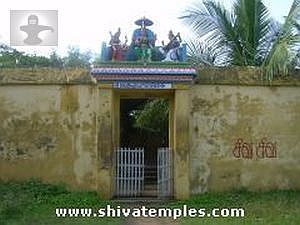
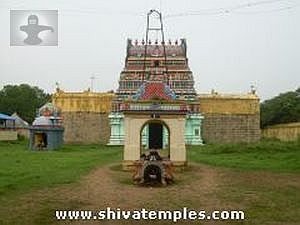
This temple is situated on the northern bank of the River Arisili and presents a majestic appearance with a five-tiered east-facing Rajagopuram (main temple tower). According to legend, Goddess Kali, after slaying the demon Ambaran, worshipped the deity here to atone for the sin incurred from the act. Because of this association with Kali (Maha Kali), the place came to be known as “Makalam.” Entering through the gateway, one comes into a spacious courtyard. Directly facing the sanctum are the Bali Peedam (sacrificial altar) and the Nandi Mandapam. A Kalyana Mandapam (marriage hall) is located at the north-eastern corner of the temple complex.
Second Gopuram and Mahamandapam
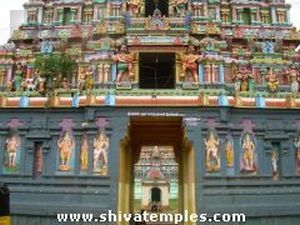
Beyond the outer courtyard stands the second gopuram, a three-tiered tower known as the Adhikara Nandi Gopuram. Inside, in the Maha Mandapam, Naganathaswamy is seen in the form of a Shiva Lingam. Facing the sanctum is Nandi, and to his right, Goddess Ambikai is seen seated in a graceful posture.
Behind the shrine of Naganathaswamy, a shrine for Naga Kanni can be seen, where she is depicted seated in a yogic posture. According to tradition, Naga Kanni worshipped the Lord at this place and attained spiritual liberation. It is also said that the word “Kaalam” can mean serpent, and since a serpent deity worshipped the Lord here, the place came to be known as Makalam. On the northern side, devotees can see the deity who granted darshan to Somasimara Nayanar, along with Nataraja and other Utsava Moorthis (festival deities) of the temple.
Makalanathar Sannidhi
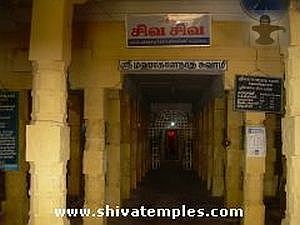
Proceeding further inside, one reaches the sanctum of Makalanathar. In the garbhagriha (sanctum), the presiding deity appears in a small form as a Shiva Lingam, believed to have been held by Goddess Kali in her hand during her worship. While circumambulating the sanctum, a sannidhi for Thyagaraja can be seen on the southern side. Further along the inner prakaram are the sannidhis of the 63 Nayanmars, Parivara Ganapati, Dakshinamurthy, the sages Uthanga and Mathanga, Dhanu Subramaniyar, Mahalakshmi, and Chandikeswarar. The idol of Dhanusu Subramaniya here is particularly striking, as the deity is depicted gracefully holding a bow, presenting a unique and beautiful form.
Outer Prakaram
After completing the circumambulation of the inner prakaram and entering the outer prakaram, a sannidhi for Goddess Kali can be seen in the south-western corner. After slaying the demon Ambasuran, She worshipped Makalanathar here to absolve herself of the sin incurred from the act. In this form, she is worshipped as Maha Kali.
Marriage Significance
It is believed that this temple is especially sacred for those experiencing long delays in marriage. According to local tradition, devotees offer two garlands made of red arali (oleander) flowers to Lord Makalanathar and Goddess Rajamathangi. By performing archana for five consecutive Fridays, and then receiving one of the garlands and wearing it around the neck, devotees believe that their prayers for marriage will soon be fulfilled. Devotees who suffer from Naga Dosha, Putra Dosha (obstacles related to progeny), or delays in marriage are also advised to perform milk abhishekam to Vasuki during Rahu Kalam on Fridays and Sundays. Worshipping in this manner is believed to bring favourable results and relief from these doshas.
Places of Interest Nearby
After visiting Ambar Makalam and Ambar Perunthirukkoil from Poonthottam, one can also visit the Ramar Temple located at Mudikondan, a village situated on the Tiruvarur road, very close to Poonthottam. It is believed that Rama, while returning after slaying Ravana, visited the ashram of Sage Bharadwaja, where the great sage wished to offer him hospitality.
In the Mudikondan temple, the Utsava Moorthy of Kodandarama is particularly noteworthy for its exquisite artistic beauty. Near the temple tank, there is also a sannidhi for Bhakta Anjaneya, who is believed to be very powerful. There is also a small Shiva temple, westward into the village, where the presiding deity is Sarveshwarar.
Gallery