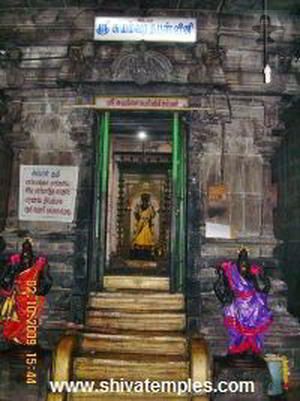
Parvatheeswarar temple, Tiruthelicheri
Location
Tiru-Theli-Cheri (Better known as Koil-Paththu)
Deity
Parvatheeswarar
Female Deity
Sakthi Nayaki
Pathikam
Sambandar - 1
Gallery - Parvatheeswarar Temple


How to Reach
This Shiva temple is situated in the town of Karaikkal, in a locality known as Koilpaththu, and is located about 3 km from the Karaikkal bus stand. Another Paadal Petra Sthalam, Tirudharmapuram, lies approximately 3 km from the Karaikkal bus stand, making it convenient for devotees to visit both temples during the same pilgrimage.
Temple Address
Koilpathu
Karaikal Post
Puducherry Union Territory
PIN – 609602
Temple Hours
Morning : 7:00 - 12:00
Evening : 4:30 - 9:00
Nearby Paadal Petra Shiva Temples
Temple Architecture
Rajagopuram
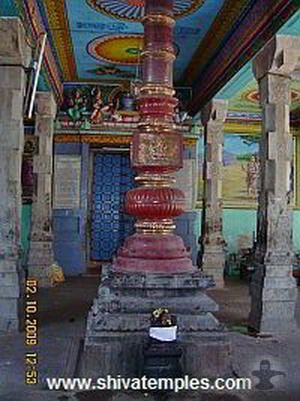
The temple is entered through a majestic west-facing five-tiered Rajagopuram. Adorned with numerous intricate stucco sculptures, the tower stands as a fine example of the artistic and architectural excellence of its period. Upon passing through the Rajagopuram, devotees enter the front mandapam, where a copper-cladded flagstaff stands prominently. Nearby is the sannidhi of Kodimara Vinayaka.
Goddess Sannidhi
In the mandapam adjoining the sanctum, Goddess Sri Swayamvara Tapasvini is enshrined in a graceful standing posture facing south. The entrance to Her sanctum is guarded on either side by Dwarapalikas, the divine female gatekeepers who symbolize protection and auspiciousness.
Main Sannidhi
The presiding deity, Parvatheeswarar, is enshrined in the sanctum in the form of a Shiva Linga facing west. The sanctum entrance is flanked by imposing Dwarapalakas, while Nandi sits directly before the Deity in an attitude of eternal devotion and worship.
Circumambulatory Passage
The inner circumambulatory corridor surrounding the sanctum houses several important sannidhis and idols, including those of the 63 Nayanmars, Narthana Ganapathi, Surya, and Saneeswaran. On the eastern side stands the sannidhi of Muruga accompanied by Valli and Deivanai. The Goshta deities—Dakshinamurthy, Lingodbhava, and Durga—are also enshrined here. A distinctive feature of this temple is the presence of a separate and dedicated sannidhi for Saneeswaran within the prakaram, attracting devotees seeking relief from planetary afflictions.
Sacred Water Bodies
Three Theerthams
The temple is blessed with three theerthams (water sources), namely Surya Pushkarani, Guha Theertham, and Tapa Theertham. Among these, Surya Pushkarani is considered the most significant, as it is believed to have been created by the Sun God himself.
Surya Pooja (Sun Worship)
It is considered highly auspicious to take a ritual bath in this theertham during the early morning hours on Sundays. A special Surya Pooja is also observed for seven consecutive days starting from the 13th day of the Tamil month of Panguni, highlighting the temple's close association with solar worship.
Historical Legend: Sambandar and the Buddhist Debate
Near this site lies the ancient town of Bodhimangai, which was once a prominent center of Buddhist learning and home to a large Buddhist community. Tradition relates that after worshipping at Tiru-Theli-chery, Tiru-Gyana-Sambandhar and his devotees passed through Bodhimangai, singing hymns in praise of the saint. Offended by these devotional songs, the local Buddhists attempted to prevent their progress. At that moment, one of Sambandar's devoted followers, who was engaged in recording the sacred Tevaram hymns, sang a verse from Sambandar's Panchakshara hymn beginning with “Buddhar saman kazhuk kaiyar…”. It is believed that upon hearing the hymn, the Buddhist leader Buddhanandi was struck by lightning and died instantly. Thereafter, the Buddhists, led by Sariputta, challenged Sambandar's followers to a theological debate in the saint's presence. The debate concluded with Sambandar's devotee emerging victorious, and the Buddhists, realizing their mistake, repented, paid homage to Sambandar, and ultimately embraced Shaivism.
Sambandar's Hymn and Its Significance
Sacred Hymn
The hymn composed by Sambandar for this place is included in the Second Thirumurai of the Tevaram. In the concluding verse of this hymn, Sambandar declares that those who recite this temple hymn daily will live a blessed life, enjoying divine grace and spiritual fulfillment.
Gallery - Parvatheeswarar Temple